You have tried serums. You have tried creams. You have tried spot treatments that promised to fade everything in two weeks. And yet, when you look in the mirror under that harsh bathroom light, those dark spots are still there. Maybe they are a little lighter. Maybe they are not. The frustration is real, and you are not alone.
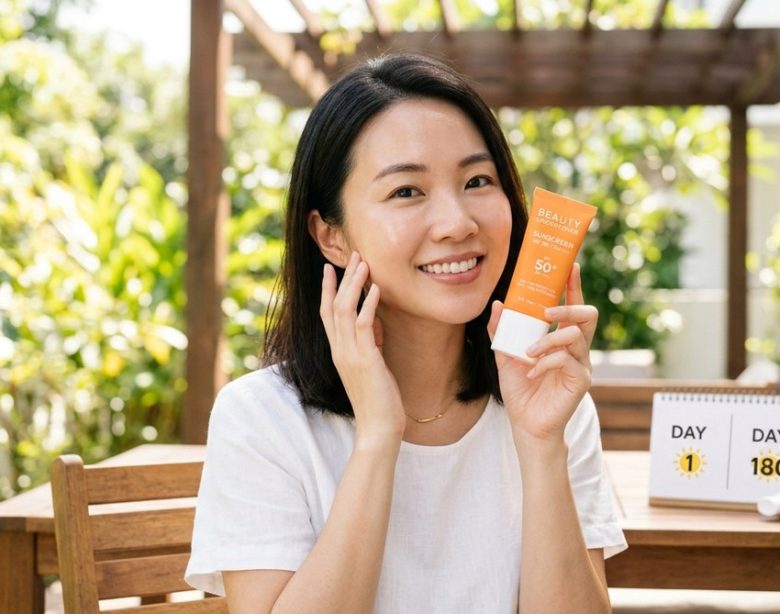
The truth is, you can spend hundreds of dollars on brightening ingredients, but if your sunscreen is not doing its job, you are basically running on a treadmill. You are working hard but going nowhere. That is why finding the right sunscreen for dark spots is the single most important step in your entire routine. And after testing one specific formula every single day for six months, I can tell you exactly what works and why.
The right sunscreen for dark spots does more than block UV rays. It must protect against visible light, contain targeted brightening ingredients like iron oxides or niacinamide, and be comfortable enough to wear daily. Without these three features, even the highest SPF will struggle to fade hyperpigmentation. Consistency matters more than the number on the bottle.
Why Your Current Sunscreen Might Be Failing You
Let me guess. You are using an SPF 50 every morning. You reapply when you remember. And yet, your melasma or post-acne marks are not budging. What gives?
The problem is not the SPF number. Most sunscreens are designed to prevent sunburn, which is caused by UVB rays. But dark spots are triggered by a much wider spectrum of light. UVA rays penetrate deep into the skin and stimulate melanin production. Visible light, especially the blue light from your phone, computer, and the sun, also triggers pigmentation in deeper skin tones. And here is the kicker. Many sunscreens offer zero protection against visible light.
If you have medium, deep, or dark skin, you are especially vulnerable. Your skin produces more melanin naturally, which means it responds more aggressively to any kind of light exposure. That is why a standard chemical sunscreen might keep you from burning, but it will not stop those spots from darkening.
What to Look For in a Sunscreen for Dark Spots
When you are shopping for a product that will actually fade hyperpigmentation, look beyond the SPF label. Here are the non-negotiable features.
- Iron oxides (tinted formulas). These are the MVP for dark spots. Iron oxides block visible light and blue light. They are the reason tinted sunscreens outperform clear ones for pigmentation.
- Zinc oxide or titanium dioxide. These mineral filters offer broad spectrum protection against UVA and UVB. They sit on top of the skin and reflect light away.
- Niacinamide or tranexamic acid. Some sunscreens now include active brighteners. These ingredients help interrupt the melanin transfer process.
- High UVA protection (PA++++ or a high PPD rating). You want the highest level of UVA defense available.
- A texture you will actually wear. This is the most practical point. If the sunscreen feels greasy, pills under makeup, or leaves a white cast, you will skip it. And skipping is the fastest way to fail.
The 3-Step Process to Fade Dark Spots With Sunscreen
You cannot just slap on sunscreen and hope for the best. You need a system. Here is the exact process I followed for six months.
-
Apply a tinted mineral sunscreen every single morning. Not just on sunny days. Not just when you leave the house. Every single morning. Use a formula with iron oxides for visible light protection. Apply a generous amount. Think two finger lengths for your face and neck.
-
Reapply at least once in the afternoon. Sunscreen breaks down over time, especially if you are near windows, driving, or using screens. A powder sunscreen with SPF is better than nothing, but a lightweight tinted sunscreen works best. Set a phone alarm if you have to.
-
Layer a brightening serum underneath. Use a vitamin C serum in the morning or a tranexamic acid serum at night. These ingredients work synergistically with sunscreen. They suppress melanin production while the sunscreen blocks the triggers. Together, they are a powerhouse.
Common Mistakes That Sabotage Your Results
Even with the best sunscreen for dark spots, you can accidentally undo your progress. Here is a breakdown of what to avoid and what to do instead.
| Mistake | Why It Hurts | What to Do Instead |
|---|---|---|
| Using a chemical-only sunscreen | No visible light protection | Switch to a tinted mineral formula with iron oxides |
| Applying too little product | You get only a fraction of the labeled SPF | Use a quarter teaspoon for your face and neck |
| Skipping reapplication | Protection fades after two hours | Reapply with a powder or mist SPF in the afternoon |
| Relying on makeup with SPF | You never apply enough to get real protection | Use a dedicated sunscreen as your base layer |
| Stopping when spots fade | Pigment returns without maintenance | Keep using sunscreen daily, even after spots clear |
Why Tinted Sunscreens Are a Game Changer for Melasma
If you have melasma, you have probably heard that visible light is a major trigger. What you might not know is that regular sunscreens do not block it. Only tinted sunscreens with pigment particles like iron oxides can do that job.
Dr. Michelle Park, a board-certified dermatologist based in New York, explains it this way: “For patients with melasma or stubborn hyperpigmentation, a tinted sunscreen is not optional. It is the only way to block the visible light spectrum that drives melanin activity. Without it, you are leaving the door open for new spots to form while you try to fade old ones.”
That advice changed my entire approach. Once I switched to a tinted mineral sunscreen, I noticed a difference within the first month. The existing spots stopped getting darker. By month three, they started to shrink. By month six, they were barely visible.
How to Choose the Right Shade for Your Skin Tone
One concern I hear often is that tinted sunscreens look chalky or ashy on deeper skin. That is a valid worry. But the formulas have improved dramatically in 2026. Many brands now offer multiple shades or a universal tint that adapts.
- Fair to light skin. Look for a light beige or pearl tint. These blend in easily and do not leave a cast.
- Medium to tan skin. A warm golden or honey tint works best. Avoid anything with a white base.
- Deep to dark skin. Seek out brands that specifically formulate for melanin-rich skin. EltaMD, Colorescience, and Supergoop have expanded their shade ranges. Some use a translucent tint that disappears into deeper skin without looking ashy.
If you are unsure, buy from a store with a good return policy. Or look for sample sizes. Your sunscreen should disappear into your skin, not sit on top of it.
Ingredients That Work Best Alongside Sunscreen
Sunscreen is your foundation, but it works even better when paired with the right supporting ingredients. Here are the ones that made the biggest difference in my six-month experiment.
- Vitamin C (L-ascorbic acid). Apply it in the morning under your sunscreen. It neutralizes free radicals and brightens overall skin tone.
- Tranexamic acid. This ingredient targets pigmentation at the source. It is gentle and works well for melasma.
- Niacinamide. It reduces melanin transfer to skin cells. Many sunscreens already contain it, which is a bonus.
- Azelaic acid. Great for post-acne marks and redness. It also has anti-inflammatory properties.
- Kojic acid or alpha arbutin. These are tyrosinase inhibitors. They stop the enzyme that produces melanin.
You do not need all of them. Pick one or two that match your skin type and budget. Consistency matters more than the number of products.
A Realistic Timeline for Fading Dark Spots
Let me be honest with you. Fading dark spots takes time. If a product promises results in a week, it is either lying or using ingredients that can harm your skin. Here is what a realistic timeline looks like when you use the right sunscreen daily.
- Weeks 1 to 4. No visible fading yet, but existing spots stop getting darker. This is a win. You have stopped the cycle.
- Months 2 to 3. Spots begin to lighten. They may look less defined. The overall skin tone looks more even.
- Months 4 to 6. Significant fading. For mild hyperpigmentation, spots may be almost gone. For stubborn melasma, they will be noticeably lighter.
- After 6 months. Maintenance mode. Continue daily sunscreen use. Spots stay faded as long as you protect your skin.
If you stop using sunscreen, the spots will return. That is not a marketing scare tactic. It is biology. Your melanocytes are always ready to react.
How to Build Your Morning Routine Around Sunscreen
Your sunscreen should not be an afterthought. It should be the star of your morning routine. Here is a simple structure that works.
- Step 1: Cleanse with a gentle, non-stripping cleanser.
- Step 2: Apply a vitamin C serum or a brightening treatment.
- Step 3: Moisturize if your skin is dry. If your sunscreen is hydrating enough, you can skip this.
- Step 4: Apply your tinted sunscreen for dark spots. Use a generous amount.
- Step 5: Makeup if you wear it. The tinted sunscreen acts as a primer.
For a deeper breakdown of how to structure your entire day, check out this guide on morning vs. night skincare: which products go when and why it matters.
What About Body Sunscreen for Dark Spots?
Hyperpigmentation does not stop at your jawline. Dark spots can appear on your chest, shoulders, arms, and hands. The same rules apply. Use a body sunscreen with broad spectrum protection and consider a tinted formula for visible light protection. If you are active or spend time outdoors, look for water-resistant options. And do not forget the back of your hands. They show age and spots faster than your face.
Why I Stuck With This One Sunscreen for Six Months
The product I used was a tinted mineral sunscreen with SPF 50 and PA++++. It contained zinc oxide, iron oxides, and niacinamide. The texture was light enough for my combination skin, and the tint matched my medium skin tone without looking orange. I chose it because it addressed every single requirement I listed above.
But the real secret was not the bottle. It was the habit. I placed it next to my toothbrush. I kept a backup in my bag. I reapplied after lunch. I treated it like a non-negotiable part of my day, like brushing my teeth or drinking coffee. And after six months, the results spoke for themselves.
Your Next Step
You do not need a cabinet full of expensive products. You need one excellent sunscreen for dark spots and the discipline to use it every day. Pick a formula that checks all the boxes. Tinted, mineral, broad spectrum, and comfortable to wear. Then commit to the process. Your dark spots did not appear overnight, and they will not disappear overnight either. But with the right protection and a little patience, you will see the change you have been working for.
Start tomorrow morning. Apply it before you do anything else. Your future skin will thank you.