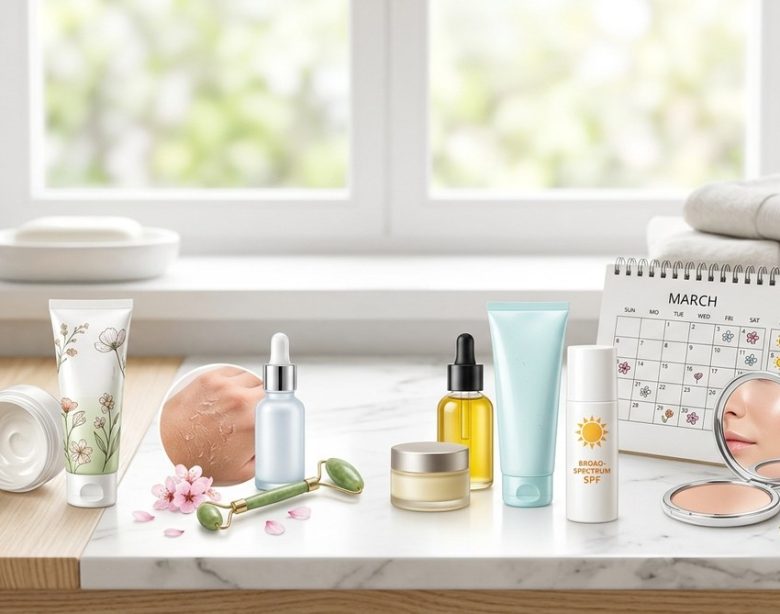
Your winter moisturizer worked like a charm in January. Now it feels like a heavy blanket. Your T-zone looks shiny by noon. And those little bumps near your jawline? They were not there a month ago.
You are not alone. Every spring, thousands of people experience this shift. The air gets warmer. Humidity rises. Your skin changes. But your routine often stays stuck in winter mode. That mismatch can lead to breakouts, congestion, or irritation.
The good news? You do not need a full cabinet overhaul. You just need to know what to swap, when to swap it, and why it matters. Let us walk through the five signs that your routine is due for a seasonal skincare routine swap for spring.
Seasonal skincare swaps prevent breakouts, congestion, and irritation as the weather warms. Look for five key signals: increased oiliness, clogged pores, product pilling, stinging sensations, and morning dryness. When you spot any of these, replace heavy creams with gel moisturizers, swap rich cleansers for gentle foaming ones, and add a lightweight serum. These simple changes keep your skin balanced through spring.
Sign 1: Your Skin Looks Greasy by Midday
Winter air is dry. Your skin needs rich creams and occlusives to hold moisture in. But when spring arrives, that same cream can feel like a layer of butter on your face.
Check your skin two hours after your morning routine. Is it shiny? Does makeup slide around? That is your first clue.
What to do: Switch from a heavy cream to a gel or water-based moisturizer. Gel formulas hydrate without leaving a greasy film. Look for ingredients like hyaluronic acid, glycerin, or aloe vera. These pull moisture into the skin without adding weight.
If you love a rich night cream, keep it for evenings only. Use a lighter lotion during the day. This simple change is often all you need to balance your seasonal skincare routine swap for spring.
Sign 2: You Notice More Clogged Pores and Breakouts
Warmer weather means more sweat and oil. Dead skin cells that used to flake off in dry air now stick around. They mix with sebum and create the perfect environment for clogged pores.
You might see small whiteheads on your chin or congestion along your cheeks. This is not a sign to quit your routine. It is a sign to adjust it.
What to do: Add a gentle exfoliant two or three times a week. A beta hydroxy acid (BHA) like salicylic acid works well for oily or combination skin. It goes deep into pores and clears out debris. If your skin is sensitive, try a milder option like polyhydroxy acid (PHA).
Check out our guide on salicylic acid decoded: the BHA that clears more than just acne for a deeper look at how this ingredient works.
You can also swap your thick winter cleanser for a foaming or gel cleanser. These remove excess oil without stripping your barrier. If you want to understand the full process of introducing new actives, read why your skin purges when you start new products and what to do about it.
Sign 3: Your Products Start Pilling or Balling Up
You apply your serum. Then your moisturizer. Then sunscreen. And suddenly little white flakes appear on your face. That is pilling, and it often happens when layers of product do not absorb well.
In winter, thick creams sit on top of the skin because the air cannot evaporate moisture. In spring, the same cream may not sink in at all. It sits on the surface and rolls off.
What to do: Lighten your layering. Use thinner textures. A great rule is to apply products from thinnest to thickest. If your moisturizer is pilling, switch to a lotion or emulsion. If your sunscreen is pilling, try a hybrid moisturizer with SPF.
Here is a quick reference table to help you decide what to keep and what to swap:
| Winter Product Type | Spring Swap |
|---|---|
| Rich cream in a jar | Gel or water-based moisturizer |
| Oil cleanser (heavy) | Micellar water or lightweight balm |
| Thick night mask | Hydrating sleeping pack (lighter) |
| Creamy physical sunscreen | Fluid or gel SPF |
| Heavy occlusive (petrolatum) | Lighter occlusive like squalane |
If you want a full walkthrough of how to structure your whole day, see morning vs night skincare: what products should go where and why.
Sign 4: Your Moisturizer Stings or Burns When Applied
This one can be alarming. You put on your usual cream and your face feels warm or prickly. That is a sign your skin barrier is reacting to a formula that is too heavy or contains an ingredient that is now irritating in warmer weather.
Some rich winter creams contain high amounts of fatty acids or oils. When temperatures rise, these can trap heat and cause inflammation. Your skin might look red or feel tight after application.
What to do: Switch to a barrier-supporting formula that is still lightweight. Look for ceramides, niacinamide, or peptides. These ingredients strengthen the skin without suffocating it.
If you suspect your barrier is already damaged, take a break from active ingredients like retinol or strong acids. Focus on hydration and repair for a week. Our article on 7 surprising habits that are secretly ruining your skin barrier can help you identify other hidden culprits.
Expert tip: “If your moisturizer stings, stop using it immediately. Do not try to ‘push through’ the discomfort. Your skin is telling you something. Switch to a simple, fragrance-free gel moisturizer for a few days and see if the irritation subsides.” [Board-certified dermatologist, New York]
Sign 5: Your Skin Feels Dry in the Morning Despite a Heavy Night Routine
This sounds backward, right? You use a thick night cream and wake up with tight, flaky skin. That often means your moisturizer is sitting on top of the skin instead of sinking in. It may be too occlusive for the current humidity level.
In spring, your skin produces more natural moisture. If you block it with a heavy layer, the skin underneath can actually become dehydrated. The top layer feels greasy while the deeper layers stay thirsty.
What to do: Layer a hydrating serum under a lighter moisturizer at night. A serum with hyaluronic acid or glycerin pulls water into the skin. Then seal it with a light lotion. This two-step method works better than one heavy cream.
For budget-friendly options, check the best hydrating serums for dry skin under $30. If you want to compare hydration heavyweights, read hyaluronic acid vs. glycerin: which hydrator your skin actually needs.
How to Execute Your Seasonal Swap in 3 Steps
Making the change does not have to be complicated. Follow this simple process:
-
Audit your current routine. Write down every product you use morning and night. Note the texture (cream, gel, oil, foam). Identify which ones feel heavy or greasy now.
-
Replace one product at a time. Start with your moisturizer. That is usually the biggest change. Use the new product for three days before swapping anything else. This helps you see what works and prevents overwhelming your skin.
-
Watch for reactions. After each swap, give your skin a week to adjust. If you notice new breakouts or irritation, step back. You may have switched too fast or chosen a formula that does not suit your skin type.
If you are new to building routines, start with how to build a simple 3-step skincare routine for absolute beginners. It covers the basics you need before making any swaps.
Common Mistakes to Avoid During a Seasonal Swap
Even experienced skincare lovers make these errors. Here are the most common pitfalls and how to avoid them:
- Changing everything at once. Your skin cannot tell which product caused a reaction if you swap five things in one day. Change one item at a time.
- Dropping hydration completely. Just because it is warmer does not mean your skin stops needing water. A lighter moisturizer still counts. Do not skip it.
- Using the same SPF from last year. Sunscreen expires. Check the date. Also, a winter SPF may be too thick. Look for a lightweight, non-comedogenic formula for spring.
- Ignoring your cleanser. A creamy winter cleanser can feel too rich in spring. Switch to a gel or foam that matches your current oil level.
- Forgetting your neck and chest. These areas change with the season too. Extend your swap to your decollete.
Your Spring Skincare Checklist
Use this list to track what to swap and when:
- Heavy cream replaced with gel or water-based moisturizer
- Rich cleanser swapped for gentle foaming or gel cleanser
- Thick night mask used only once a week (or paused)
- Exfoliant added 2-3 times per week (BHA or PHA)
- Sunscreen updated to a lightweight, broad-spectrum SPF 30 or higher
- Hydrating serum added under moisturizer for extra dewiness
- Heavy oil cleanser replaced with micellar water (if needed)
If you are curious about how to layer these new products correctly, read what order should you apply your serums, oils, and moisturizers. It explains the exact sequence for maximum absorption.
Listen to Your Skin, Not the Calendar
Your skin knows when the season changes. Sometimes it happens earlier than the official first day of spring. Sometimes it lags behind. Pay attention to the signs we covered instead of setting a fixed date on your calendar.
A seasonal skincare routine swap for spring is not about following trends. It is about responding to your skin’s needs in real time. When you notice greasiness, congestion, pilling, stinging, or morning dryness, you have your cue. Make the swap. Give it a week. Then enjoy the relief of a routine that finally matches the weather outside.
Your skin will thank you. And you will wonder why you waited so long to make the change.