Your skin does its most important repair work while you’re asleep. Between 10 PM and 2 AM, cell turnover increases, collagen production ramps up, and your skin becomes more receptive to active ingredients. Missing out on proper nighttime care means missing your skin’s most productive hours for healing and renewal.
Nighttime is when your skin repairs itself most efficiently. Five essential habits can maximize this natural renewal process: removing makeup thoroughly, applying products in the right order, using overnight treatments strategically, maintaining proper sleep position, and keeping your bedroom environment skin-friendly. These simple changes work with your body’s natural rhythms to deliver visible improvements in texture, tone, and overall skin health without adding hours to your routine.
Remove Every Trace of Makeup and Sunscreen
Your skin cannot repair itself properly if it’s suffocated under layers of makeup, sunscreen, and daily grime. Sleeping with makeup on blocks pores, prevents cell turnover, and accelerates aging.
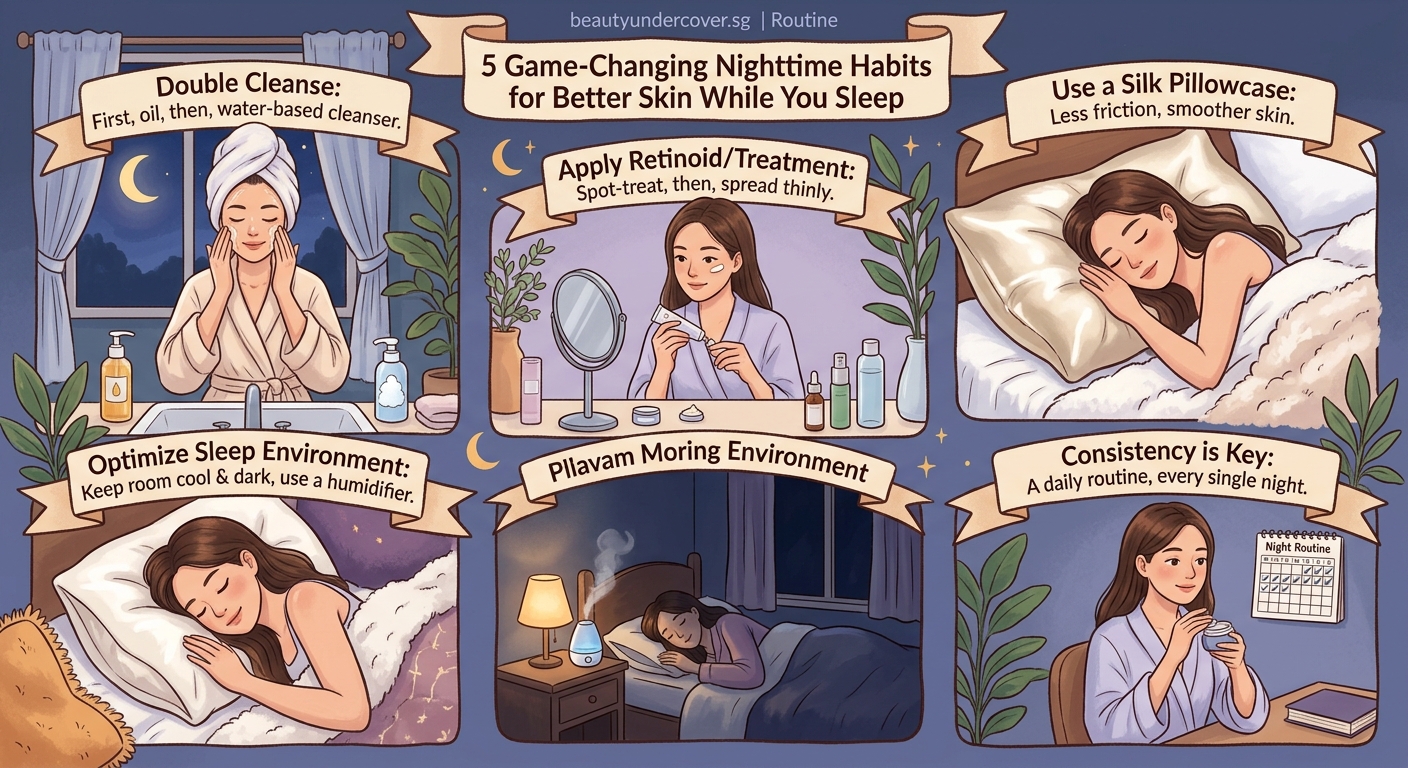
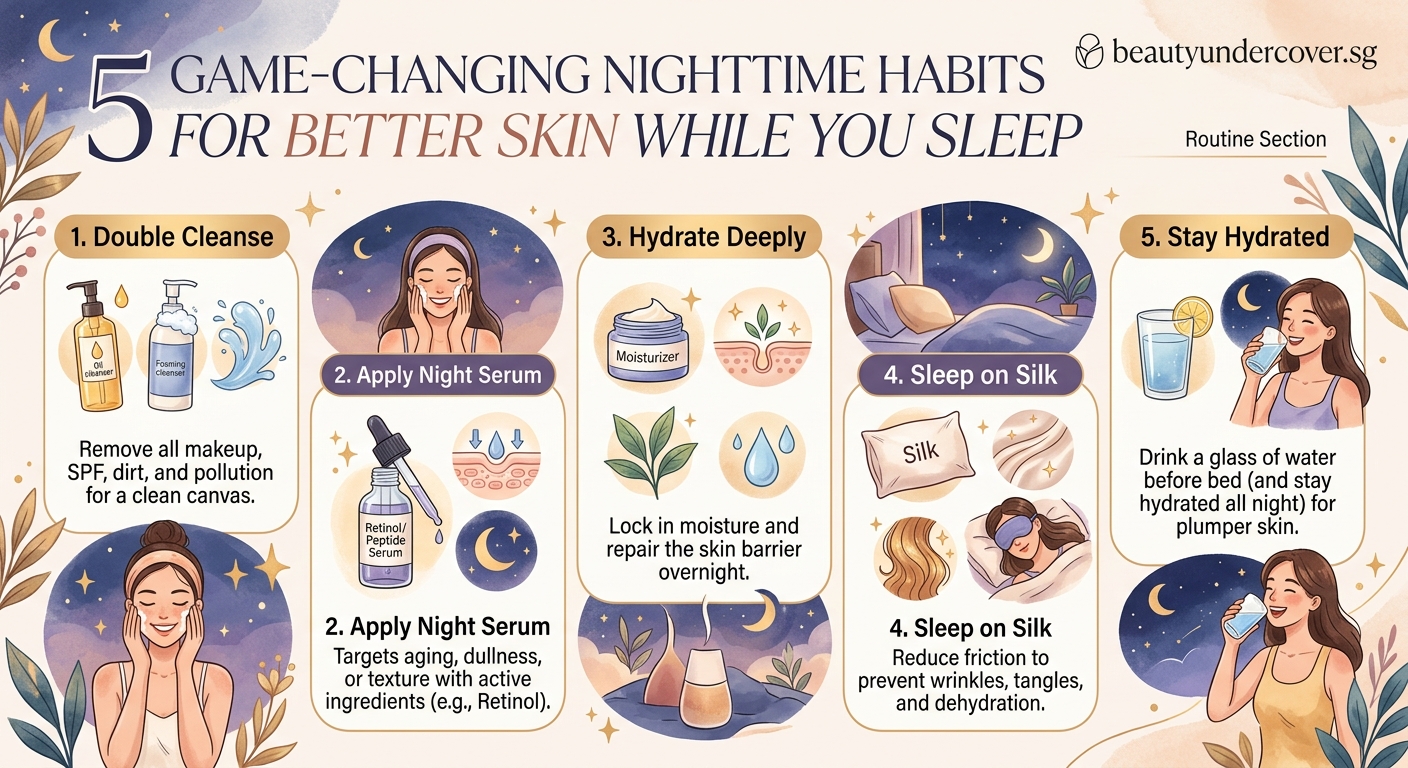
Double cleansing is the most effective method for thorough removal. Start with an oil-based cleanser to break down makeup and sunscreen. These products work like magnets, attracting oil-based impurities without stripping your skin. Massage the cleanser for 60 seconds, focusing on areas where makeup tends to hide: along the hairline, around the nose, and under the eyes.
Follow with a water-based cleanser suited to your skin type. This second cleanse removes any remaining residue and prepares your skin to absorb treatment products. If you’re new to building an effective routine, how to build a simple 3-step skincare routine for absolute beginners covers the foundational steps.
Here’s what happens when you skip proper cleansing:
- Pores become clogged with oxidized makeup and sebum
- Active ingredients in your nighttime products cannot penetrate effectively
- Bacteria multiply on your skin surface, leading to breakouts
- Free radicals from pollution remain on your skin, accelerating aging
- Your pillowcase becomes a breeding ground for acne-causing bacteria
Layer Your Products from Thinnest to Thickest
Product order matters more at night than during the day. Your skin is more permeable while you sleep, making it the ideal time to use potent actives. But applying them in the wrong sequence reduces their effectiveness dramatically.
The basic rule is simple: thinnest to thickest consistency. This allows each product to absorb properly before the next layer creates a barrier. Wait 30 to 60 seconds between each step to let products sink in.
| Product Type | When to Apply | Why It Matters |
|---|---|---|
| Toner or essence | Immediately after cleansing | Balances pH and preps skin for absorption |
| Serums (water-based) | After toner dries | Delivers concentrated actives to deeper layers |
| Serums (oil-based) | After water-based serums | Provides additional nourishment without blocking absorption |
| Eye cream | Before moisturizer | Targets delicate eye area with specialized ingredients |
| Moisturizer | Second to last | Seals in previous layers and provides hydration |
| Face oil or sleeping mask | Final step | Creates protective barrier to lock everything in |
Understanding morning vs. night skincare: which products go when and why it matters helps you make smarter choices about when to use specific ingredients.
Some ingredients work better at night because they make your skin photosensitive. Retinoids, AHAs, and BHAs should always be applied in the evening. They accelerate cell turnover and can increase sun sensitivity during the day.
Use Targeted Treatments for Overnight Repair
Nighttime is when you should use your most powerful skincare products. Your skin’s permeability increases by up to 25% while you sleep, making it more receptive to active ingredients.
Retinoids remain the gold standard for anti-aging and acne treatment. They boost collagen production, speed up cell turnover, and improve skin texture. Start with a low concentration (0.025% to 0.03%) two nights per week, gradually increasing as your skin builds tolerance. If retinoids irritate your skin, 5 retinol alternatives that actually work for sensitive skin offers gentler options with similar benefits.
Hydrating serums work overtime while you sleep. Hyaluronic acid draws moisture from the air into your skin, plumping fine lines and improving texture. Apply it to damp skin for maximum absorption. Layer a richer moisturizer on top to prevent moisture loss.
For those dealing with breakouts, understanding why your skin purges when you start new products and what to do about it prevents panic when starting new treatments.
“The skin’s natural repair processes peak between 11 PM and midnight. Products applied before bed have up to eight hours to work without interference from makeup, pollution, or UV exposure. This extended contact time significantly improves ingredient efficacy.” – Dr. Rachel Nazarian, Board-Certified Dermatologist
Sleeping masks provide an extra boost once or twice weekly. These occlusive treatments create a seal over your skin, forcing hydration and active ingredients deeper into the epidermis. They’re particularly effective for dry skin or during winter months when indoor heating strips moisture.
Sleep on Your Back with a Silk Pillowcase
Your sleep position affects your skin more than you might realize. Sleeping on your side or stomach creates compression, leading to sleep lines that become permanent wrinkles over time. The constant friction also transfers bacteria and oils from your pillowcase back onto your freshly cleansed skin.
Sleeping on your back prevents these issues entirely. It keeps your face elevated and free from contact with fabric. This position also reduces puffiness by allowing fluids to drain naturally rather than pooling in your face.
If back sleeping feels impossible, invest in a silk or satin pillowcase. These materials create less friction than cotton, reducing the formation of sleep lines. They also absorb less moisture, keeping your skincare products on your face instead of your pillow.
Wash your pillowcases every three to four days. Even with the best nighttime routine, pillowcases collect dead skin cells, bacteria, and product residue. Sleeping on dirty fabric reintroduces these impurities to your skin, undoing your careful cleansing work.
Consider these additional sleep hygiene practices:
- Keep your bedroom temperature between 60 and 67 degrees Fahrenheit for optimal skin repair
- Use a humidifier if you live in a dry climate or use heating/air conditioning
- Avoid touching your face while you sleep by keeping hands away from your pillow
- Change your pillowcase immediately after applying hair masks or oils
- Elevate your head slightly to reduce morning puffiness
Create a Consistent Bedtime Routine
Consistency matters more than perfection. Your skin responds best to regular care, not sporadic intensive treatments. Establishing a set routine trains your skin to anticipate and respond to products more effectively.
Aim to start your nighttime routine at the same time each evening. This consistency supports your circadian rhythm, which regulates skin repair processes. Going to bed at wildly different times disrupts these natural cycles, reducing the effectiveness of your skincare efforts.
Keep your routine simple enough to maintain every single night. An elaborate 12-step process might work on weekends, but it’s not sustainable during busy weekdays. A streamlined routine you actually follow beats a complex one you skip half the time.
The minimum effective routine includes:
- Thorough cleansing (double cleanse if wearing makeup)
- One treatment product (retinoid, vitamin C, or targeted serum)
- Moisturizer appropriate for your skin type
- Eye cream if you’re concerned about fine lines
You can expand from there based on specific concerns, but these four steps form a solid foundation. For those seeking efficiency, the minimal 3-step evening routine that actually works for glowing skin offers a streamlined approach.
Set up your bathroom to support consistency. Keep products visible and organized. If you have to dig through drawers to find your cleanser, you’re more likely to skip steps. Store everything at eye level in the order you use it.
Common Mistakes That Sabotage Your Nighttime Routine
Even with good intentions, certain habits undermine your efforts. Recognizing and correcting these mistakes amplifies your results without requiring new products or more time.
| Mistake | Why It’s Harmful | Better Approach |
|---|---|---|
| Applying products to dry skin | Reduces absorption and can cause irritation | Pat face with damp hands or apply to slightly damp skin |
| Using too much product | Wastes product and can clog pores | Use pea-sized amounts for face products |
| Skipping neck and chest | These areas show aging but get neglected | Extend all products down to chest area |
| Going to bed immediately after applying | Products transfer to pillowcase instead of absorbing | Wait 10-15 minutes before lying down |
| Using daytime products at night | Misses opportunity for stronger treatments | Reserve actives like retinoids for evening use |
Overloading your skin with too many active ingredients causes more harm than good. Combining certain ingredients triggers irritation, redness, and compromised skin barrier. Stick to one active treatment per night, especially when starting new products.
Neglecting hydration undermines even the best treatment products. Active ingredients work more effectively in well-hydrated skin. If you’re using potent treatments but skipping moisturizer, you’re creating an environment where irritation is more likely than improvement.
Rushing through your routine reduces effectiveness. Each product needs time to absorb before the next layer. Slapping everything on in 30 seconds means products mix together on your skin surface rather than penetrating in the intended order.
Building Better Skin While You Sleep
Your nighttime routine represents your skin’s best opportunity for repair and renewal. These five habits work together to create an environment where your skin can do what it does best: heal itself.
Start by choosing one habit to implement this week. Master that before adding another. Small, consistent changes create lasting results, while trying to overhaul everything at once leads to burnout and abandoned routines.
Your skin will show you what’s working. Improved texture, reduced breakouts, and a more even tone appear within four to six weeks of consistent nighttime care. Give new products at least a month before deciding they’re not effective.
The beauty of these habits is their simplicity. None require expensive products or hours of time. They simply optimize what your skin already wants to do naturally. By working with your body’s rhythms instead of against them, you create the conditions for genuinely better skin without the stress of complicated routines or unrealistic expectations.