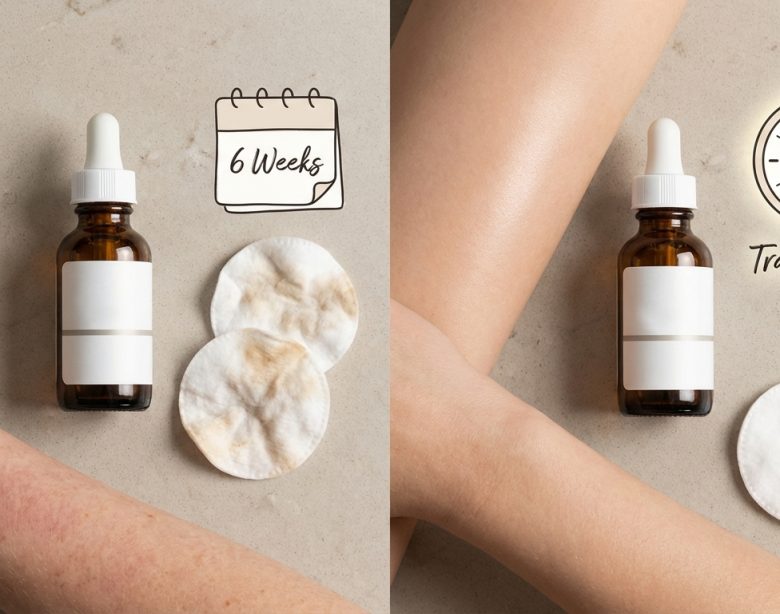
You started retinol with high hopes for glowing skin. Instead, you woke up to new breakouts, flaking, and redness. Your first thought? This product is ruining my face. But before you toss that bottle, you need to understand purging. It’s a real phenomenon, and knowing how long it lasts can mean the difference between giving up too soon and achieving the skin transformation you’re after.
Retinol purging usually lasts between 4 and 8 weeks, though some people experience it for up to 12 weeks. The timeline depends on your skin type, retinol concentration, and application frequency. Purging brings existing clogs to the surface faster, causing temporary breakouts in areas where you normally get acne. If breakouts appear in new areas or last beyond 12 weeks, you’re likely experiencing irritation or an allergic reaction, not purging.
What retinol purging actually means
Purging happens when active ingredients speed up your skin’s cell turnover rate. Retinol pushes your skin to shed dead cells faster than usual. This process brings underlying clogs, microcomedones, and trapped sebum to the surface all at once.
Think of it like cleaning out a messy closet. Everything gets worse before it gets better because you’re pulling everything out into the open.
Your skin normally takes about 28 days to complete a full cell turnover cycle. Retinol can cut that time in half. All those baby pimples that were forming under your skin suddenly appear within days instead of weeks.
This is why purging feels so dramatic. You’re not getting more acne. You’re just seeing it all at once.
The complete timeline for retinol purging
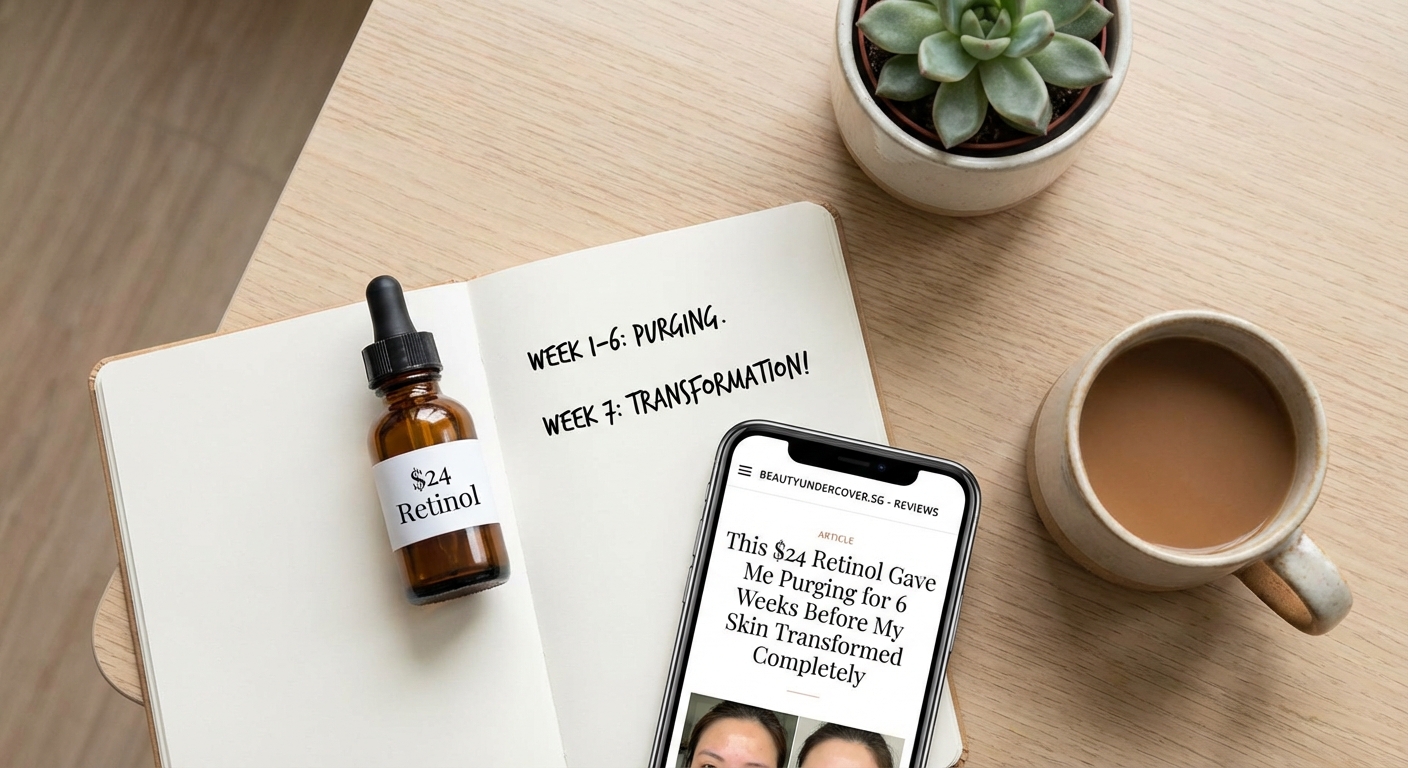
Most people experience purging in predictable phases. Here’s what typically happens week by week.
Weeks 1 to 2
You might notice slight dryness and sensitivity first. Small bumps and whiteheads start appearing, usually in your typical breakout zones. Your skin may feel tight or look a bit red after application.
Some people see no purging at all during this phase. That’s normal too.
Weeks 3 to 4
This is usually peak purging time. Breakouts are most visible and numerous. You might see clusters of small pimples, increased texture, and more flaking than before.
Your skin might look worse than it did before you started retinol. This is the phase where most people panic and quit.
Don’t. You’re right in the middle of the process.
Weeks 5 to 8
Breakouts start to calm down. New pimples appear less frequently. The ones you have begin healing faster than they did before retinol.
You’ll notice your skin texture improving. Old acne marks might start fading. The flaking becomes more manageable as your skin adjusts.
Weeks 9 to 12
Most people are completely through purging by now. Your skin should look noticeably clearer and smoother. If you’re still experiencing new breakouts at this point, something else is going on.
“If your skin is still purging after 12 weeks of consistent retinol use, you’re likely dealing with irritation or a sensitivity issue rather than true purging. Consider reducing your application frequency or switching to a lower concentration.” – Board-certified dermatologists commonly recommend this guideline.
How to tell if it’s purging or a bad reaction
Not every breakout is purging. Here’s how to tell the difference.
Signs it’s normal purging:
- Breakouts appear in areas where you usually get acne
- Pimples are smaller and heal faster than your typical breakouts
- You see whiteheads and small pustules, not deep cystic acne
- Symptoms improve after 4 to 6 weeks
- Your skin feels slightly dry but not burning or stinging
Signs it’s a bad reaction:
- Breakouts appear in areas where you never break out
- Your skin burns, stings, or feels extremely sensitive
- You develop a rash, hives, or severe redness
- Cystic acne appears when you don’t normally get cysts
- Symptoms get worse after 8 weeks instead of better
If you’re experiencing a bad reaction, stop using the product immediately. You can always try again later with a lower concentration or different retinol formula.
Factors that affect how long your purging lasts
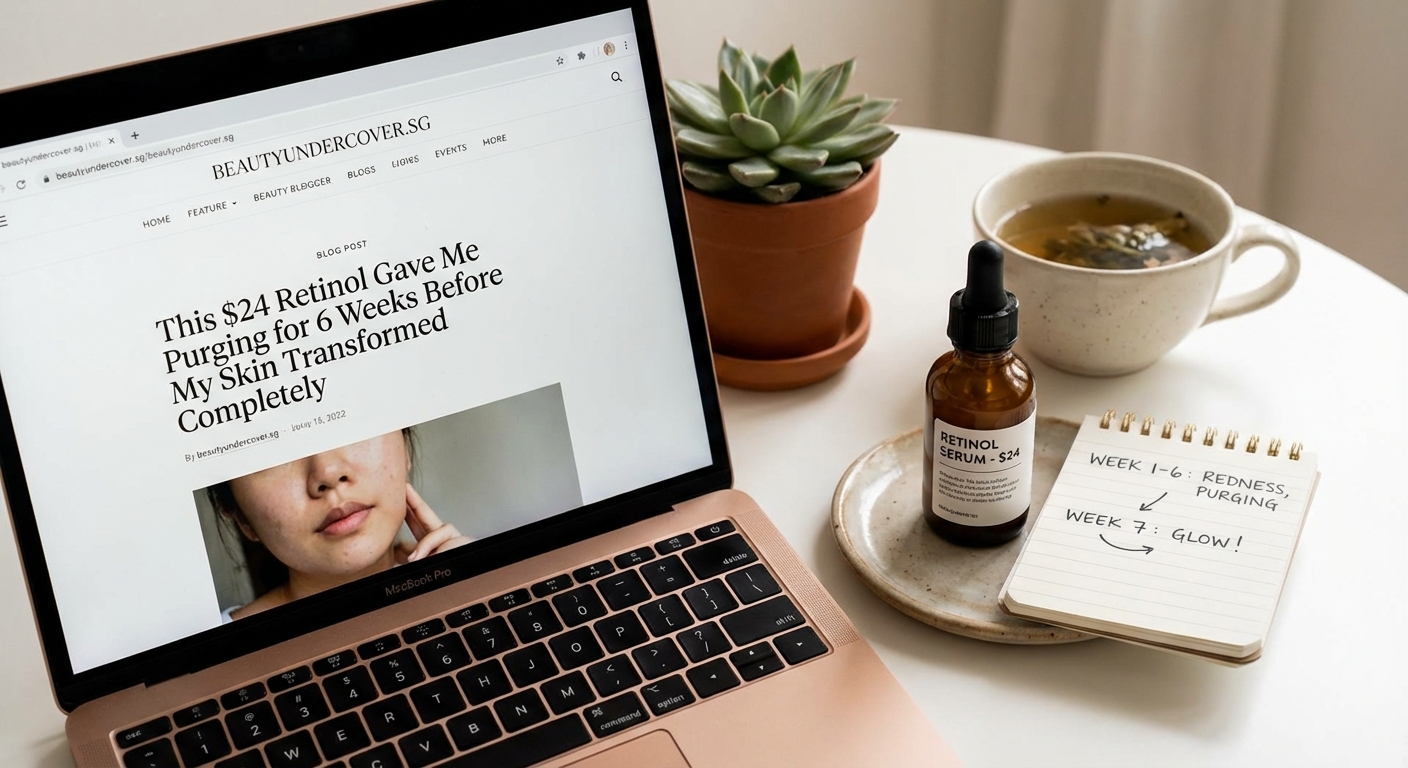
Not everyone purges for the same amount of time. Several factors influence your personal timeline.
| Factor | Impact on Purging Duration |
|---|---|
| Retinol concentration | Higher percentages (0.5% to 1%) may cause more intense but shorter purging |
| Application frequency | Daily use can extend purging compared to 2-3 times per week |
| Skin type | Oily, acne-prone skin typically purges longer than dry skin |
| Previous skincare routine | First-time retinol users often purge longer than those who’ve used it before |
| Underlying congestion | More existing clogs mean more purging time |
Your age matters too. Younger skin with faster natural cell turnover may purge more intensely but finish sooner. Mature skin might experience gentler, longer purging.
Steps to minimize purging duration and intensity
You can’t skip purging entirely, but you can make it more manageable. Here’s how to get through it with less drama.
-
Start with a low concentration. Begin with 0.25% or 0.3% retinol instead of jumping straight to 1%. Your skin needs time to build tolerance.
-
Use it less frequently at first. Apply retinol twice a week for the first two weeks. Gradually increase to every other night, then nightly if your skin tolerates it.
-
Buffer with moisturizer. Apply your retinol over a light layer of moisturizer instead of on bare skin. This slows absorption and reduces irritation without eliminating effectiveness.
-
Keep the rest of your routine simple. Skip other active ingredients like AHAs, BHAs, and vitamin C during the purging phase. Stick to gentle cleansers and hydrating products. If you’re new to building a solid foundation, learning how to build a simple 3-step skincare routine for absolute beginners can help you avoid overcomplicating things.
-
Don’t pick at your skin. Touching and squeezing purging breakouts leads to scarring and prolongs healing time.
-
Use a gentle, non-stripping cleanser. Your skin barrier is already stressed. Harsh cleansers make everything worse.
The goal is consistency, not aggression. Slow and steady wins this race.
What to do during the purging phase
Purging is uncomfortable, but you can support your skin through it. Here’s what actually helps.
Do these things:
- Apply sunscreen every single morning (retinol makes you more sun-sensitive)
- Use a rich, barrier-repairing moisturizer at night
- Treat active breakouts with spot treatments containing benzoyl peroxide or salicylic acid
- Take progress photos weekly so you can see improvement even when it doesn’t feel like it
- Hydrate your skin from the inside by drinking enough water
- Be patient and give your skin the full 8 to 12 weeks
Avoid these mistakes:
- Increasing your retinol concentration or frequency during purging
- Adding new active ingredients to “speed up” the process
- Over-exfoliating to remove flaking (this damages your skin barrier)
- Skipping moisturizer because your skin is oily
- Giving up before week 8
Your skin is working hard to renew itself. Support the process instead of fighting it.
When to stop using retinol and try something else
Sometimes you need to pause or pivot. Here are clear signs it’s time to stop.
If you develop severe burning, stinging, or pain, stop immediately. Retinol should never hurt.
If your skin becomes extremely red, swollen, or develops a rash, you’re having an allergic reaction. Discontinue use and see a dermatologist.
If you’re still breaking out heavily after 12 weeks with no improvement, the product isn’t right for you. Try a different formulation or lower concentration.
If you develop deep cystic acne that you didn’t have before, stop using the product. Cystic acne isn’t typical purging.
You can always try again later. Sometimes your skin needs a break before building up tolerance.
Alternative approaches if standard retinol is too harsh
Not everyone can tolerate traditional retinol, especially at higher concentrations. You have options.
Retinol alternatives to consider:
- Retinaldehyde (gentler but still effective)
- Bakuchiol (plant-based retinol alternative with no purging)
- Granactive retinoid (newer, less irritating form)
- Prescription adapalene (designed specifically for acne-prone skin)
You can also try encapsulated or time-release retinol formulas. These deliver the ingredient more slowly, reducing irritation and potentially shortening purging time.
Some people do better with prescription tretinoin under dermatologist supervision. It’s stronger but more predictable.
The right retinol for you is the one you’ll actually stick with for months.
How to track your progress through purging
Purging feels endless when you’re in it. Tracking helps you see the light at the end of the tunnel.
Take photos in the same lighting, same angle, and same time of day every week. Use natural light near a window for the most accurate representation.
Keep a simple journal noting:
- Date and week number
- Number of active breakouts
- Skin texture (smooth, rough, flaky)
- Redness level (mild, moderate, severe)
- How your skin feels (tight, comfortable, irritated)
This data helps you spot patterns. You’ll notice improvements you’d otherwise miss when staring at your face in the mirror every day.
Compare your week 8 photos to your week 1 photos. The difference is usually dramatic, even if week 7 to week 8 looks the same.
Progress isn’t always linear. Some weeks look worse than others. That’s normal.
Supporting your skin barrier during the purging process
A healthy skin barrier shortens purging time and reduces irritation. Here’s how to protect it.
Look for ingredients that repair and strengthen:
- Ceramides (rebuild the skin barrier)
- Niacinamide (reduces inflammation and supports barrier function)
- Hyaluronic acid (holds moisture in your skin)
- Centella asiatica (calms irritation)
- Squalane (mimics your skin’s natural oils)
Avoid anything that strips or irritates:
- Alcohol-based toners
- Harsh physical scrubs
- Foaming cleansers with sulfates
- Hot water on your face
- Multiple active ingredients at once
Think of your skin barrier like a brick wall. Retinol is temporarily removing some bricks to build a better wall. Your job is to provide the materials (moisture, lipids, protection) to rebuild it stronger.
The transformation waiting on the other side
Purging is temporary. The results are not.
After you get through the purging phase, you’ll notice your skin looks smoother, clearer, and more even-toned. Fine lines soften. Acne scars fade. Your complexion looks brighter and more refined.
Retinol continues working long after purging ends. Most people see their best results around the 6-month mark.
Your skin will also become less reactive over time. What caused purging at week 2 won’t bother your skin at month 6. You’re building tolerance and resilience.
Many people who stick with retinol say they wish they’d started sooner. The purging phase becomes a distant memory once you see your transformed skin.
Your purging timeline is personal but predictable
Retinol purging how long? For most people, 4 to 8 weeks. For some, up to 12 weeks. Beyond that, you’re dealing with something other than purging.
The timeline varies based on your skin type, the concentration you’re using, and how often you apply it. But the pattern is consistent: things get worse before they get dramatically better.
Track your progress. Support your skin barrier. Stay consistent. And remember that everyone who has beautiful retinol results went through this exact same phase. They just didn’t give up at week 4.
Your skin is working exactly as it should. Give it time to finish the job.