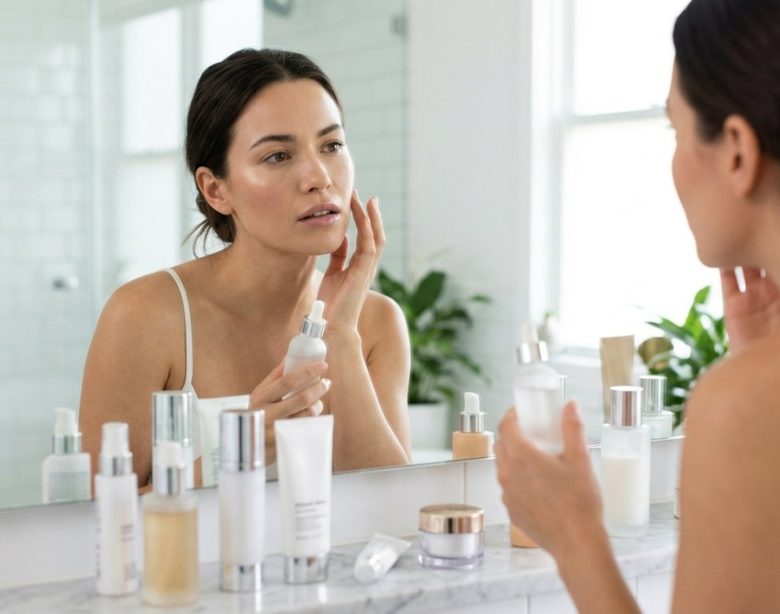
You wash your face every night. You apply serums in the right order. You even splurged on that viral moisturizer everyone raved about on TikTok. Yet your skin still looks dull, congested, or irritated. If this sounds familiar, you are not alone. The truth is, many of us make subtle mistakes that quietly sabotage our progress. The good news? Once you identify them, the fix is usually simple and free.
Most skincare routine mistakes in 2026 come down to three things: overdoing actives, skipping hydration for oily skin, and ignoring the skin barrier. This guide covers the six most common errors people make today, from using too many products to forgetting that winter air dries out even the oiliest complexions. Fix these, and your routine will finally start working.
Mistake 1: You are using too many active ingredients at once
It is tempting to layer every buzzy ingredient you hear about. Vitamin C in the morning, niacinamide after, then retinol at night, plus a BHA toner for good measure. But your skin is not a chemistry lab. Piling on multiple actives can lead to irritation, redness, and a compromised moisture barrier.
In 2026, the trend is moving toward minimalism. Many dermatologists now recommend sticking to one or two targeted actives per routine and rotating them based on your skin’s needs. For example, use a gentle retinol three nights a week and swap it for a hydrating serum on off nights.
“I see patients who use four different exfoliating acids in one routine. Their skin barrier is essentially screaming for help. Less is almost always more.” Dr. Emily Torres, board-certified dermatologist in Austin, Texas.
How to fix it:
- Identify your primary skin concern (acne, hyperpigmentation, or aging).
- Choose one active that targets that concern.
- Use it at the recommended frequency, not every single day.
- Give your skin two to three nights a week with only hydration and barrier repair.
If you are unsure where to start, read our guide on how to build a simple 3-step skincare routine for absolute beginners. It will help you strip back without losing results.
Mistake 2: You are skipping sunscreen or using it wrong
This might be the oldest skincare advice in the book, but it remains the most common skincare routine mistake in 2026. You might wear SPF 50 on a beach day, but do you wear it when you work from home? Do you reapply it every two hours if you are near a window?
Sunscreen is not optional. It is the single most important product for preventing premature aging and hyperpigmentation. Yet many people still apply it incorrectly.
| Common Sunscreen Mistake | What To Do Instead |
|---|---|
| Applying too little | Use a nickel-sized amount for your face and neck |
| Skipping the neck and ears | These areas show aging just as much as your face |
| Using expired sunscreen | Check the bottle; most are good for 12 months |
| Not reapplying | Set a phone alarm if you are outdoors or near windows |
| Relying on makeup with SPF | Foundation SPF is rarely enough coverage |
If you struggle with white cast or greasiness, check out our recommendations for 7 body sunscreens that won’t leave a white cast or greasy residue. Many of those formulas work beautifully on the face too.
Mistake 3: You are over-exfoliating (yes, even with gentle acids)
Exfoliation is great. Until it is not. Physical scrubs, AHAs, BHAs, and enzymatic exfoliants all do the same job: they remove dead skin cells. Using them together or too often strips away the protective barrier, leaving skin raw, sensitive, and prone to breakouts.
In 2026, the recommended frequency for most people is two to three times per week, max. If you have dry or sensitive skin, once a week might be enough. Signs you are overdoing it include stinging upon moisturizer application, visible redness, and a tight feeling after cleansing.
Signs you need to exfoliate less:
- Your moisturizer burns when you apply it.
- Your skin looks shiny but feels tight and uncomfortable.
- You are breaking out in areas where you normally do not.
- Your complexion looks red or blotchy for hours after washing.
If you suspect your barrier is damaged, take a full week off all actives. Use only a gentle cleanser, a hydrating serum, and a ceramide-rich moisturizer. Learn more about protecting your barrier in our article on 7 surprising habits that are secretly ruining your skin barrier.
Mistake 4: You are not adjusting your routine for the season
Your skin in July is not the same as your skin in January. Yet many people use the exact same products year round. This is one of the sneakiest skincare routine mistakes in 2026.
In winter, indoor heating strips moisture from the air. Your skin needs heavier creams, more humectants like glycerin, and possibly a sleeping mask or facial oil. In summer, humidity increases, so you can switch to lighter gel moisturizers and maybe add a salicylic acid cleanser if you get oily.
How to adjust by season:
- Winter: Switch to a cream cleanser, add a hydrating toner, use a thicker moisturizer at night.
- Spring: Start incorporating a vitamin C serum in the morning for brightness.
- Summer: Swap to a gel moisturizer, use a salicylic acid wash if needed, reapply sunscreen more often.
- Fall: Introduce a gentle retinol or peptide serum as the sun becomes less intense.
For a deeper look at how to shift your products, see our guide on how to transition your skincare routine from summer to fall without breaking out.
Mistake 5: You are layering products in the wrong order
Even if you own the best products, they will not work if you apply them in the wrong sequence. The general rule is: thinnest to thickest. But many people still put oils before serums or use a heavy moisturizer before a treatment.
Here is a simple breakdown of the correct order for both morning and night.
Morning routine order:
– Cleanser (or just water if your skin is dry)
– Vitamin C serum or other antioxidant
– Hydrating serum (hyaluronic acid or glycerin based)
– Moisturizer
– Sunscreen
Night routine order:
– Oil cleanser or micellar water (first cleanse)
– Water-based cleanser (second cleanse)
– Treatment serum (retinol, peptides, or acids)
– Moisturizer
– Facial oil or sleeping mask (if needed)
If you use a toner, apply it after cleansing and before serums. If you use a spot treatment, apply it after cleansing and before your moisturizer. For a complete guide, read our article on what order should you apply your serums, oils, and moisturizers.
Mistake 6: You are ignoring your skin type when choosing products
This might sound basic, but it is still a huge problem. People with oily skin often skip moisturizer because they think it will make them greasier. People with dry skin sometimes use foaming cleansers that strip their natural oils. And those with sensitive skin often grab products with fragrance or essential oils.
In 2026, the industry has moved toward personalized skincare. But you still need to know your baseline.
Match your routine to your skin type:
- Oily or acne-prone: Use a gel or water-based moisturizer. Do not skip hydration. Dehydrated oily skin actually produces more oil.
- Dry or dehydrated: Use a cream or balm cleanser. Look for ingredients like ceramides, squalane, and shea butter.
- Combination: Use a lightweight moisturizer all over and a richer cream on dry areas like the cheeks.
- Sensitive: Avoid fragrance, alcohol, and essential oils. Stick to soothing ingredients like centella asiatica, oat, and panthenol.
If you have been struggling with congestion, you might benefit from salicylic acid decoded: the BHA that clears more than just acne. It is especially helpful for oily and combination skin types.
Small tweaks that make a big difference
Now that you know the six most common skincare routine mistakes in 2026, take a moment to look at your current routine. Are you using too many actives? Are you applying your products in the right order? Did you adjust your moisturizer when the weather changed?
Making one or two small changes can transform how your skin looks and feels. You do not need to buy a whole new set of products. You just need to use the ones you have more wisely.
Start by picking the mistake that resonates most with you. Fix that one thing for two weeks. Then move on to the next. Your skin will thank you, and you will finally see the results you have been working toward.