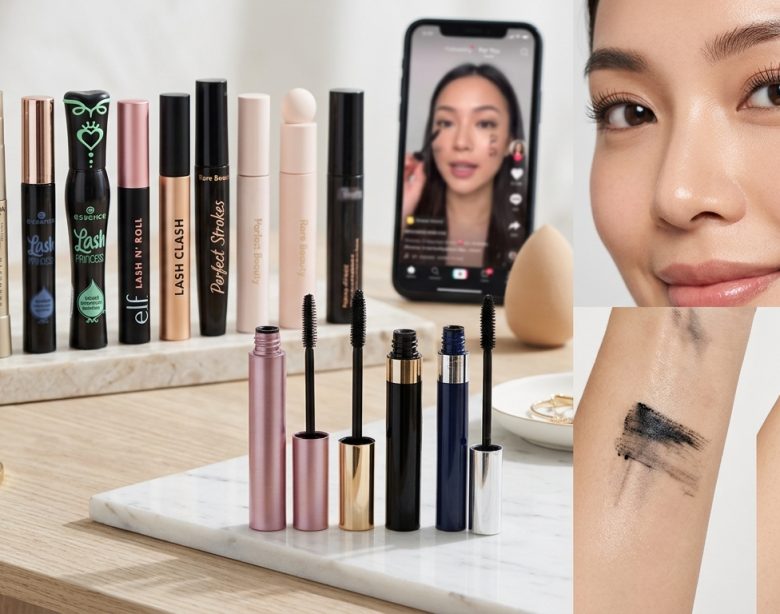
If you’ve ever caught your reflection at 2 PM and found raccoon eyes staring back at you, you’re not alone. Oily eyelids turn mascara into a messy nightmare, transferring product onto your upper lids and making you look perpetually exhausted. The good news? Not all mascaras are created equal, and some formulas genuinely resist oil and humidity without flaking, smudging, or migrating.
The best smudge proof mascara for oily lids uses tubing or waterproof technology to create a barrier against sebum. Look for formulas labeled “transfer-resistant” or “tubing” that form tiny polymer tubes around each lash. Prep your lids with powder, avoid oil-based eye products, and replace mascara every three months for optimal performance. Tubing mascaras remove cleanly with warm water, while waterproof formulas need dedicated oil-based removers.
Why regular mascara fails on oily lids
Your eyelids produce sebum constantly throughout the day. When you have naturally oily skin, that production goes into overdrive, creating a slick surface that breaks down traditional mascara formulas.
Most mascaras rely on waxes and pigments suspended in water or alcohol. These ingredients work beautifully on normal or dry lids. But oil dissolves wax. The moment your lash line gets oily, the mascara’s structure weakens and starts migrating.
The transfer happens in stages. First, mascara softens at the root where your lashes meet your oily lash line. Then gravity and blinking pull the softened formula upward onto your mobile lid. By afternoon, you’ve got dark smudges in your crease and under your brow bone.
Temperature makes it worse. Hot weather, workouts, or even walking from air conditioning into humid outdoor air causes your skin to produce more oil. The mascara doesn’t stand a chance.
Understanding waterproof vs tubing formulas
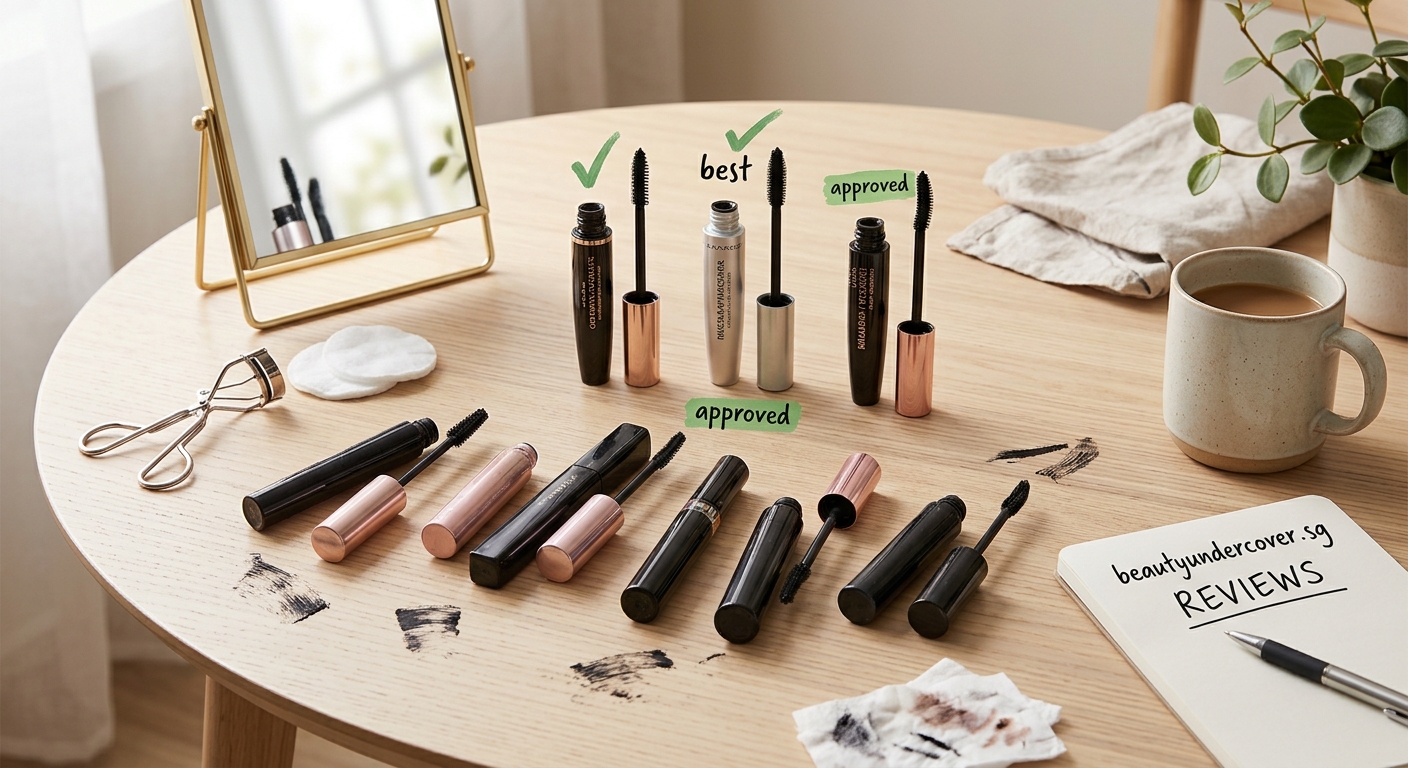
Two types of mascara resist oil better than traditional formulas, but they work completely differently.
Waterproof mascaras use silicone-based polymers and film-forming ingredients that repel water and resist oil breakdown. They create a flexible coating that won’t budge, even when your lids get slick. The downside? They’re harder to remove and can dry out your lashes over time.
Tubing mascaras wrap each individual lash in tiny polymer tubes. These tubes don’t smudge, flake, or transfer because they’re physically separate from your skin. When you’re ready to remove them, warm water loosens the tubes and they slide off intact. No raccoon eyes, no residue.
For oily lids specifically, tubing formulas often perform better for daily wear. They resist oil without requiring harsh removers. Save waterproof formulas for swimming, weddings, or situations where you absolutely cannot have any smudging.
The testing process for smudge resistance
Finding the best smudge proof mascara for oily lids requires real-world testing beyond what brands claim on packaging.
Here’s how to properly test any mascara for oil resistance:
- Apply mascara to clean, bare lashes without primer or powder
- Wait 10 minutes for the formula to fully dry and set
- Touch your upper lid gently with a fingertip to check for transfer
- Wear the mascara for a minimum of 8 hours through normal activities
- Check for smudging at the 4-hour, 6-hour, and 8-hour marks
- Note whether smudging appears in your crease, on your lid, or under your eyes
The best formulas show zero transfer at the 4-hour check and minimal to no smudging after 8 hours. Anything that starts breaking down before hour 6 isn’t worth your money.
Similar to how why your eyeshadow creases and how to make it last all day addresses lid concerns, mascara needs proper prep to perform optimally.
Top ingredients that resist oil transfer

Not all mascara ingredients are equal when fighting sebum. The best smudge proof formulas for oily lids contain specific components that create oil-resistant barriers.
Film-forming polymers like acrylates copolymer and VP/VA copolymer create a flexible, water-resistant coating. These ingredients literally form a film over your lashes that oil cannot penetrate easily.
Silicones such as dimethicone and trimethylsiloxysilicate repel both water and oil. They give mascara that slippery, smooth texture and help it resist breakdown from sebum.
Waxes matter too, but not all waxes perform equally. Carnauba wax and candelilla wax hold up better against oil than beeswax or paraffin. Check the ingredient list for these specific types.
Avoid mascaras heavy in natural oils like argan oil, coconut oil, or jojoba oil. While these ingredients condition lashes, they make the formula more susceptible to oil-based breakdown.
“The key to smudge-proof mascara isn’t just about the formula itself. It’s about creating a complete barrier system from lash root to tip that oil cannot penetrate. Look for polymers high on the ingredient list, not buried at the end.” – Cosmetic chemist perspective
Application techniques that prevent smudging
Even the best formula fails without proper application. These techniques maximize smudge resistance.
Start with completely oil-free lids. Use a gentle cleanser or micellar water on a cotton pad to remove any skincare residue from your eye area before makeup. Oil-based eye creams are your enemy here.
Set your lids with powder. Dust a thin layer of translucent powder over your eyelids, including the area right above your lash line. This absorbs excess oil before it reaches your mascara.
Let each coat dry completely. Rushing through multiple coats while the formula is still wet creates a thick, heavy layer that’s more prone to smudging. Wait 30 seconds between coats.
Focus on roots last. Apply mascara to the mid-lengths and tips of your lashes first. Then carefully wiggle the wand at the roots. This prevents loading too much product where oil production is highest.
Don’t pump the wand. Pumping air into the tube dries out the formula and introduces bacteria. A dried-out mascara is more likely to flake and smudge.
Common mistakes that cause transfer
You might be sabotaging your mascara without realizing it. These habits guarantee smudging on oily lids.
| Mistake | Why It Causes Smudging | Better Alternative |
|---|---|---|
| Applying mascara before eyeshadow | Powder falls onto wet mascara and breaks down the formula | Always apply mascara last |
| Using oil-based eye cream in the morning | Creates a slippery base that dissolves mascara | Switch to gel-based eye products for daytime |
| Touching your eyes frequently | Transfers natural oils from fingers to lashes | Keep hands away from your face |
| Skipping lid primer | Leaves lids unprotected from oil breakthrough | Use mattifying primer on lids and lash line |
| Applying too many coats | Creates heavy buildup that gravity pulls down | Stick to 2 coats maximum |
The eye cream mistake is particularly sneaky. Even if you apply mascara an hour after your morning skincare routine, oil-based eye creams continue releasing moisture and oils throughout the day. That migration eventually reaches your lashes.
Prep steps before applying mascara
Preparation determines whether your mascara survives the day. These steps create an oil-resistant foundation.
Blot your lids with blotting papers or a clean tissue right before mascara application. This removes any oil that accumulated during your skincare routine.
Use an eyelash curler on clean, dry lashes before mascara. Curling after application can break the smudge-proof seal and cause flaking.
Apply a lash primer if your mascara doesn’t include one. Primers create a base layer that helps the main formula adhere better and resist oil. Look for primers with the same technology as your mascara (waterproof primer with waterproof mascara, tubing primer with tubing mascara).
Set your under-eye area with powder if you’re prone to lower lash smudging. The same oil that affects your upper lids can cause transfer below your eyes.
Understanding waterproof vs long-wear makeup which formula do you actually need helps you choose the right prep products for your specific needs.
How to remove stubborn formulas safely
Smudge-proof mascaras require specific removal techniques. Tugging or rubbing damages lashes and the delicate eye area.
For tubing mascaras: Splash warm (not hot) water onto closed eyes and gently press with your fingertips. The tubes will start sliding off. Catch them with a washcloth or let them rinse away. No rubbing needed.
For waterproof formulas: You need an oil-based remover. Soak a cotton pad with remover, press it gently against closed eyes for 10 seconds, then wipe downward. Never scrub side to side.
Double cleanse if you wear waterproof mascara regularly. First remove with an oil-based remover, then cleanse your whole face with your regular cleanser. This prevents oil-based remover residue from causing breakouts.
Avoid micellar water alone for waterproof formulas. While micellar water works for regular mascara, it struggles with heavy-duty waterproof polymers. You’ll end up rubbing and irritating your eyes.
Maintaining lash health with strong formulas
Smudge-proof mascaras work harder, which can stress your lashes. Balance performance with lash care.
Give your lashes a break. Don’t wear waterproof mascara every single day. Rotate between waterproof, tubing, and regular formulas to prevent dryness and breakage.
Condition overnight with a lash serum or plain castor oil. Apply with a clean spoolie brush before bed. This replenishes moisture that strong formulas strip away.
Be gentle during removal. Most lash damage happens during makeup removal, not application. Take your time and let the remover do the work.
Replace mascara every 3 months. Old mascara dries out, becomes clumpy, and is more likely to flake or smudge. It also harbors bacteria that can cause eye infections.
If your lashes feel brittle or you notice more fallout than usual, take a week off from mascara entirely. Your lashes will recover faster than you think.
Troubleshooting persistent smudging issues
If you’re still getting smudges with supposedly smudge-proof formulas, one of these issues is usually the culprit.
Your skincare is too rich. Heavy moisturizers, facial oils, or thick eye creams migrate throughout the day. Switch to lighter, gel-based products for your morning routine. Save the rich stuff for nighttime.
You have naturally very oily skin. Some people produce so much sebum that even the best formulas struggle. In this case, use blotting papers every few hours to absorb excess oil before it reaches your mascara.
The mascara is expired or dried out. Even if you bought it recently, manufacturing dates vary. A dried-out formula won’t form a proper seal and will flake or smudge.
You’re layering incompatible products. Silicone-based mascara over water-based primer (or vice versa) can cause separation and smudging. Match your primer technology to your mascara.
Your application is too heavy. More product doesn’t mean better wear. Thick, goopy layers are heavy and prone to drooping. Thin, even coats perform better.
The approach mirrors strategies from how to create a flawless no-makeup makeup look in 5 easy steps where less product often delivers better, longer-lasting results.
Budget-friendly options that actually work
You don’t need to spend $30 on mascara to get smudge-proof performance. Several drugstore formulas rival high-end options.
Look for these features in affordable mascaras:
- Tubing technology at any price point performs similarly because the polymer chemistry is straightforward
- Waterproof drugstore mascaras often use the same silicone ingredients as luxury versions
- Asian beauty brands frequently offer superior tubing formulas at lower prices than Western brands
Test new mascaras during low-stakes days. Don’t debut a new formula on your wedding day or an important presentation. Give yourself a week of normal wear to assess true performance.
Buy travel sizes when available. They’re cheaper, let you test the formula, and you’ll use them up before the 3-month replacement deadline.
What to look for on product labels
Marketing language can be misleading. Here’s what actually matters when shopping for the best smudge proof mascara for oily lids.
“Transfer-resistant” is more honest than “smudge-proof.” No mascara is 100% smudge-proof, but transfer-resistant formulas are designed to minimize migration.
“Tubing” or “tube technology”** should appear prominently. This is a specific formula type, not just marketing speak.
“Ophthalmologist-tested” matters if you have sensitive eyes. Smudge-proof formulas can be more irritating, so this testing provides some safety assurance.
Avoid vague claims like “long-lasting” or “all-day wear” without specifics. These terms are unregulated and don’t guarantee oil resistance.
Check the ingredient list for the polymers and silicones mentioned earlier. If they’re near the end of the list, they’re present in tiny amounts and won’t help much.
Setting sprays and finishing touches
A good setting spray adds an extra layer of smudge protection, especially in humid weather.
Mist your face after complete makeup application, including mascara. Hold the bottle 8-10 inches away and spray in an X pattern, then a T pattern for even coverage.
Let it dry completely before touching your face or putting on glasses. This takes about 60 seconds.
Reapply throughout the day if needed. A midday refresh of setting spray can revive your mascara’s smudge resistance without adding more product.
Choose alcohol-based setting sprays for oily skin. Glycerin-heavy sprays can actually make oil worse by attracting moisture to your skin’s surface.
Consider the same principles used in 10 makeup mistakes that age you and what to do instead where proper finishing steps make or break your entire look.
Seasonal adjustments for different climates
Your perfect winter mascara might fail spectacularly in summer humidity. Adjust your formula with the weather.
Hot, humid months demand waterproof formulas. The combination of heat, humidity, and increased oil production is too much for most tubing mascaras to handle.
Cold, dry weather is ideal for tubing formulas. Less oil production means better wear, and tubing mascaras won’t dry out your lashes like waterproof versions do in harsh winter air.
Spring and fall let you use either formula type. These moderate seasons are perfect for testing new mascaras because conditions are stable.
Travel requires special consideration. Airplane cabins are extremely dry, which can make waterproof formulas uncomfortable. But if you’re headed somewhere humid, you’ll want that waterproof protection. Pack both types.
When to see a professional
Sometimes persistent mascara smudging signals a bigger issue that products alone can’t fix.
Excessive oil production might indicate a hormonal imbalance or skin condition. If your lids are constantly shiny and slick despite mattifying products, consult a dermatologist.
Watery eyes cause smudging that looks identical to oil-based smudging. If your eyes water frequently, you might need to address allergies or eye irritation rather than switching mascaras.
Eyelid dermatitis can increase oil production and make mascara application uncomfortable. Red, itchy, or flaky eyelids need medical attention, not better makeup.
Blepharitis (eyelid inflammation) causes oil gland dysfunction and makes mascara wear unpredictable. This requires treatment from an eye doctor.
Don’t ignore persistent eye area issues. Proper medical treatment often solves mascara problems that products never could.
Making smudge-proof mascara work for you
Finding the best smudge proof mascara for oily lids isn’t about one perfect product. It’s about understanding your specific needs, choosing the right formula type, and applying it with proper technique.
Start with your skincare. Switch to oil-free, gel-based products around your eyes. Add a mattifying primer to your routine. These changes alone can transform how any mascara performs on your lids.
Test formulas systematically. Try one tubing mascara and one waterproof option. Wear each for a full week before deciding. Track how they perform at different times of day and in different weather.
Remember that even the best formula needs proper removal and lash care. Healthy lashes hold mascara better and resist damage from strong formulas. Make conditioning part of your nightly routine.
Your perfect mascara exists. It might take a few tries to find it, but when you do, you’ll never again worry about checking your reflection and finding smudged, raccoon eyes staring back.