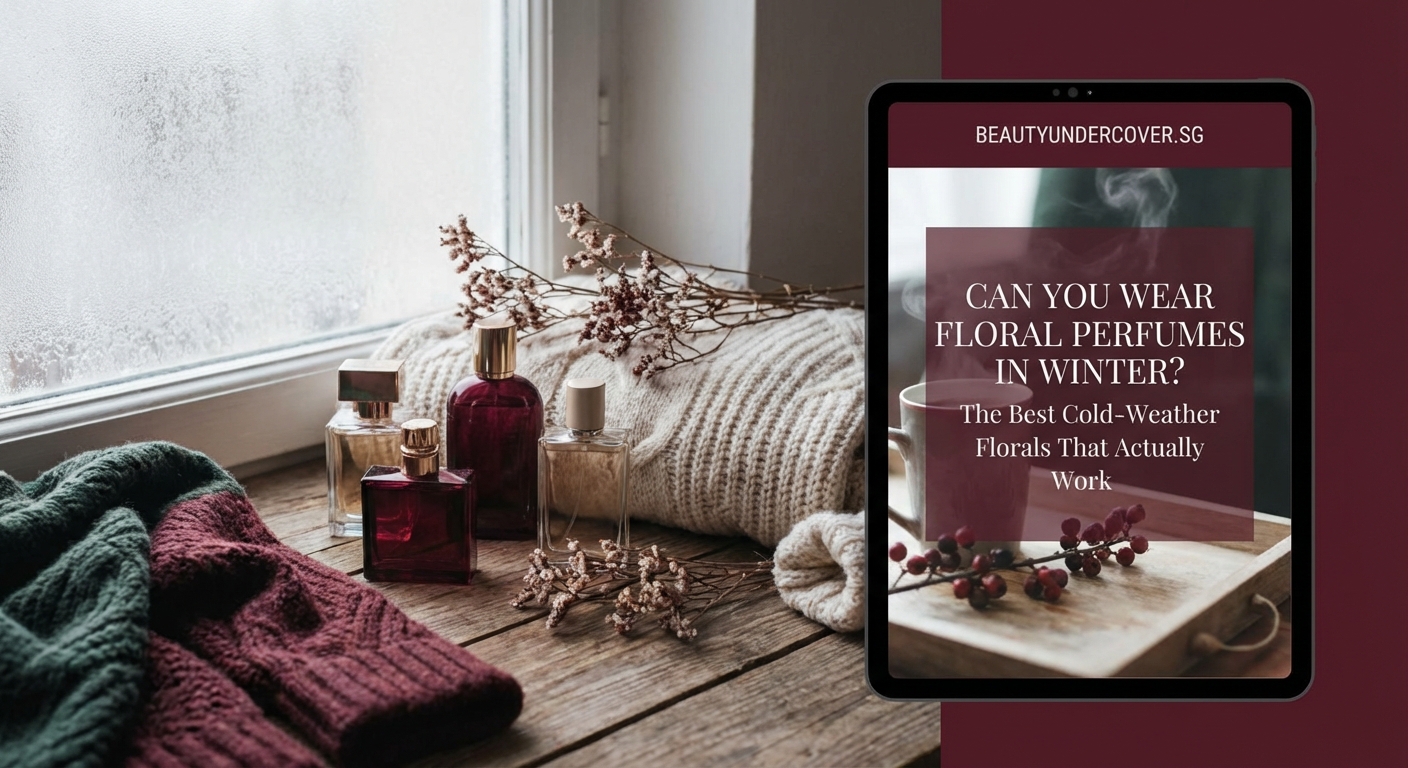
Winter doesn’t mean putting away your favorite floral bottles. The idea that florals only belong in spring and summer is outdated. Cold air actually changes how fragrance molecules behave, and certain floral notes perform beautifully when temperatures drop. The secret lies in choosing florals with depth, richness, and supporting notes that anchor them to your skin.
Floral perfumes for winter work best when they feature richer blooms like tuberose, iris, or orange blossom paired with warming base notes. Cold weather slows fragrance evaporation, making heavier florals more wearable. Look for compositions that blend flowers with woods, resins, or spices. Application technique matters just as much as scent selection in winter months.
Why Florals Behave Differently in Cold Weather
Temperature directly impacts how perfume develops on your skin. In summer, heat accelerates evaporation. Light florals like peony or freesia can become overwhelming in humidity. Winter flips this dynamic completely.
Cold air slows down the release of fragrance molecules. This means scents sit closer to your skin and evolve more gradually. What might feel too heavy in July becomes perfectly balanced in January.
Your skin also changes with the seasons. Winter air strips moisture, creating a less hospitable base for fragrance. Oils in perfume need something to cling to. Dry skin means faster fade times unless you prep properly.
Layering becomes essential. Many fragrance enthusiasts apply unscented lotion or body oil before spraying. This creates a hydrated canvas that holds scent longer. The technique works especially well with how to make your perfume last all day approaches.
The Best Floral Notes for Cold Months
Not all flowers translate equally well to winter. Some blooms naturally carry more weight and complexity. These are the notes worth seeking out when temperatures drop.
Tuberose sits at the top of the list. This flower has an almost narcotic richness. It’s creamy, slightly indolic, and incredibly long-lasting. Tuberose doesn’t fade politely. It announces itself and stays present for hours.
Iris brings a powdery, almost rooty quality. It feels elegant and restrained. Iris-forward fragrances often include butter-like textures that feel comforting in winter. The note pairs beautifully with violet and mimosa.
Orange blossom offers more versatility than you might expect. While it can read fresh in isolation, orange blossom often appears alongside honey, amber, or vanilla in winter compositions. This combination creates warmth without sacrificing the floral character.
Jasmine sambac differs from lighter jasmine varieties. It’s deeper, richer, and slightly animalic. This version of jasmine holds up against wool sweaters and heavy coats. It doesn’t disappear into fabric the way delicate florals might.
Ylang-ylang contributes a tropical richness that works surprisingly well in cold weather. It has a banana-like sweetness and a creamy texture. When blended with woods or resins, ylang-ylang becomes grounding rather than summery.
Supporting Notes That Make Florals Winter-Ready
The flowers themselves tell only half the story. What surrounds them determines whether a floral perfume feels seasonally appropriate.
Base notes provide the foundation. Look for compositions featuring:
- Sandalwood or cedarwood for creamy warmth
- Vanilla or tonka bean for sweetness without being cloying
- Amber or labdanum for resinous depth
- Patchouli for earthiness
- Musk for soft, skin-like closeness
Middle notes bridge the gap between florals and bases. Spices like cardamom, cinnamon, or pink pepper add dimension. Honey notes create viscosity. Incense brings smokiness that feels appropriate for shorter days.
Even top notes matter. Citrus can still appear, but look for bergamot or bitter orange rather than sharp lemon. These open a fragrance without making it feel summery.
“The most successful winter florals aren’t trying to pretend it’s spring. They acknowledge the season while celebrating flowers in a different context. Think of them as blooms preserved in amber rather than freshly picked from a garden.” – Master Perfumer Interview, 2024
How to Choose Your Winter Floral
Shopping for cold-weather florals requires a different approach than summer sampling. Here’s a step-by-step process that works.
-
Test on skin, not paper. Blotters can’t show you how a fragrance warms up or how long it lasts. Winter perfumes need at least two hours to fully develop.
-
Wear your test in actual cold conditions. Step outside. Notice how the scent behaves when you come back into heated spaces. Temperature shifts reveal a lot about performance.
-
Check the concentration. Eau de parfum or extrait formulations typically work better in winter than eau de toilette. Higher oil content means better longevity on dry skin.
-
Read the note pyramid carefully. If the base is thin or non-existent, the fragrance might not have enough staying power. Look for at least three substantial base notes.
-
Consider your wardrobe. Heavy fabrics absorb fragrance differently than summer cotton. Test how your chosen scent interacts with wool, cashmere, or fleece.
Common Mistakes When Wearing Florals in Winter
Even experienced fragrance lovers make these errors. Avoiding them improves your winter scent experience significantly.
| Mistake | Why It Fails | Better Approach |
|---|---|---|
| Applying the same amount as summer | Cold air needs more fragrance to project | Add one extra spray to pulse points |
| Skipping moisturizer | Dry skin can’t hold scent molecules | Hydrate skin before applying perfume |
| Choosing soliflores | Single-note florals lack complexity for winter | Pick blends with supporting notes |
| Storing bottles near heaters | Heat degrades fragrance quality | Keep perfumes in cool, stable locations |
| Spraying only on wrists | Limited surface area in winter layers | Target chest, behind knees, hair |
The soliflore issue deserves special attention. A perfume featuring only rose or only lily rarely has enough depth for cold weather. These compositions shine in warmth but feel flat when temperatures drop. Blended florals offer more interest and better performance.
Winter Floral Families Worth Exploring
Understanding fragrance families helps narrow your search. These categories contain the most winter-appropriate floral options.
Floral orientals combine flowers with amber, vanilla, and spices. They feel opulent and enveloping. This family includes some of the most beloved cold-weather fragrances. The floral aspect provides beauty while oriental notes provide warmth.
Floral woody compositions pair blooms with sandalwood, cedar, or vetiver. These feel polished and sophisticated. They work equally well for professional settings and evening wear.
Floral gourmands add edible notes like caramel, praline, or almond to flowers. This category can veer sweet, but well-executed examples feel comforting rather than cloying. They’re perfect for casual winter days.
Floral chypres feature florals over a mossy, woody base with bergamot on top. Classic and structured, these fragrances feel timeless. They suit those who want elegance without excessive sweetness.
Application Techniques for Maximum Impact
Where and how you apply fragrance matters more in winter. Cold air requires strategic placement.
Pulse points still work, but add unconventional spots. The back of your neck stays warm under scarves. Behind your knees creates a subtle scent trail. Your chest area, where clothing traps warmth, holds fragrance beautifully.
Hair application extends longevity. Spray perfume into the air and walk through the mist, or lightly mist your brush before styling. Hair holds scent longer than skin and releases it gradually as you move.
Layering with matching body products amplifies staying power. If your chosen fragrance has a corresponding lotion or oil, use it. This creates multiple scent layers that reinforce each other throughout the day.
Avoid rubbing wrists together after application. This breaks down fragrance molecules and changes how the scent develops. Let the perfume dry naturally on your skin.
Transitioning Your Floral Collection Between Seasons
You don’t need to completely overhaul your fragrance wardrobe when winter arrives. Many bottles can transition with minor adjustments.
Start by reassessing what you already own. Spray your spring and summer florals in cold conditions. Some might surprise you. A fragrance that felt too heavy in August could be perfect in December.
Create combinations by layering. A light floral you love can gain winter weight when worn over a vanilla body lotion or woody oil. Experimentation reveals new possibilities from existing bottles.
Rotate based on occasion rather than season alone. Even in winter, you might want something lighter for the gym or running errands. Save your richest florals for evenings, special events, or days when you’ll be mostly indoors.
Consider half-sizes or discovery sets before committing to full bottles. Winter-specific purchases can feel like a significant investment. Sampling first prevents expensive mistakes.
Reading Between the Marketing Lines
Fragrance descriptions often use coded language. Learning to decode these terms helps you shop smarter.
“Fresh floral” typically means light and potentially too delicate for winter. “Opulent floral” or “rich floral” suggests more substance. “Floral bouquet” can go either way, check the notes list.
“Long-lasting” and “intense” indicate higher concentration and better cold-weather performance. “Airy” and “sheer” signal fragrances that might struggle in winter conditions.
Seasonal release timing tells you something too. Fragrances launched in fall often have winter wearability built in. Spring launches typically favor lighter compositions.
Don’t trust the bottle color or packaging design alone. Marketing teams choose aesthetics for shelf appeal, not always accuracy. A pale pink bottle might contain a powerful tuberose. A dark, heavy-looking bottle might house something unexpectedly delicate.
Building Your Winter Floral Wardrobe
How many winter florals do you actually need? The answer depends on your lifestyle and preferences, but a focused collection works better than random accumulation.
Three bottles cover most situations well:
- One sophisticated floral for professional settings and formal occasions
- One cozy floral gourmand for weekends and casual wear
- One statement floral oriental for evenings and special events
This trio provides variety without overwhelming your routine. You can wear each often enough to justify the purchase while having options for different moods.
Budget-conscious approaches work too. Many niche brands offer discovery sets featuring their winter-appropriate florals. These smaller sizes let you rotate more frequently and match your scent precisely to each day’s needs.
When Florals Still Don’t Work in Winter
Some people genuinely prefer non-floral fragrances in cold weather. That’s completely valid. Fragrance preference is personal, and forcing yourself to wear something you don’t enjoy defeats the purpose.
If you’ve tried richer florals with proper application and still feel unsatisfied, lean into what does work for you. Woods, ambers, and spices have their own beauty. You can always return to florals when the weather warms.
Alternatively, try florals in different formats. Solid perfumes, hair mists, and scented oils behave differently than alcohol-based sprays. The same floral note in a different vehicle might click for you.
Your Winter Floral Journey Starts Now
Cold weather opens up a whole category of floral fragrances that feel too intense in summer heat. Tuberose, iris, and orange blossom become wearable. Compositions you previously overlooked suddenly make sense.
Start with one bottle that intrigues you. Wear it consistently for a week in actual winter conditions. Notice how it develops, how long it lasts, and how it makes you feel. That real-world testing tells you more than any review or description.
Your favorite floral perfumes for winter might surprise you. They might not be the obvious choices or the most-hyped releases. Trust your own nose and your own experience. The right winter floral feels like wrapping yourself in something beautiful and warm, blooms that refuse to wait for spring.