You bought the serum everyone raves about. You slather on the expensive moisturizer. You even splurged on that retinol your favorite influencer swears by. But your skin still looks… the same. Maybe even worse. Here’s the thing: you might be using great products in the wrong order, which means they’re not absorbing properly or working against each other. The sequence matters just as much as the products themselves.
The order to apply skincare products follows a simple rule: thinnest to thickest consistency. Start with water-based cleansers, move through lightweight serums, then apply heavier creams and oils. Morning routines prioritize protection with sunscreen as the final step, while evening routines focus on repair with active ingredients like retinol. Proper sequencing ensures each product penetrates your skin and delivers its intended benefits without interference.
Why Application Order Actually Matters
Your skin can only absorb so much at once. When you pile on products randomly, heavier formulas create a barrier that blocks lighter ones from penetrating. It’s like trying to soak a sponge that’s already coated in oil. Nothing gets through.
Think about it this way: if you apply a thick face oil before your vitamin C serum, that serum is just sitting on top of the oil. It never reaches your skin cells. You wasted money on a product that’s doing absolutely nothing.
The molecular size of ingredients also plays a role. Smaller molecules need a clear path to sink into deeper skin layers. Larger molecules work on the surface. When you apply them in the wrong sequence, you’re blocking the smaller molecules from doing their job.
Temperature and texture matter too. Some products need time to absorb before you layer the next one. Rushing through your routine or applying everything at once creates pilling, where products ball up on your skin instead of absorbing.
The Golden Rules for Layering Products
Before we get into specific steps, here are the core principles that guide every effective skincare routine:
- Thin to thick: Always apply lighter, more liquid formulas before heavier creams
- Water before oil: Water-based products go on before oil-based ones
- Active ingredients need direct contact: Treatments like retinol or acids work best on bare skin
- Wait time matters: Give each layer 30 to 60 seconds to absorb before adding the next
- Less is more: Using too much product doesn’t make it work better
These rules apply whether you own three products or thirty. Master these basics, and you’ll get better results from everything you use.
Morning Routine Application Order
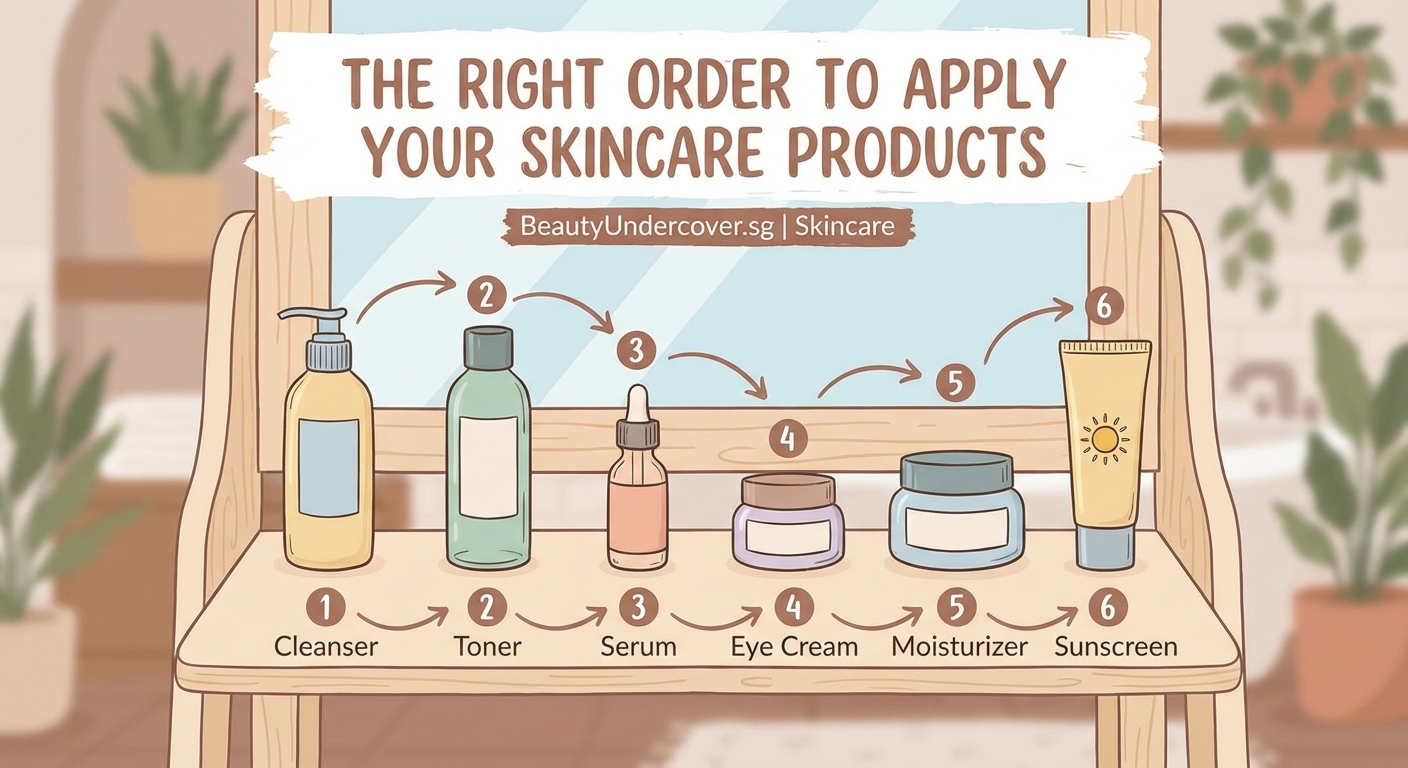
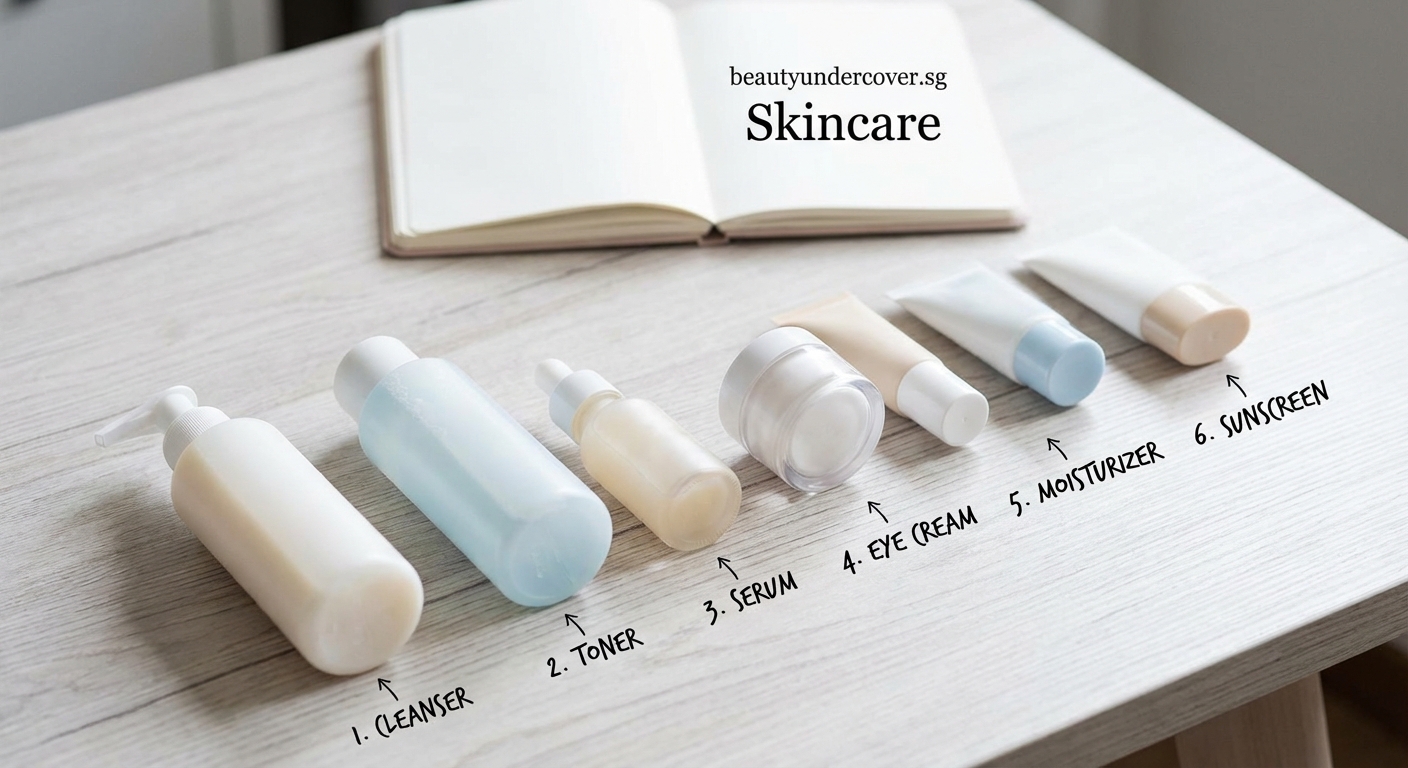
Your morning routine protects your skin from environmental damage throughout the day. Here’s the exact sequence:
-
Cleanser: Start with a gentle, water-based cleanser to remove overnight oils and dead skin cells. Splash with lukewarm water and pat dry.
-
Toner or essence: If you use one, apply it now while your skin is still slightly damp. Pat it in with your hands rather than rubbing.
-
Serums: This is where targeted treatments go. Apply the thinnest serum first. If you’re using vitamin C, it goes on now. What does niacinamide really do for your skin? It works beautifully in this step too.
-
Eye cream: Gently tap a rice-grain amount around your orbital bone. Never pull or tug the delicate skin.
-
Moisturizer: Lock in all those serums with a hydrating cream suited to your skin type. Give it a minute to absorb.
-
Sunscreen: This is non-negotiable and always goes last. SPF 30 minimum, applied generously. Wait a full two minutes before makeup.
If you’re short on time, the ultimate 10-minute morning skincare routine for busy people can help you streamline without sacrificing results.
Evening Routine Application Order
Nighttime is when your skin repairs itself. Your evening routine should support that natural process:
-
Makeup remover or cleansing oil: If you wear makeup or sunscreen, start here. Oil-based cleansers dissolve everything.
-
Water-based cleanser: Follow up with a regular cleanser to remove any remaining residue. This double cleanse ensures truly clean skin.
-
Exfoliant (2 to 3 times per week): Chemical exfoliants like AHAs or BHAs go on clean, dry skin. Never use them the same night as retinol.
-
Toner: Rebalance your skin’s pH after cleansing.
-
Treatments and serums: This is when you apply your most potent actives. Retinol, peptides, or targeted treatments go here.
-
Eye cream: Same technique as morning, but you might use a richer formula at night.
-
Moisturizer: Nighttime moisturizers tend to be heavier and more nourishing than daytime versions.
-
Face oil (optional): If your skin is very dry, seal everything in with a few drops of facial oil as your final step.
“The biggest mistake I see is people applying retinol over moisturizer thinking it will be gentler. It just makes it less effective. Apply it to clean skin, wait five minutes, then moisturize. Your skin will adjust, and you’ll actually see results.” – Board-certified dermatologist
Common Product Categories and Where They Fit
Not sure where a specific product type belongs? This table breaks down the most common categories:
| Product Type | When to Apply | Texture Clue |
|---|---|---|
| Hyaluronic acid serum | After toner, before moisturizer | Watery to gel-like |
| Vitamin C serum | Morning, after cleansing | Thin liquid |
| Retinol | Night, on bare skin | Cream or serum |
| Niacinamide | Morning or night, with serums | Lightweight serum |
| Face oil | Last step at night | Thick, oily |
| Sunscreen | Last step in morning | Varies, but always final |
| Sheet mask | After cleansing, before serums | N/A |
| Spot treatment | On clean skin, before moisturizer | Gel or cream |
Mistakes That Sabotage Your Routine
Even when you know the right order, these common errors can still mess things up:
Applying sunscreen under moisturizer: Sunscreen needs to form an even film on your skin surface. Putting moisturizer on top dilutes it and creates gaps in protection.
Mixing incompatible actives: Vitamin C and retinol together can irritate. Benzoyl peroxide deactivates retinol. Use them on alternate nights instead.
Skipping wait times: Rushing from one product to the next means they mix together on your skin surface instead of absorbing in layers.
Using too much product: A pea-sized amount of most products is plenty. More doesn’t mean better absorption or faster results.
Applying actives to damp skin: Unless the product specifically says to use it on wet skin, wait until your face is completely dry. Water can increase penetration to irritating levels.
Special Considerations for Different Skin Types
The order stays the same, but product choices change based on your skin:
Oily skin: Skip heavy creams. Use gel-based moisturizers. You still need moisturizer even if you’re oily.
Dry skin: Layer multiple hydrating products. Add a facial oil as your last evening step. Don’t skip toner.
Sensitive skin: Introduce new products one at a time. Wait two weeks between additions. Stick to fragrance-free formulas.
Combination skin: You can use different products on different zones. Lighter gel on your T-zone, richer cream on cheeks.
Acne-prone skin: Don’t over-strip with harsh cleansers. Moisturize even when using drying acne treatments. Your skin needs balance, not punishment.
If you’re just starting out and feeling overwhelmed, how to build a simple 3-step skincare routine for absolute beginners offers a gentler entry point.
How to Add New Products Without Chaos
You just bought three new serums. Don’t use them all at once. Here’s how to integrate new products safely:
Start with one new product at a time. Use it for two weeks before adding another. This way, if you have a reaction, you know exactly what caused it.
Introduce actives slowly. If you’ve never used retinol, start with once a week. Gradually increase to every other night, then nightly if your skin tolerates it.
Keep the rest of your routine simple when testing something new. Don’t change multiple products in the same week.
Pay attention to how your skin feels. Slight tingling with actives is normal. Burning, excessive redness, or peeling means you need to dial back.
Adjusting Your Routine Through the Seasons
Your skin’s needs change with weather and environment. The order stays the same, but formulas might shift.
Summer: Switch to lighter moisturizers. Add antioxidant serums for extra sun protection. Never skip sunscreen, even on cloudy days.
Winter: Layer hydrating products. Add a facial oil at night. Use a gentler cleanser that doesn’t strip natural oils.
Humid climates: Gel formulas work better than heavy creams. You might skip moisturizer in the morning if your sunscreen is hydrating enough.
Dry climates: Extra hydration is essential. Use a humidifier at night. Apply moisturizer to damp skin for better absorption.
When to Apply Makeup After Skincare
If you wear makeup, timing matters. Sunscreen needs at least two minutes to set before you apply foundation. Some people wait up to 15 minutes for their full routine to absorb.
Pilling happens when you rush. Those little balls of product forming on your skin mean things haven’t absorbed yet.
Primer goes after sunscreen, before foundation. Choose one that works with your sunscreen formula. Silicone-based products can sometimes clash with water-based sunscreens.
For a natural finish that works with your skincare, how to create a flawless no-makeup makeup look in 5 easy steps shows you how to let your skin shine through.
Budget-Friendly Layering Tips
You don’t need expensive products at every step. Here’s where to save and where to splurge:
Save on: Cleansers and toners. These wash off or prep your skin. Drugstore versions work just as well as luxury ones.
Splurge on: Serums and treatments. These contain the highest concentrations of active ingredients. Quality matters here.
Mid-range: Moisturizers and sunscreen. You need enough product to use daily, so find something effective that you can afford to repurchase.
How to build a luxury skincare routine without breaking the bank offers more strategies for getting premium results on a realistic budget.
Troubleshooting Common Layering Problems
Products pilling: You’re using too much or not waiting long enough between steps. Reduce amounts and add 30 seconds between each layer.
Skin feels greasy: You might be using too many occlusive products. Cut back on heavy creams or oils, especially in the morning.
Nothing seems to work: Check your order. Make sure actives touch clean skin. Verify you’re not mixing incompatible ingredients.
Breakouts after starting a new routine: Give it four weeks. Your skin might be purging, especially with retinol or acids. If it continues past six weeks, something isn’t working for you.
Stinging or burning: Stop using actives temporarily. Go back to basics: gentle cleanser, simple moisturizer, sunscreen. Rebuild slowly once your skin calms down.
Making Your Routine Work for Your Life
The perfect routine is one you’ll actually do. If ten steps feels overwhelming, start with three: cleanser, moisturizer, sunscreen. You can always add more later.
Morning routines can be faster than evening ones. Save your elaborate treatments for nighttime when you have more patience.
Travel-size products make it easier to maintain your routine on the go. Decant your favorites into small containers or buy travel versions.
Set reminders on your phone if you forget. Skincare works through consistency, not perfection. Five nights a week of a solid routine beats one perfect night.
Keep your products visible. If they’re buried in a drawer, you won’t use them. A small tray on your bathroom counter works perfectly.
Your Skin Will Tell You What’s Working
After two to four weeks of consistent application in the right order, you should notice changes. Smoother texture. More even tone. Better makeup application. Products absorbing faster.
Take photos in the same lighting every two weeks. Your mirror lies, but photos don’t. You’ll see progress you might miss day to day.
If something isn’t working after six weeks, change it. Not every product works for every person, no matter how many five-star reviews it has.
Trust your skin more than marketing claims. A $200 serum isn’t automatically better than a $20 one if the cheaper version gives you better results.
Getting the Most from What You Already Own
You probably have products sitting in your bathroom right now that could work better with proper layering. You don’t need to buy anything new to see improvement.
Read the instructions on your current products. Some specify exactly when to apply them. Follow those directions.
Use up what you have before buying more. Skincare hoarding helps no one. Products expire, and your skin can only absorb so much.
Repurpose products that don’t work on your face. That too-heavy moisturizer? Perfect for your hands or feet. That serum that pills under makeup? Use it at night instead.
The best routine is the one you’ll stick with, using the right order to apply skincare products every single day. Start tonight with what you have, follow the sequence, and give your skin the chance to actually absorb everything you’re giving it.