You have stared at the skincare aisle for twenty minutes. You have read twelve conflicting reviews. You have asked three friends what they use, and they all gave different answers. The problem is not the products. The problem is that you do not know your own skin type yet.
Learning how to determine your skin type is the single most important step before you spend another dollar on cleansers, serums, or moisturizers. Without that foundation, you are basically shopping blind. The good news? You do not need a dermatologist or an expensive gadget. You just need a clean face, a little patience, and this guide.
Your skin type is not a label a salesperson assigns you. It is a physical trait determined by how much oil your sebaceous glands produce. The wash-and-wait test gives you the most accurate read because it shows your skin in its natural state. Once you know if you are oily, dry, combination, normal, or sensitive, every product choice becomes clearer and your routine gets simpler.
Why Guessing Your Skin Type Backfires
Skincare brands want you to believe you have every problem at once. Oily T-zone? Here is a mattifying mask. Dry cheeks? Here is a rich cream. Confused yet? That is the point.
When you do not know how to determine your skin type, you end up layering incompatible formulas. You might buy a heavy moisturizer for dry skin when your face is actually combination. That leads to clogged pores, breakouts, and the frustrating feeling that nothing works. A 2025 survey by the American Academy of Dermatology found that nearly 40 percent of people who reported “problem skin” were actually using products mismatched to their natural oil production. The fix starts with one simple test.
The Bare-Faced Test: How to Determine Your Skin Type at Home
This method is called the wash-and-wait test. It is reliable, free, and takes about an hour.
- Wash your face with a gentle, sulfate-free cleanser. Pat dry with a clean towel. Do not apply any toner, serum, moisturizer, or treatment.
- Wait 30 minutes. Do not touch your face. Do not apply anything. Just let it sit.
- Check your skin in natural light. Look at your forehead, nose, chin, and cheeks. Pay attention to how each area feels and looks.
- Blot if needed. Press a clean tissue or blotting paper against your T-zone. Hold it for five seconds, then check for oil.
Here is what your results mean:
- Oily skin: Shine appears all over within 30 minutes. The blotting paper looks translucent with oil. Your pores appear visible, especially on the nose and forehead.
- Dry skin: Your face feels tight, flaky, or rough. You see no oil on the blotting paper. Your skin may look dull or feel uncomfortable when you smile.
- Combination skin: The T-zone (forehead, nose, chin) shows oil on the blotting paper. Your cheeks feel normal or slightly dry. This is the most common skin type.
- Normal skin: Balanced. No tightness, no shine. The blotting paper shows only a trace of oil. Your skin feels comfortable and looks even.
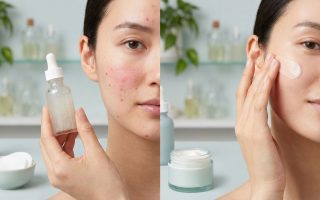
- Sensitive skin: Your skin looks red, feels irritated, or stings after washing. You may see patches of redness or feel a burning sensation without any product.
If you are still unsure, repeat the test on a different day. Hormones, weather, and diet can shift your oil production temporarily. The goal is to find your consistent baseline.
Common Mistakes That Ruin the Test
Even a good test can give bad results if you make these errors.
| Mistake | Why It Fails | What to Do Instead |
|---|---|---|
| Testing after a hot shower | Steam opens pores and temporarily changes oil flow | Wait at least 20 minutes after showering |
| Applying any product before the test | Moisturizer or toner masks your natural state | Start with a completely bare, clean face |
| Touching your face during the wait | Your fingers transfer oils and bacteria | Keep hands away for the full 30 minutes |
| Testing during a breakout | Acne treatments can dry or irritate skin | Wait until your skin is calm and clear |
| Relying on one test only | Skin changes with seasons and stress | Repeat the test three times over two weeks |
“I tell my patients to do the bare-faced test three times before they label themselves. Many people think they have oily skin because they get shiny by noon, but their cheeks are actually dry. That is combination skin, not oily.” Dr. Priya Sharma, board-certified dermatologist in New York.
What Your Skin Type Means for Your Routine
Once you know how to determine your skin type, you can choose products that work with your biology instead of against it.
Oily skin benefits from gel-based cleansers, lightweight water-based moisturizers, and salicylic acid for pore control. Avoid heavy creams and oil-based cleansers.
Dry skin needs creamy cleansers, hydrating serums with hyaluronic acid, and rich moisturizers with ceramides. Avoid foaming cleansers and alcohol-based toners.
Combination skin requires a balancing act. Use a gentle cleanser, a lightweight moisturizer everywhere, and spot-treat the T-zone with a mattifying product if needed. Many people with combination skin do well with a simple 3-step routine that adjusts by season.
Normal skin can handle a wide range of products but still needs consistency. Stick with a balanced routine and avoid over-exfoliating.
Sensitive skin calls for fragrance-free, minimalist formulas. Look for soothing ingredients like niacinamide, centella asiatica, and oat extract. Patch test everything before applying to your full face. If you struggle with irritation, check out our guide on what really happens when you layer too many skincare products.
Skin Type Can Shift Over Time
Your skin type is not permanently tattooed on your face. Many people find their skin changes with age, climate, medication, or hormonal shifts. A teenager with oily skin might develop dry skin in their thirties. Someone who moves from humid Florida to dry Colorado might suddenly need richer moisturizers.
Re-test your skin type every six months or whenever you notice a major change in how your skin feels after washing. This is especially important if you are starting a new medication, changing birth control, or entering a new season. For more on how seasons affect your skin, read our guide on how to transition your skincare routine from summer to fall without breaking out.
What About Dehydrated Skin?
Dehydration is not a skin type. It is a temporary condition. Your skin type is genetic and relates to oil production. Dehydration relates to water content. You can have oily skin that is also dehydrated. This is why some people feel tight and flaky but still produce excess oil by midday.
If you suspect dehydration, add a hydrating toner or serum with glycerin or hyaluronic acid to your routine. Do not confuse this with changing your skin type. For a deeper comparison, see hyaluronic acid vs. glycerin: which hydrator your skin actually needs.
A Final Note on Sensitive Skin
Sensitive skin is sometimes considered a skin type and sometimes a skin condition. If your skin reacts easily to products, weather, or touch, treat it as sensitive regardless of your oil level. That means choosing fragrance-free, hypoallergenic products and introducing new items one at a time. Our guide on 5 retinol alternatives that actually work for sensitive skin can help if you want anti-aging benefits without irritation.
Your Skin Type Is Your Shortcut to Better Choices
Knowing how to determine your skin type does not just save you money. It saves you frustration. It saves your skin from the cycle of trying something new every week and wondering why nothing clicks.
Take the wash-and-wait test today. Write down what you see. Trust the results. Then shop with confidence, knowing you finally have the one piece of information that makes every other decision easier. Your skin is not complicated. It just needed you to listen to it instead of the internet.