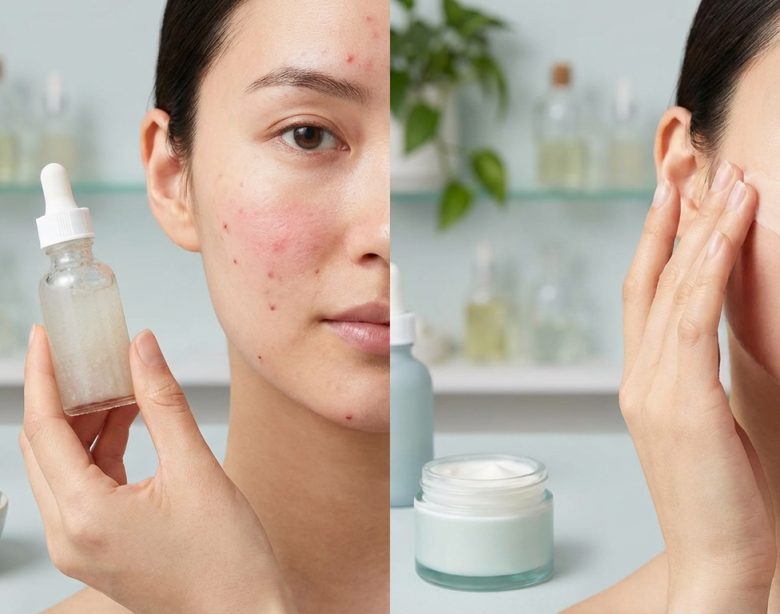
You started a new retinol serum last week. Your dermatologist promised glowing skin. Instead, your face is covered in tiny bumps and whiteheads that weren’t there before. You’re wondering if you made a terrible mistake or if this chaos is actually progress.
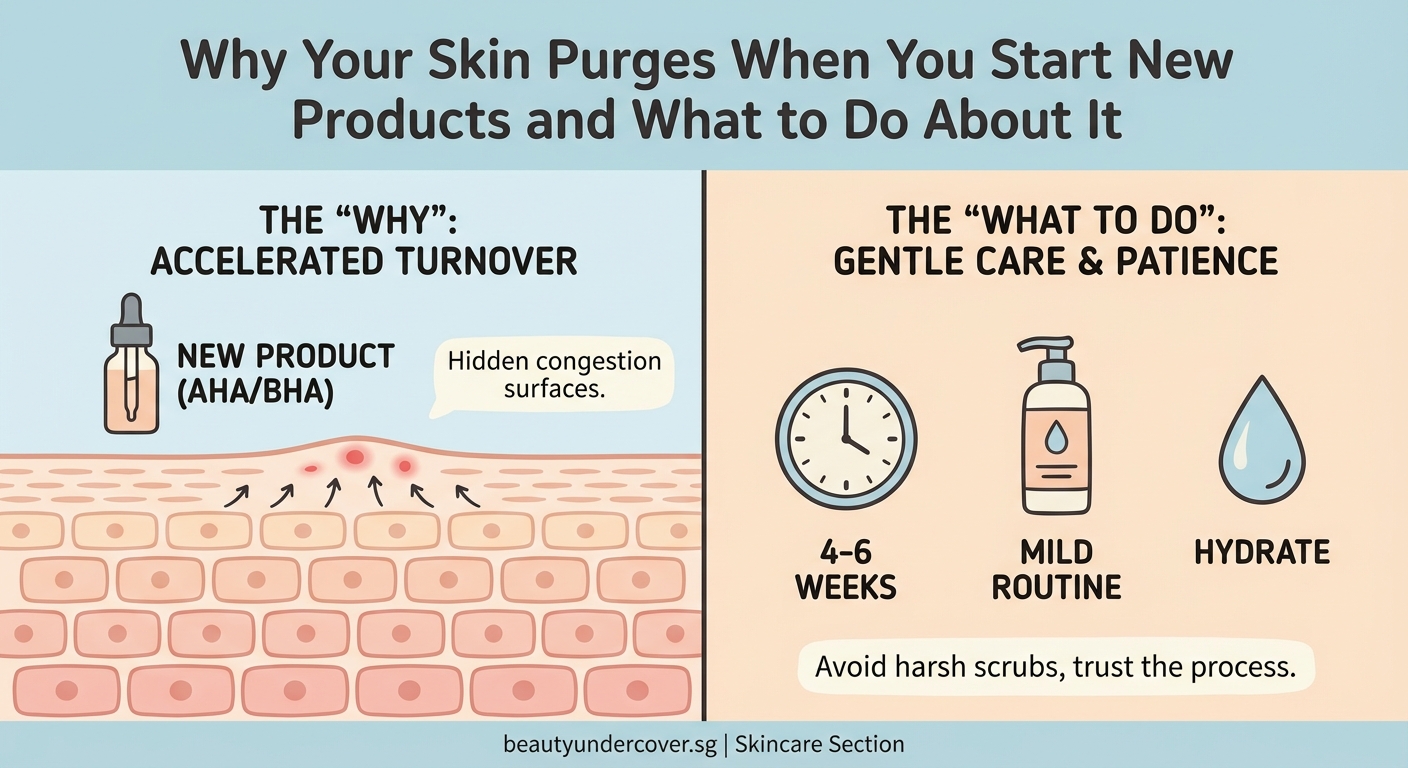
Skin purging is a temporary reaction that occurs when active ingredients like retinoids, AHAs, or BHAs accelerate cell turnover, bringing existing microcomedones to the surface faster. Unlike regular breakouts, purging appears in areas where you typically break out, clears within four to six weeks, and happens only when using products that increase skin cell renewal.
What skin purging actually means
Skin purging is your skin’s way of fast-forwarding through its natural renewal cycle.
Your skin constantly creates new cells in the deeper layers and sheds dead ones from the surface. This process normally takes about 28 days. When you introduce certain active ingredients, this timeline compresses dramatically.
Active ingredients like retinoids, glycolic acid, or salicylic acid tell your skin to work faster. They speed up cell turnover, which means all those clogged pores hiding beneath the surface suddenly rush to make their exit.
Think of it like cleaning out a messy closet. Everything gets worse before it gets better because you have to pull everything out to organize it properly.
The breakouts you see during purging were already forming under your skin. The active ingredient just accelerated their timeline from weeks or months down to days.
How to tell purging apart from a regular breakout
Not every breakout after starting a new product is purging. Some are just plain old irritation or allergic reactions.
Here’s how to tell the difference:
Location matters most. Purging happens where you normally break out. If you usually get pimples on your chin and forehead, that’s where purging will show up. If you suddenly have acne on your cheeks when you’ve never broken out there before, that’s not purging.
Timeline tells the truth. Purging starts within the first few weeks of using a new active ingredient. It peaks around week three or four, then gradually improves. If you’re still seeing new breakouts after eight weeks, something else is wrong.
Texture gives clues. Purging typically shows up as small whiteheads, pustules, or blackheads. These blemishes come to a head faster than normal breakouts. They also heal faster, usually within a few days.
Regular breakouts from irritation tend to be deeper, more inflamed, and take longer to heal. You might see redness, swelling, or painful cysts that stick around for weeks.
Product type provides context. Only certain ingredients cause purging. If your new moisturizer or cleanser without actives is causing breakouts, that’s not purging. That’s a reaction to an ingredient your skin doesn’t like.
| Sign | Purging | Irritation/Breakout |
|---|---|---|
| Location | Where you normally break out | New areas, especially cheeks |
| Duration | 4 to 6 weeks, then improves | Continues beyond 8 weeks |
| Appearance | Small whiteheads, blackheads | Deep cysts, widespread redness |
| Healing time | A few days | Weeks |
| Product type | Contains actives (retinoids, acids) | Any product, including inert ones |
Which ingredients trigger purging
Only products that increase cell turnover cause true purging.
Retinoids top the list. This includes prescription tretinoin, adapalene, and over-the-counter retinol. These vitamin A derivatives are the most common purging culprits because they dramatically speed up skin cell renewal.
Chemical exfoliants follow close behind. Alpha hydroxy acids like glycolic acid and lactic acid dissolve the bonds between dead skin cells. Beta hydroxy acids, mainly salicylic acid, work inside pores to clear out oil and debris.
Vitamin C can cause minor purging. High-concentration L-ascorbic acid formulas sometimes trigger a mild purge, though this is less common than with retinoids or acids.
Benzoyl peroxide occasionally causes purging. This acne-fighting ingredient works differently than retinoids, but it can still bring existing comedones to the surface faster.
Products that don’t cause purging include:
- Hyaluronic acid serums
- Niacinamide
- Ceramide moisturizers
- Gentle cleansers
- Sunscreen
- Most oils and balms
If you’re breaking out from these gentler ingredients, your skin is reacting negatively to a specific component. Stop using the product.
What to do when your skin starts purging
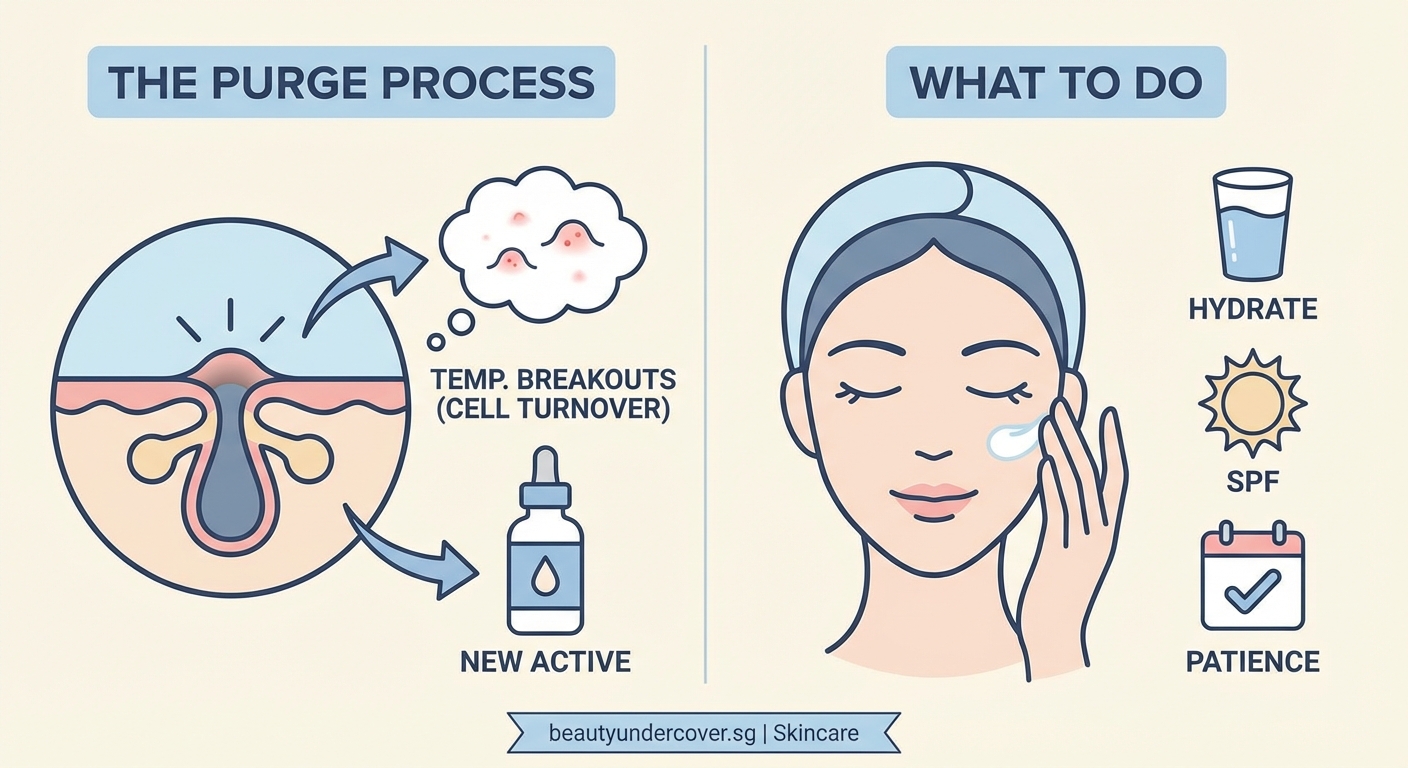
The hardest part about purging is resisting the urge to abandon ship.
Here’s how to manage the process:
-
Stick with your routine for at least six weeks. Mark the date you started the new product on your calendar. Give your skin a full cycle to adjust before making any decisions.
-
Reduce frequency if needed. If purging feels intense, cut back to every other night or even twice a week. You can slowly increase frequency as your skin adjusts.
-
Keep the rest of your routine gentle. Now is not the time to add other actives or try harsh scrubs. Use a mild cleanser, a simple moisturizer, and always wear sunscreen during the day.
-
Don’t pick at your skin. Those purging bumps will heal faster if you leave them alone. Picking creates scarring and prolongs the inflammation.
-
Take progress photos. Your perception of your skin changes daily, making it hard to see improvement. Weekly photos in the same lighting help you track actual progress.
-
Stay hydrated and support your skin barrier. Use a good moisturizer with ingredients like ceramides or centella asiatica. A healthy barrier helps your skin tolerate actives better.
“The purging phase is temporary, but the results from retinoids and acids are long-term. Most people who push through the initial adjustment period are glad they did. The key is distinguishing between productive purging and destructive irritation.” — Board-certified dermatologist
When to stop and seek help
Sometimes what you think is purging is actually your skin crying for help.
Stop using the product immediately if you notice:
- Burning or stinging that doesn’t fade
- Widespread redness across your entire face
- Dry, flaking skin that feels tight and uncomfortable
- Breakouts that keep getting worse after eight weeks
- Deep, painful cystic acne in new locations
- Swelling or hives
These signs indicate irritation or an allergic reaction, not purging.
Contact a dermatologist if you’re unsure. They can examine your skin and determine whether you should continue, adjust your routine, or try a different approach entirely.
Some people have sensitive skin that can’t tolerate certain actives at standard concentrations. A dermatologist can prescribe lower-strength formulas or suggest alternative ingredients that achieve similar results without the reaction.
How to prevent severe purging next time
You can minimize purging intensity with smart introduction strategies.
Start low and go slow. Begin with the lowest concentration available. Use it once or twice a week for the first two weeks. Gradually increase to every other night, then nightly if your skin tolerates it.
Buffer with moisturizer. Apply your moisturizer first, wait a few minutes, then apply your active ingredient on top. This technique, called buffering, reduces penetration slightly and makes the adjustment period gentler.
Choose the right formula. Time-release retinoids and encapsulated acids cause less irritation and purging than traditional formulas. They cost more but make the transition smoother.
Avoid mixing multiple actives at first. Introduce one new active ingredient at a time. Wait until your skin fully adjusts before adding another. Combining retinoids and acids too soon increases irritation without improving results.
Build your barrier first. If your skin is already compromised from over-exfoliation or harsh products, spend a few weeks repairing it before introducing actives. Use gentle, hydrating products until your skin feels healthy and resilient.
Common mistakes that make purging worse
Even people who understand purging often sabotage their progress with these errors:
Over-exfoliating to “speed things up.” Adding physical scrubs or additional chemical exfoliants doesn’t help. It just damages your skin barrier and prolongs the adjustment period.
Switching products too soon. Jumping to a different retinoid or acid before giving the first one enough time means starting the purging process all over again.
Skipping moisturizer because skin feels oily. Purging and the dryness from actives can trigger oil overproduction. Your skin needs hydration, not punishment.
Forgetting sunscreen. Actives that cause purging also make your skin more sun-sensitive. Skipping SPF leads to hyperpigmentation and undoes all your hard work.
Comparing your timeline to others. Your friend might have purged for two weeks while you’re on week five. Everyone’s skin responds differently based on their existing congestion and skin type.
Your skin on the other side
Purging feels discouraging when you’re in the middle of it.
You invested money in products that promised better skin. Instead, you’re dealing with more breakouts than you had before. You’re avoiding mirrors and canceling plans.
But here’s what happens after you push through: your skin texture smooths out. Your pores look smaller. Those stubborn closed comedones that never quite surfaced before are finally gone. New breakouts become rare.
The active ingredients that caused purging continue working to prevent future congestion, fade dark spots, and improve overall skin quality. Your skin looks clearer and more radiant than it has in years.
Most people who stick with their actives through the purging phase say the temporary discomfort was worth the long-term results. The key is knowing what to expect, how to support your skin through the transition, and when to recognize that something isn’t working.
Give your skin the time it needs to adjust. Take your progress photos. Be patient with the process. Your clearer skin is waiting on the other side of this temporary phase.