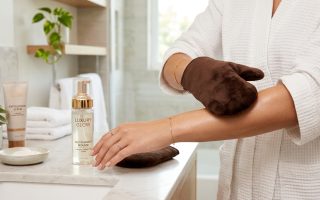
You’ve probably used the same moisturizer on your face and body at some point. Maybe you ran out of face cream and grabbed your body lotion instead. Or perhaps you wondered why you even need separate products in the first place. Turns out, your face and body aren’t just different in size. They’re fundamentally different in structure, function, and needs.
Face skin vs body skin differs significantly in thickness, oil production, pore density, and environmental exposure. Your facial skin is thinner, more sensitive, and produces more sebum than body skin. It also faces more sun damage, pollution, and daily wear. These biological differences mean each area needs targeted products with specific formulations, textures, and active ingredients to stay healthy and function properly.
Your Face and Body Have Completely Different Skin Structures
The skin on your face is about 0.12 mm thick. The skin on your body ranges from 0.6 mm to 3 mm thick depending on the area.
That’s a massive difference.
Facial skin contains more sebaceous glands per square inch than almost any other part of your body. Your forehead, nose, and chin can have up to 900 oil glands per square centimeter. Your arms and legs have around 50.
This explains why your face gets oily while your legs feel dry and tight.
Pore density matters too. Your face has significantly more pores, which means more opportunities for congestion, blackheads, and breakouts. Body skin has fewer pores and a stronger lipid barrier that helps it retain moisture better.
The collagen and elastin fibers in facial skin are also more delicate. They break down faster from sun exposure, stress, and aging. Body skin maintains its structural integrity longer, which is why fine lines show up on your face years before they appear on your arms.
Face Skin Faces More Environmental Damage Every Single Day
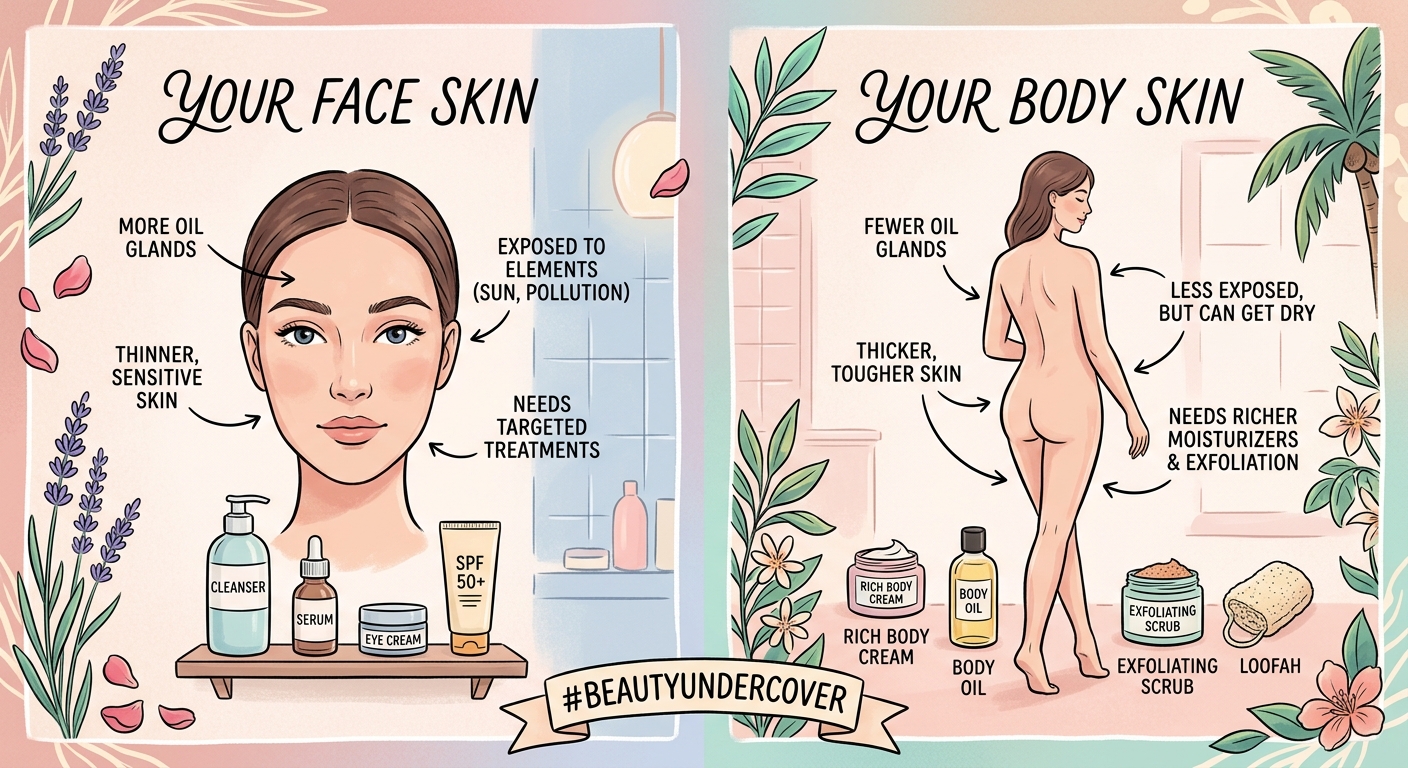
Your face is exposed to the elements constantly.
Sun damage, pollution, wind, temperature changes, and indoor heating all hit your facial skin directly. Unless you wear a balaclava daily, your face gets the brunt of environmental stress.
Body skin stays covered most of the time. Clothes act as a physical barrier against UV rays, pollution particles, and harsh weather. This protection means body skin ages more slowly and needs less intensive repair.
Facial skin also touches more surfaces. Your hands touch your face dozens of times per day, transferring bacteria, oils, and dirt. You apply makeup, sunscreen, and other products that can clog pores or cause reactions.
Body skin doesn’t deal with this constant contact and product layering.
“The skin on your face is exposed to about 10 times more environmental stressors than the skin on your body. This is why facial skin requires more frequent application of protective products like sunscreen and antioxidants.” – Board-certified dermatologist Dr. Rachel Nazarian
Oil Production Varies Dramatically Between Face and Body
Your T-zone produces more oil than your entire torso combined.
Sebaceous glands on your face are larger and more active. They respond strongly to hormones, stress, diet, and temperature changes. This is why your face can look shiny by midday while your body feels normal.
Body skin produces less sebum naturally. Areas like your arms, legs, and back have smaller, less active oil glands. This makes body skin more prone to dryness, flaking, and roughness.
The difference becomes obvious when you compare product needs. Facial cleansers need to remove excess oil without stripping the skin. Body washes can be more straightforward because there’s less oil to manage.
Using a rich body cream on your face can clog those densely packed pores. Using a lightweight facial moisturizer on your body won’t provide enough hydration for thicker, drier skin.
The pH Balance and Skin Barrier Function Differently
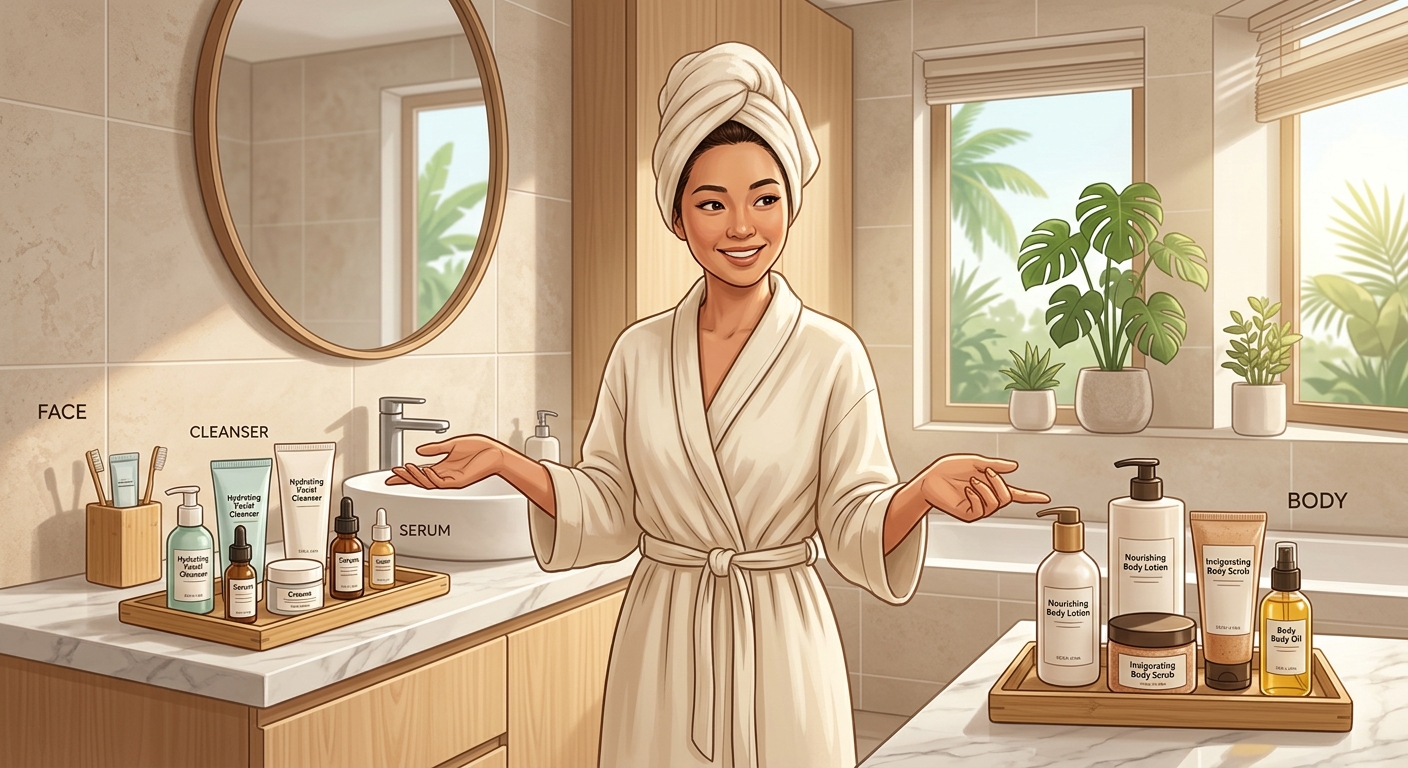
Healthy facial skin has a pH between 4.5 and 5.5. This slightly acidic environment protects against bacteria and maintains the skin barrier.
Body skin can tolerate a wider pH range. It’s more resilient to alkaline products like bar soaps that would disrupt the delicate facial barrier.
The stratum corneum (outermost layer) on your face is thinner and turns over faster. Dead skin cells shed every 28 to 40 days on your face. Body skin turnover can take 40 to 56 days.
This faster turnover means facial skin needs gentler exfoliation and more frequent product application. Body skin can handle stronger exfoliants like salt scrubs and rougher textures that would damage your face.
When you understand these functional differences, you can see why building a body care routine that actually works requires different products than your facial routine.
Common Mistakes When Treating Face and Body Skin the Same
Here are the most frequent errors people make:
| Mistake | Why It’s Problematic | Better Approach |
|---|---|---|
| Using body lotion on face | Too heavy, clogs pores, causes breakouts | Use a facial moisturizer formulated for your skin type |
| Using face wash on body | Too expensive, not enough coverage, inadequate cleansing for larger areas | Use a body wash with appropriate surfactants for body skin |
| Applying face sunscreen to body | Costly, runs out too fast, wrong texture for large areas | Use body sunscreen with appropriate coverage and water resistance |
| Using body acne products on face | Too harsh, can cause irritation and dryness | Use facial acne treatments with gentler concentrations |
| Skipping neck and chest care | These areas age like facial skin but get neglected | Extend facial products down to your chest |
How to Build Separate Routines for Face and Body
Start by identifying what each area actually needs.
For Your Face:
- Choose a gentle cleanser that matches your skin type (gel for oily, cream for dry, micellar for sensitive)
- Apply targeted treatments like serums for specific concerns (acne, aging, hyperpigmentation)
- Use a lightweight moisturizer that won’t clog pores
- Apply facial sunscreen with at least SPF 30 every morning
- Add eye cream for the delicate skin around your eyes
For Your Body:
- Use a body wash that cleanses without stripping (soap-free formulas work well)
- Exfoliate 2-3 times per week with a body scrub or exfoliating gloves
- Apply a rich body moisturizer or oil while skin is still damp
- Use body sunscreen that won’t leave a white cast for exposed areas
- Target specific concerns like keratosis pilaris on your arms or bacne with specialized products
If you’re just starting out, a simple 3-step routine for your face covers the basics without overwhelming you.
Active Ingredients Work Differently on Face and Body
Retinol is a perfect example.
A 0.5% retinol serum might be perfect for your face. That same concentration on your body could cause irritation because body skin is thicker and needs higher percentages to see results.
Conversely, a 10% glycolic acid body lotion might smooth rough patches beautifully. Using that same strength on your face could cause redness, peeling, and barrier damage.
Here’s how to think about ingredient strengths:
- Vitamin C: Face needs 10-20% in a stabilized serum; body can handle lower percentages in lotion form
- AHAs: Face responds to 5-10%; body benefits from 10-15% for keratosis pilaris and texture
- Retinoids: Face starts at 0.025-0.1%; body can go higher for specific concerns
- Niacinamide: Both face and body tolerate 2-10%, but facial formulas are lighter in texture
When you start new products, your skin might purge as it adjusts to active ingredients. This is normal and temporary.
Texture and Formulation Differences Matter
Face products are designed to absorb fast and sit well under makeup.
They use lighter emollients like squalane, hyaluronic acid, and lightweight oils. These ingredients provide hydration without heaviness.
Body products use richer ingredients like shea butter, cocoa butter, and heavier oils. These create an occlusive barrier that locks in moisture for hours.
The texture difference isn’t just about feel. It’s about function.
A facial serum spreads easily over a small surface area and delivers concentrated actives. A body lotion needs to cover large areas efficiently, so it’s formulated to glide smoothly and absorb without leaving residue.
Facial products also avoid certain ingredients that might migrate into eyes or cause sensitivity on delicate skin. Body products don’t have these restrictions.
When choosing between body oils and body butters, consider your skin type and the season.
Special Zones That Need Hybrid Care
Some areas fall between face and body care.
Your neck and chest (décolletage) age similarly to your face. The skin is thin, exposed to sun, and shows wrinkles easily. Treat these areas with your facial products, not body products.
Your hands also need facial-quality care. They’re constantly exposed, washed frequently, and show age spots and wrinkles. A hand cream with SPF and anti-aging ingredients works better than regular body lotion.
Your feet need the opposite approach. The skin on your heels is thick and can handle intensive treatments. Urea creams at 20-40% concentration work wonders for cracked heels but would be far too strong for your face.
Behind your ears and along your hairline deserve attention too. These spots often get skipped but can develop dryness, irritation, or even breakouts.
Budget-Friendly Ways to Care for Both Face and Body
You don’t need to double your skincare budget.
Here’s how to prioritize spending:
- Invest in quality facial products (cleanser, moisturizer, sunscreen)
- Use affordable body products from drugstore brands
- Make exceptions for problem areas (body acne treatments, keratosis pilaris lotions)
- Share some products strategically (facial sunscreen for hands, face serum for neck)
Some ingredients work well in simple, affordable body formulations. Cetaphil, CeraVe, and Eucerin make excellent body products at reasonable prices.
For your face, you might want to spend more on targeted treatments. But you can still find hydrating serums under $30 that work beautifully.
Shopping guides for the best times to buy can help you stock up during sales.
Signs You’re Using the Wrong Products for Each Area
Your skin will tell you when something isn’t working.
On your face:
* Breakouts that won’t clear
* Excessive oiliness or dryness
* Tight, uncomfortable feeling after cleansing
* Products that pill or don’t absorb
* Irritation or redness
On your body:
* Persistent dryness despite moisturizing
* Rough, bumpy texture
* Itchiness or flaking
* Products that feel greasy hours later
* Breakouts on chest, back, or shoulders
If you notice these issues, reassess your products. You might be using formulations that don’t match the biological needs of that specific skin.
When Face and Body Can Share Products
Some products work well for both areas.
Sunscreen is the most important shared product. If you run out of body sunscreen, facial sunscreen works fine on exposed body parts. It’s just more expensive.
Gentle cleansers can double for both. A mild, fragrance-free face wash works for body skin if you’re traveling or simplifying your routine.
Basic moisturizers without active ingredients sometimes work across both areas. A simple hyaluronic acid serum or plain glycerin can hydrate face and body.
But these are exceptions, not rules.
For optimal results, each area deserves products designed for its specific needs.
Your Skin Deserves Customized Care
Face skin vs body skin isn’t just about marketing or selling you more products.
The biological differences are real and significant. Your face is thinner, more sensitive, more exposed, and produces more oil. Your body is thicker, more resilient, and needs richer hydration.
When you match your products to these differences, your skin functions better. Your face stays clearer and more balanced. Your body feels softer and more comfortable.
Start simple. Get the basics right for both areas. Then add targeted treatments as you identify specific needs.
Your skin will thank you for treating each area with the respect and care it deserves.