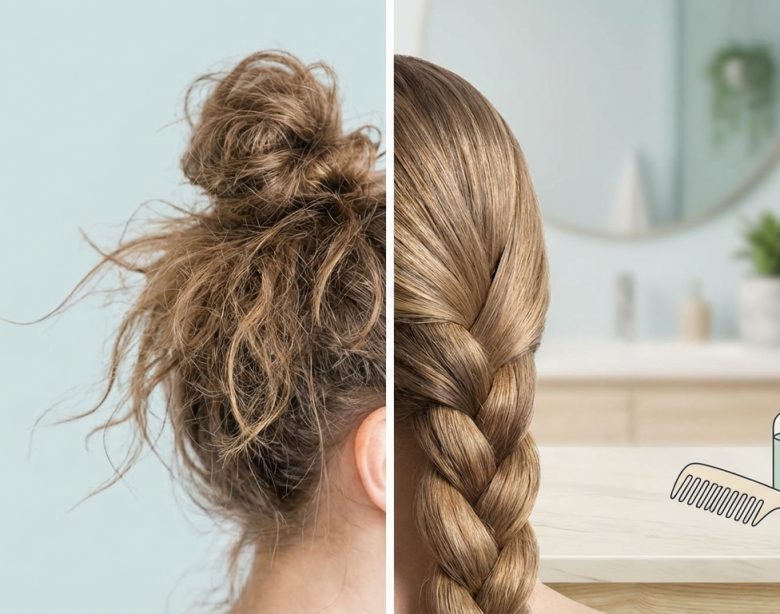
You look in the mirror and your hair has doubled in size since you left the house. The smooth blowout you spent 30 minutes perfecting now looks like a cloud of frizz. Sound familiar? You’re not alone. Frizzy hair affects millions of people, and the causes might surprise you. Understanding what makes your hair frizz is the first step to fixing it for good.
Frizz happens when your hair cuticle lifts and absorbs moisture from the air. Common causes include heat damage, humidity, over-washing, harsh products, and towel drying. The good news? Simple changes to your routine like using sulfate-free shampoo, applying leave-in conditioner, and air drying can dramatically reduce frizz and restore smoothness to your strands.
What Actually Causes Frizz
Your hair shaft is covered in tiny overlapping scales called cuticles. When these cuticles lie flat, your hair looks shiny and smooth. When they lift up, moisture sneaks in and your hair swells. That’s frizz.
Think of your hair like a pinecone. When it’s dry and happy, the scales stay closed. Add moisture or damage, and those scales open up. Your hair becomes porous and starts grabbing water from the air.
Several factors can damage your cuticle and make it more prone to lifting. Some are environmental. Others come from what you’re doing to your hair every single day.
The 7 Surprising Reasons Your Hair Gets Frizzy
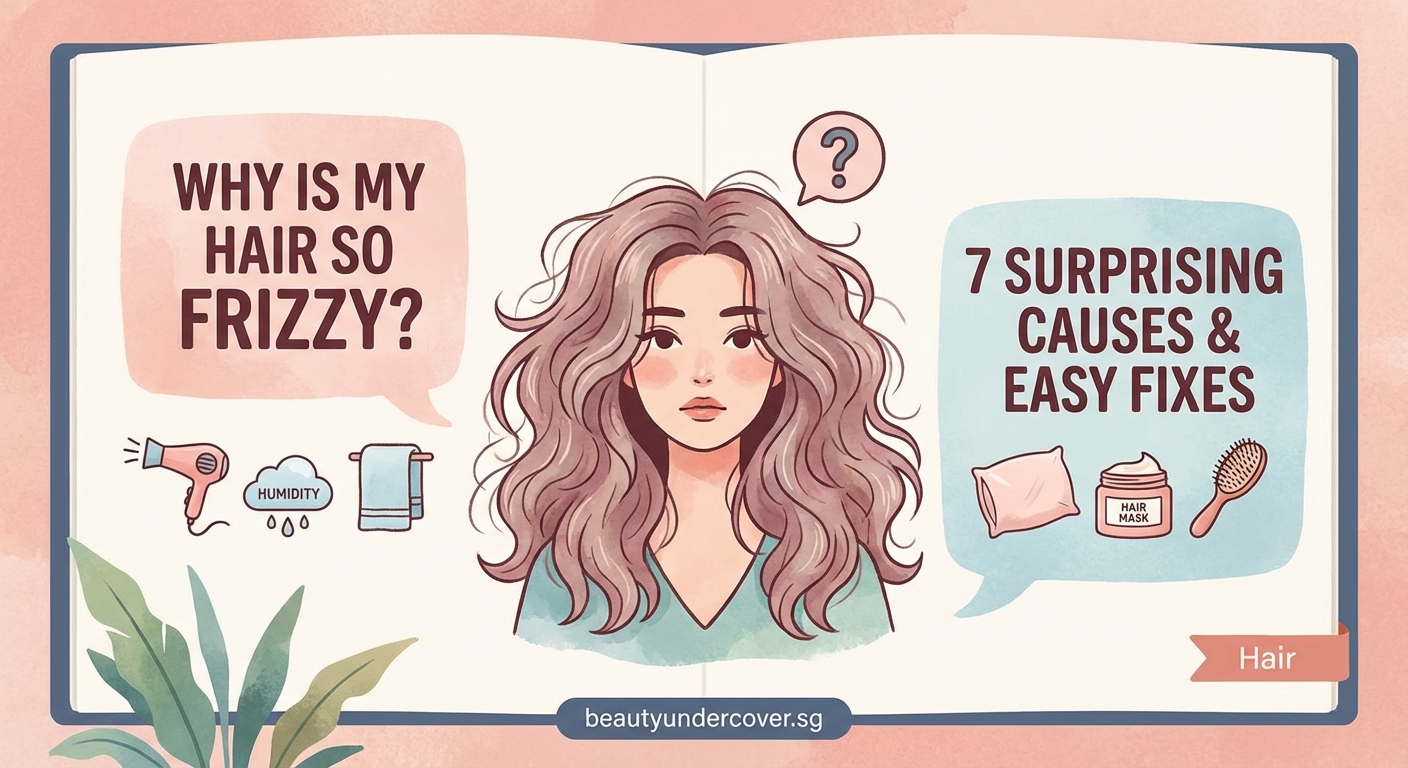
1. You’re Using Way Too Much Heat
Flat irons, curling wands, and blow dryers all reach temperatures hot enough to damage your hair cuticle. One pass at 400°F might not seem like much, but repeated exposure breaks down the protein structure in your hair.
Heat damage is cumulative. You might not see it after one styling session, but after months of daily heat styling, your cuticle becomes rough and porous.
The fix? Turn down the temperature. Most hair types don’t need more than 350°F. Fine hair can go even lower, around 300°F. Always use a heat protectant spray before any hot tool touches your hair.
2. Humidity Is Your Hair’s Worst Enemy
Here’s why humid days turn your hair into a frizz ball. Your hair is hygroscopic, which means it absorbs water from the air. When humidity is high, your hair cuticle swells with moisture.
If your hair is already damaged or dry, it’s even more desperate for moisture. It grabs water molecules from the air like a sponge, causing the shaft to expand unevenly.
You can’t control the weather, but you can create a barrier. Anti-humidity serums and oils seal your cuticle so moisture can’t penetrate. Apply them to damp hair before styling.
3. Your Shampoo Contains Harsh Sulfates
Sulfates are detergents that create that satisfying lather in your shampoo. They’re also incredibly drying. Sodium lauryl sulfate and sodium laureth sulfate strip your hair of its natural oils.
When your hair loses these protective oils, the cuticle becomes rough and raised. Dry, damaged hair is frizzy hair.
Switch to a sulfate-free shampoo. Yes, it won’t foam as much. That’s fine. You don’t need bubbles to get clean hair. Look for gentle cleansers like cocamidopropyl betaine or decyl glucoside instead.
4. You’re Washing Your Hair Too Often
Every time you shampoo, you remove some of your hair’s natural sebum. This oil travels from your scalp down the hair shaft, coating and protecting each strand.
If you wash daily, your hair never gets a chance to benefit from this natural conditioning. Your cuticle stays dry and lifted.
Most people can extend their wash schedule to every 2-3 days. Use dry shampoo on off days to absorb oil at the roots. Your hair will be healthier and less frizzy.
5. That Cotton Towel Is Wrecking Your Hair
Rubbing your wet hair with a regular bath towel creates friction. Wet hair is extremely fragile, and all that rubbing roughs up the cuticle.
Cotton towels also absorb too much moisture too fast, leaving your hair dry and frizzy.
Use a microfiber towel or an old t-shirt instead. Gently squeeze excess water from your hair rather than rubbing. This one change can make a noticeable difference in your frizz levels.
6. You’re Skipping Conditioner or Using It Wrong
Conditioner is not optional if you have frizzy hair. It smooths down the cuticle and adds moisture back into your strands.
But here’s the mistake most people make: they apply conditioner to their roots. Your scalp produces natural oil. It doesn’t need extra moisture. Your ends do.
Apply conditioner from mid-length to ends only. Leave it on for at least 2-3 minutes. For extra smoothing power, use a leave-in conditioner after you shower.
7. Your Hair Is Naturally Dry or Damaged
Some hair types are naturally more prone to frizz. Curly and coily hair tends to be drier because the natural oils from your scalp have a harder time traveling down spiral-shaped strands.
Color-treated hair is also more porous. Chemical processing lifts the cuticle to deposit or remove color. Even after the process is done, that cuticle never fully closes again.
If your hair is naturally dry or chemically treated, you need extra moisture. Deep condition once a week. Use hair masks with ingredients like shea butter, argan oil, or keratin.
How to Fix Frizzy Hair Starting Today
Now that you know what causes frizz, here’s what to do about it. These steps work together to smooth your cuticle and lock in moisture.
- Wash your hair with lukewarm or cool water. Hot water opens the cuticle even more.
- Apply a sulfate-free shampoo only to your scalp. Let the suds rinse through your ends.
- Use conditioner from mid-length to tips. Comb it through with a wide-tooth comb.
- Rinse with cool water to seal the cuticle.
- Gently squeeze out excess water with a microfiber towel.
- Apply a leave-in conditioner or smoothing cream to damp hair.
- Let your hair air dry when possible, or use a diffuser on low heat.
Products That Actually Help Tame Frizz
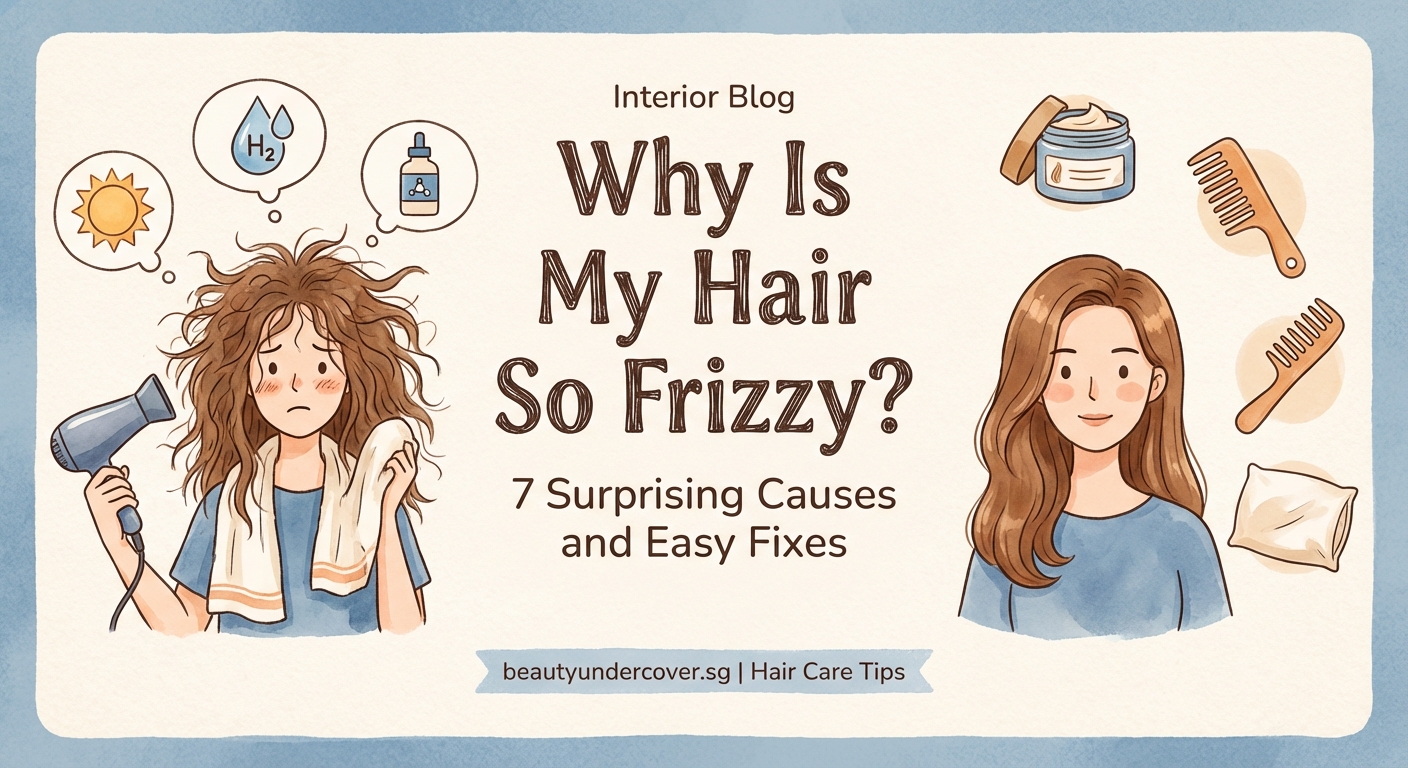
Not all anti-frizz products work the same way. Here’s what to look for based on your specific hair needs.
| Hair Type | Best Product Type | Key Ingredients |
|---|---|---|
| Fine, frizzy hair | Lightweight serum | Silicones, argan oil |
| Thick, coarse hair | Rich cream or butter | Shea butter, coconut oil |
| Curly, frizzy hair | Curl cream or gel | Glycerin, flaxseed extract |
| Color-treated hair | Protein treatment | Keratin, hydrolyzed wheat protein |
| Damaged, porous hair | Deep conditioning mask | Ceramides, panthenol |
Silicones get a bad reputation, but they’re actually great for frizz. They coat the hair shaft and create a smooth, water-resistant barrier. Dimethicone and cyclomethicone are two to look for.
Natural oils work too. Argan oil, jojoba oil, and marula oil all help seal moisture in without weighing hair down. Use them sparingly. A few drops go a long way.
Common Mistakes That Make Frizz Worse
Even with the right products, you can sabotage your results with these common errors.
- Brushing dry, curly hair (use your fingers or a wide-tooth comb on wet hair instead)
- Touching your hair constantly throughout the day (your hands transfer oil and disrupt the cuticle)
- Using too much product (it weighs hair down and attracts humidity)
- Sleeping on cotton pillowcases (switch to silk or satin)
- Skipping regular trims (split ends travel up the shaft and cause more frizz)
Your nighttime routine matters just as much as your morning one. Friction from tossing and turning roughs up your cuticle. A silk or satin pillowcase reduces that friction significantly.
If you have long hair, try a loose braid or bun before bed. This protects your ends and keeps your hair from tangling.
When to See a Professional
Sometimes frizz is a sign of deeper damage that needs professional help. If your hair feels like straw, breaks easily, or won’t hold moisture no matter what you do, book a salon appointment.
A stylist can assess your hair’s condition and recommend treatments like:
- Keratin smoothing treatments (last 3-6 months)
- Olaplex or bond-building treatments (repair broken bonds inside the hair shaft)
- Protein treatments (strengthen weak, over-processed hair)
“The biggest mistake I see is people trying to fight their natural texture instead of working with it. Frizz often improves dramatically when you stop heat styling every day and start using products designed for your actual hair type.” — Professional hairstylist with 12 years of experience
These treatments aren’t cheap, but they can reset severely damaged hair and give you a fresh start.
Building a Frizz-Free Routine That Lasts
Consistency matters more than any single product. Your hair responds to what you do every day, not just once in a while.
Here’s a realistic weekly routine for frizz-prone hair:
Every wash day:
– Sulfate-free shampoo
– Moisturizing conditioner
– Leave-in conditioner or cream
– Air dry or low-heat diffuse
Once a week:
– Deep conditioning mask or treatment
– Trim split ends at home with sharp scissors
Daily:
– Refresh with a small amount of oil or serum
– Sleep on a silk pillowcase
– Avoid touching your hair
Track your results. Take a photo of your hair today, then another in two weeks. You’ll be surprised how much improvement you see when you stick with a good routine.
Your Hair Can Be Smooth and Manageable
Frizzy hair isn’t a life sentence. Most frizz comes from fixable causes like heat damage, harsh products, and rough handling. Small changes to your routine add up to big results.
Start with one or two changes this week. Maybe swap your shampoo for a sulfate-free version. Or start using a microfiber towel instead of cotton. Notice how your hair responds.
You don’t need a 10-step routine or expensive salon treatments to see improvement. The basics work. Gentle cleansing, proper moisture, heat protection, and careful handling will get you 90% of the way there. Your smoothest, most manageable hair is closer than you think.