You’re standing in front of your bathroom mirror, staring at those stubborn dark spots that just won’t budge. You’ve heard about alpha arbutin and kojic acid, but which one actually works? Both ingredients promise brighter, more even skin, but they work differently, suit different skin types, and deliver results at different speeds. Choosing the wrong one could mean wasted money or irritated skin.
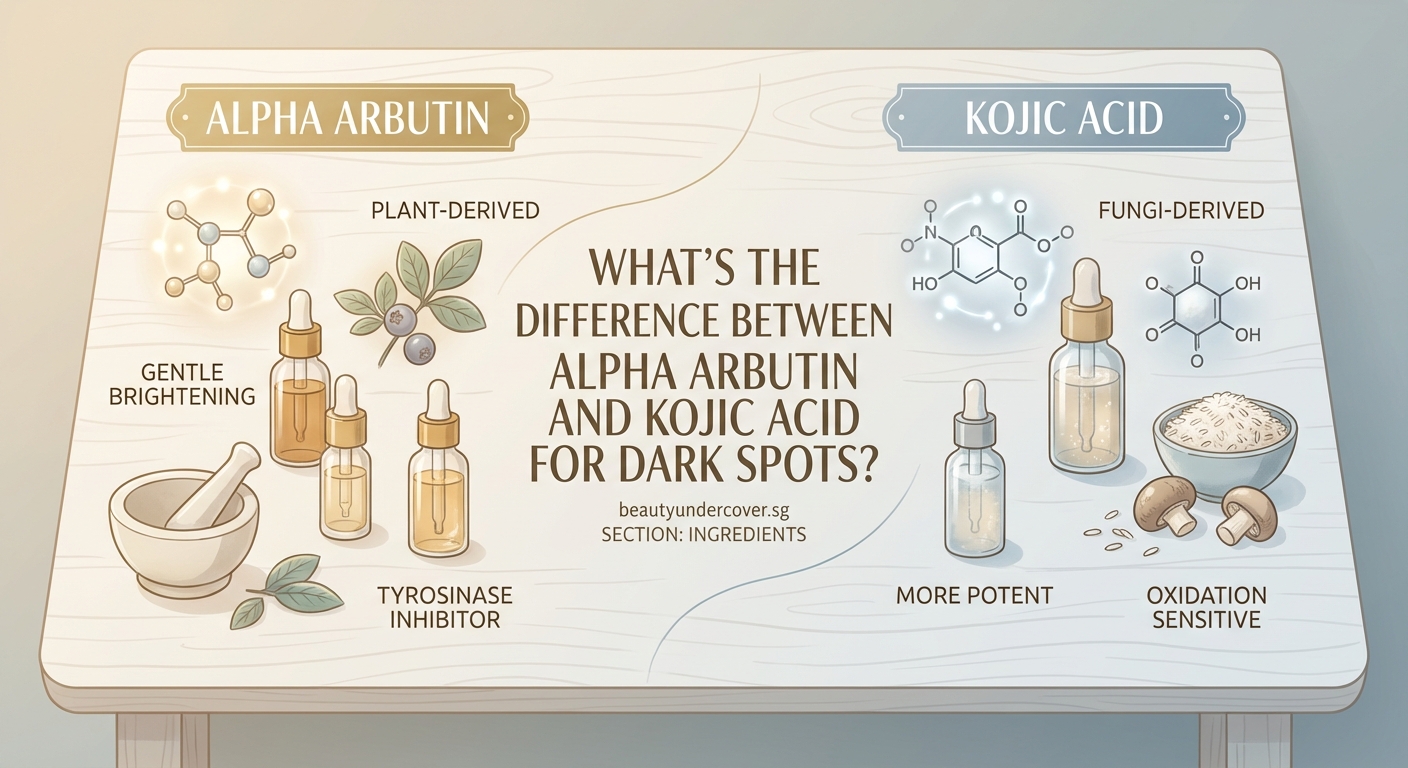
Alpha arbutin is a gentle, stable brightening agent ideal for sensitive skin and daily use, working gradually to fade dark spots. Kojic acid is more potent and works faster on stubborn pigmentation but can irritate sensitive skin. Both block melanin production but differ in strength, speed, and tolerability. Your choice depends on your skin sensitivity, pigmentation severity, and patience level.
Understanding how these brightening agents actually work
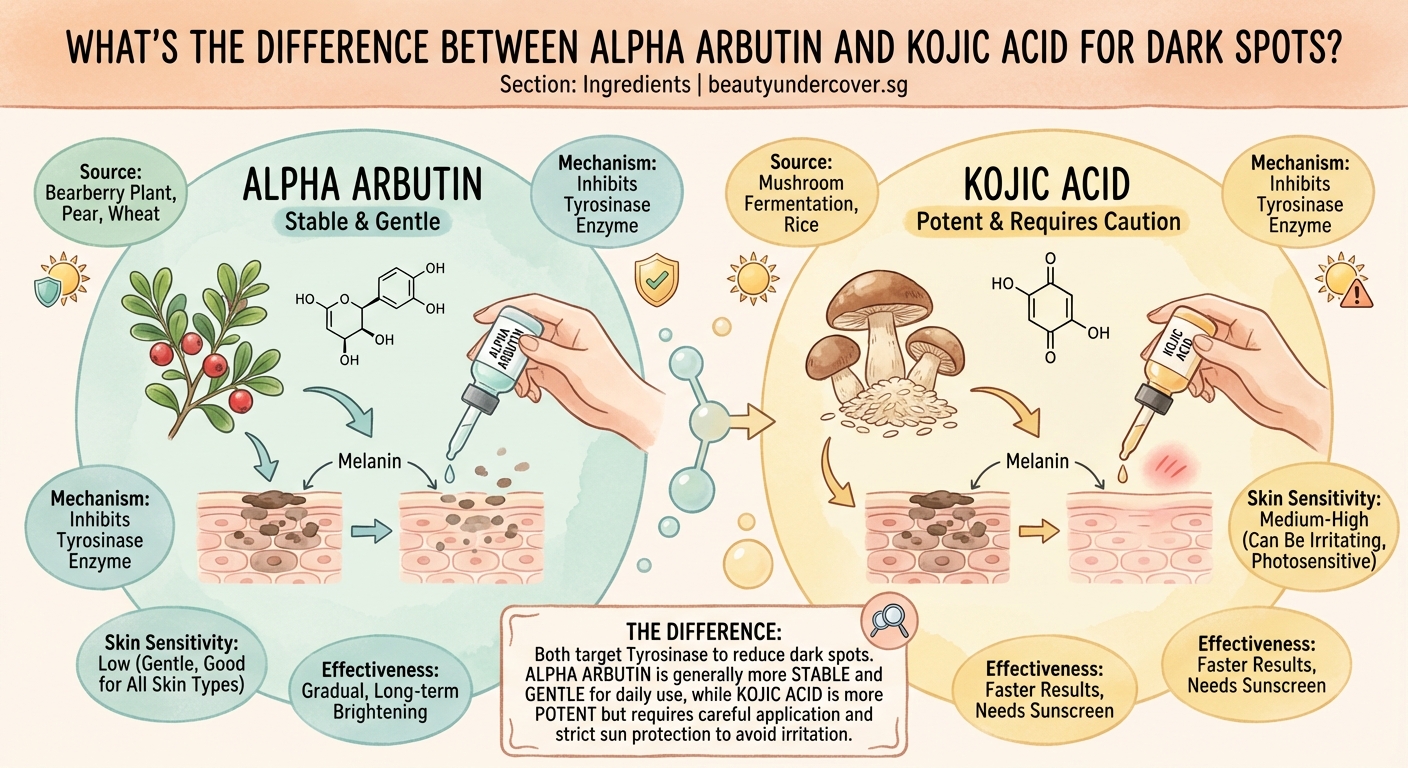
Both alpha arbutin and kojic acid target the same problem: excess melanin production. But they take different routes to get there.
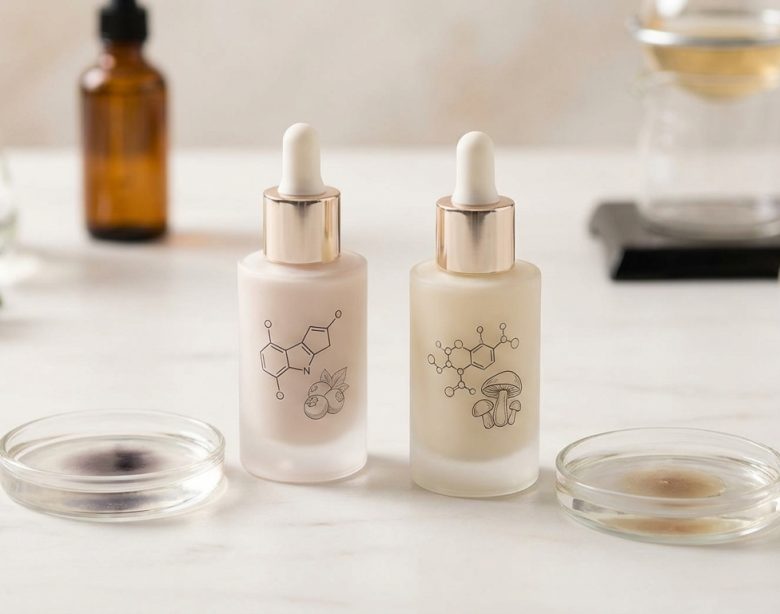
Alpha arbutin is a synthetic derivative of hydroquinone, but don’t let that scare you. It’s far gentler and safer. This ingredient works by inhibiting tyrosinase, the enzyme responsible for melanin production. Think of it as turning down the volume on your skin’s pigment factory rather than shutting it off completely.
Kojic acid comes from fungi during the fermentation process of making sake, soy sauce, and rice wine. It also inhibits tyrosinase but does so more aggressively. It’s like hitting the brakes harder and faster.
The key difference lies in how your skin tolerates each ingredient. Alpha arbutin tends to play nice with most skin types, while kojic acid can be more demanding.
Breaking down the benefits of each ingredient
Let’s get specific about what each ingredient brings to your skincare routine.
What alpha arbutin does for your skin
Alpha arbutin shines in several areas:
- Fades post-inflammatory hyperpigmentation from acne scars
- Reduces melasma and sun spots gradually
- Works well with other actives like vitamin C and niacinamide
- Stays stable in formulations, meaning it won’t oxidize easily
- Suits all skin types, including sensitive and reactive skin
The concentration matters here. Most effective products contain 1% to 2% alpha arbutin. Anything lower might not deliver visible results, while higher concentrations don’t necessarily work better.
What kojic acid brings to the table
Kojic acid has its own strengths:
- Works faster on stubborn dark spots
- Provides antioxidant benefits beyond brightening
- Effective at lower concentrations (typically 1% to 4%)
- Addresses age spots and sun damage effectively
- Can improve overall skin radiance
The trade-off is potential irritation. Some people experience redness, dryness, or sensitivity, especially when first starting out.
Comparing effectiveness and results timeline
Here’s where things get practical. You want to know which one actually works and how long you’ll wait.
| Aspect | Alpha Arbutin | Kojic Acid |
|---|---|---|
| Results timeline | 8 to 12 weeks | 4 to 8 weeks |
| Intensity | Gentle, gradual | Stronger, faster |
| Irritation risk | Low | Moderate to high |
| Stability in products | Very stable | Less stable, can oxidize |
| Daytime use | Safe with sunscreen | Requires strict sun protection |
Alpha arbutin is the marathon runner. It takes consistent use over several months to see significant changes. But the results tend to be more sustainable and less likely to cause rebound pigmentation.
Kojic acid is the sprinter. You’ll often notice improvements within a month, making it appealing if you need faster results for an event or just want to see progress sooner.
“The best brightening ingredient isn’t the strongest one. It’s the one you can use consistently without irritation. Consistency beats intensity every time when treating hyperpigmentation.”
How to add each ingredient to your routine
Getting the application right makes all the difference between clear skin and a damaged moisture barrier.
Using alpha arbutin correctly
Follow these steps for best results:
- Cleanse your face thoroughly and pat dry
- Apply alpha arbutin serum to damp skin for better absorption
- Wait 2 to 3 minutes before layering other products
- Follow with moisturizer and sunscreen during the day
- Use twice daily, morning and evening, for consistent results
Alpha arbutin plays well with others. You can safely combine it with niacinamide for enhanced brightening, vitamin C for antioxidant protection, and hyaluronic acid for hydration.
Using kojic acid the right way
Kojic acid requires more caution:
- Start with application every other night to test tolerance
- Apply to clean, dry skin (not damp, as this increases penetration and irritation)
- Use a pea-sized amount and spot-treat problem areas first
- Wait 5 to 10 minutes before applying other products
- Always use sunscreen the next morning, no exceptions
Avoid combining kojic acid with other strong actives like retinol, AHAs, or BHAs initially. Your skin needs time to adjust.
Who should choose which ingredient
Your skin type and concerns should guide your decision.
Choose alpha arbutin if you have:
- Sensitive or reactive skin prone to redness
- Mild to moderate hyperpigmentation
- Patience for gradual, sustainable results
- A preference for gentler skincare
- Concerns about ingredient stability
Choose kojic acid if you have:
- Resilient skin that tolerates actives well
- Stubborn, deep-set dark spots
- A need for faster visible results
- Experience with potent skincare ingredients
- No history of contact dermatitis
If you’re building a simple skincare routine from scratch, alpha arbutin is the safer starting point. You can always graduate to kojic acid later if needed.
Can you use both ingredients together?
Yes, but with smart strategy.
Some people alternate them: alpha arbutin in the morning, kojic acid at night. Others use alpha arbutin daily and kojic acid two to three times per week for targeted treatment.
The safest approach is starting with one ingredient for at least four weeks. Once your skin adapts, you can introduce the second one gradually.
Watch for these signs you’re overdoing it:
- Persistent redness or burning
- Flaking or peeling beyond normal exfoliation
- Increased sensitivity to other products
- New breakouts or irritation
If you experience any of these, scale back immediately. Sometimes less really is more.
Common mistakes that sabotage your results
Even the best ingredients fail when used incorrectly.
Mistake one: Skipping sunscreen
Both ingredients make your skin more vulnerable to UV damage. Without daily SPF 30 or higher, you’ll actually create more dark spots than you fade. Sun protection isn’t optional here.
Mistake two: Expecting overnight miracles
Hyperpigmentation took time to develop. It takes time to fade. Give any brightening ingredient at least eight weeks before judging its effectiveness.
Mistake three: Using too much product
More doesn’t mean faster results. It means irritation, wasted product, and potentially damaged skin. A thin layer is all you need.
Mistake four: Neglecting hydration
Brightening ingredients work better when your skin barrier is healthy. Pair them with a solid moisturizer and consider adding hyaluronic acid to your routine.
Mistake five: Mixing with incompatible ingredients
Both alpha arbutin and kojic acid can destabilize in certain pH environments. Avoid using them immediately after strong acids or right before retinol application.
What to look for when shopping for products
Not all alpha arbutin and kojic acid products are created equal.
For alpha arbutin serums, check that:
- The concentration is between 1% and 2%
- It’s packaged in opaque or dark glass bottles
- The ingredient appears in the first five on the list
- The formula includes hydrating ingredients like glycerin or hyaluronic acid
For kojic acid products, verify that:
- The concentration doesn’t exceed 4%
- The product is recently manufactured (kojic acid degrades over time)
- It comes in airless pump packaging to prevent oxidation
- The formula includes soothing ingredients like allantoin or centella
Avoid products that combine multiple strong actives unless you have experience with each ingredient individually. Simplicity often wins with brightening treatments.
Realistic expectations and patience pays off
Let’s get real about what these ingredients can and can’t do.
Both alpha arbutin and kojic acid can significantly fade dark spots, even out skin tone, and prevent new pigmentation from forming. They work especially well on post-inflammatory hyperpigmentation from acne and mild to moderate melasma.
They cannot completely erase deep, years-old pigmentation overnight. They won’t change your natural skin tone. And they require ongoing use to maintain results.
Think of these ingredients as part of your long-term skin health strategy, not a temporary fix. The people who see the best results are those who incorporate these actives into a consistent daily routine and stick with it for months, not weeks.
Watching for side effects and when to stop
Both ingredients are generally safe, but individual reactions vary.
With alpha arbutin, side effects are rare but can include:
- Mild tingling upon first application (usually subsides)
- Slight dryness if used without adequate moisturizer
- Temporary sensitivity if combined with too many actives
With kojic acid, watch for:
- Redness or irritation, especially around the nose and cheeks
- Contact dermatitis in sensitive individuals
- Increased sun sensitivity
- Paradoxical darkening if you skip sun protection
Stop using either ingredient immediately if you experience severe burning, persistent redness lasting more than an hour after application, or any allergic reaction like hives or swelling.
Making the final call for your skin
Here’s the bottom line: neither ingredient is universally “better.” They serve different needs.
Alpha arbutin is your reliable friend who shows up consistently, works steadily, and rarely causes drama. It’s ideal for building a sustainable brightening routine that you can maintain long-term without stress.
Kojic acid is the high-intensity option that delivers faster results but demands more attention and care. It works well for targeted treatment of specific stubborn spots when you need results on a tighter timeline.
Your best choice depends on your skin’s personality, your patience level, and how your skin has responded to active ingredients in the past. Start with whichever feels right for your situation, give it a fair trial of at least eight weeks, and adjust from there. Your skin will tell you what it needs.