You’ve probably seen perfume descriptions that mention “notes of jasmine and vanilla” or “citrus top notes with a woody base.” If you’re wondering what any of that actually means, you’re not alone. Most people buy perfume based on the bottle design or a celebrity endorsement, then feel confused when the scent smells completely different an hour later.
Understanding fragrance notes changes everything about how you shop for perfume. It helps you predict how a scent will evolve on your skin, why some perfumes disappear within minutes while others linger all day, and most importantly, how to find fragrances you’ll actually love wearing.
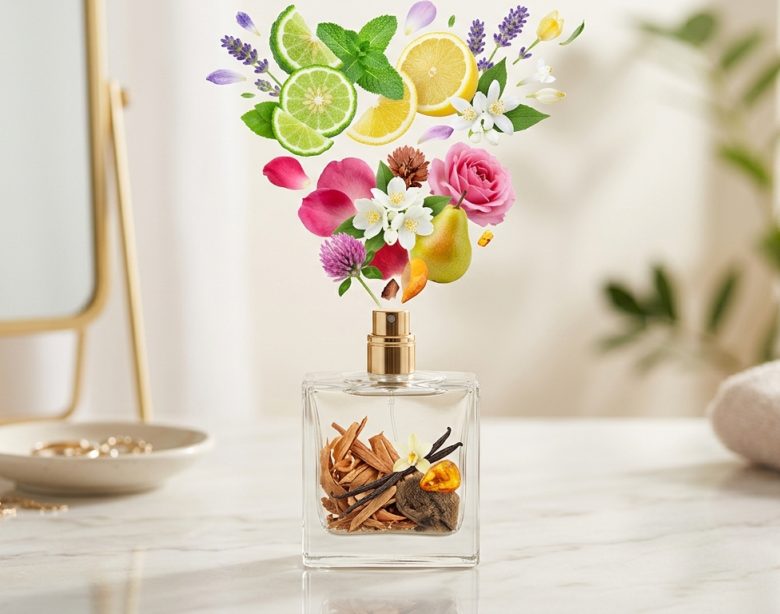
Fragrance notes are the individual scent ingredients that make up a perfume, organized into three layers that appear at different times. Top notes are what you smell first, heart notes form the main character after 15 minutes, and base notes are what linger for hours. Learning to identify these layers helps you choose perfumes that match your preferences and understand how scents change throughout the day on your skin.
The three layers every perfume has
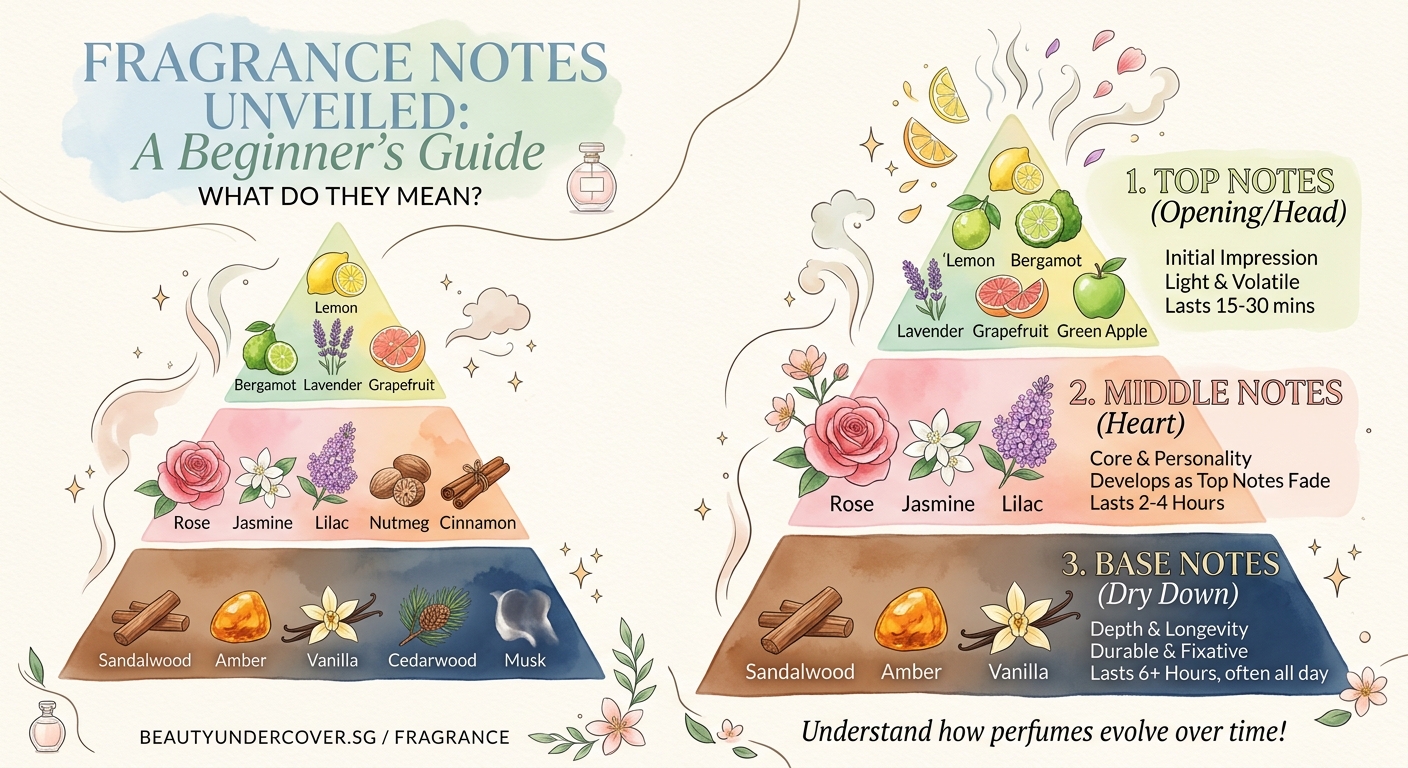
Every fragrance is built like a pyramid with three distinct sections. Each layer appears at a different time and serves a specific purpose in the overall scent experience.
The structure isn’t random. Perfumers design fragrances this way because different ingredients evaporate at different rates. Light, volatile molecules disappear within minutes. Heavy, rich molecules stick around for hours or even days.
Think of it like a song with an intro, verse, and outro. Each part contributes to the whole experience, but they don’t all play at once.
Top notes are your first impression
Top notes are what you smell immediately when you spray perfume on your skin or test strip. They’re the lightest, most volatile ingredients that evaporate within 5 to 15 minutes.
Common top notes include:
– Citrus fruits like bergamot, lemon, grapefruit, and orange
– Light herbs such as basil, mint, and lavender
– Fresh green scents like grass or cucumber
– Aromatic spices like cardamom or pink pepper
These notes exist to grab your attention and make you want to keep smelling. They’re bright, punchy, and often sparkly. But they’re not the main event.
This is why you should never judge a perfume by the first spray. That initial burst is designed to fade, revealing what lies underneath.
Heart notes are the real personality
Heart notes (also called middle notes) emerge after 15 to 30 minutes and last for 2 to 4 hours. They form the core identity of the fragrance and determine whether you’ll actually like wearing it all day.
Popular heart notes include:
– Floral scents like rose, jasmine, ylang-ylang, and neroli
– Spices such as cinnamon, clove, and nutmeg
– Fruity notes like peach, plum, and berry
– Green notes including geranium and violet leaf
The heart is where perfumers show their creativity. This layer blends with both the fading top notes and the emerging base notes to create smooth transitions. When someone asks what a perfume smells like, they’re usually describing the heart notes.
Base notes are what people remember
Base notes are the heaviest molecules that take 30 minutes to an hour to fully develop. They last 4 to 6 hours or longer, sometimes lingering on clothes for days.
Typical base notes include:
– Woods like sandalwood, cedarwood, and patchouli
– Resins such as amber, benzoin, and frankincense
– Vanilla, tonka bean, and other gourmand elements
– Musks (both natural and synthetic)
– Leather and tobacco accords
These notes give a fragrance staying power and depth. They’re what you smell on your sweater the next day or catch a whiff of when you hug someone hours after applying perfume.
If you want long-lasting perfumes that still smell amazing after 8 hours, pay close attention to the base notes listed in the description.
How to read a fragrance pyramid
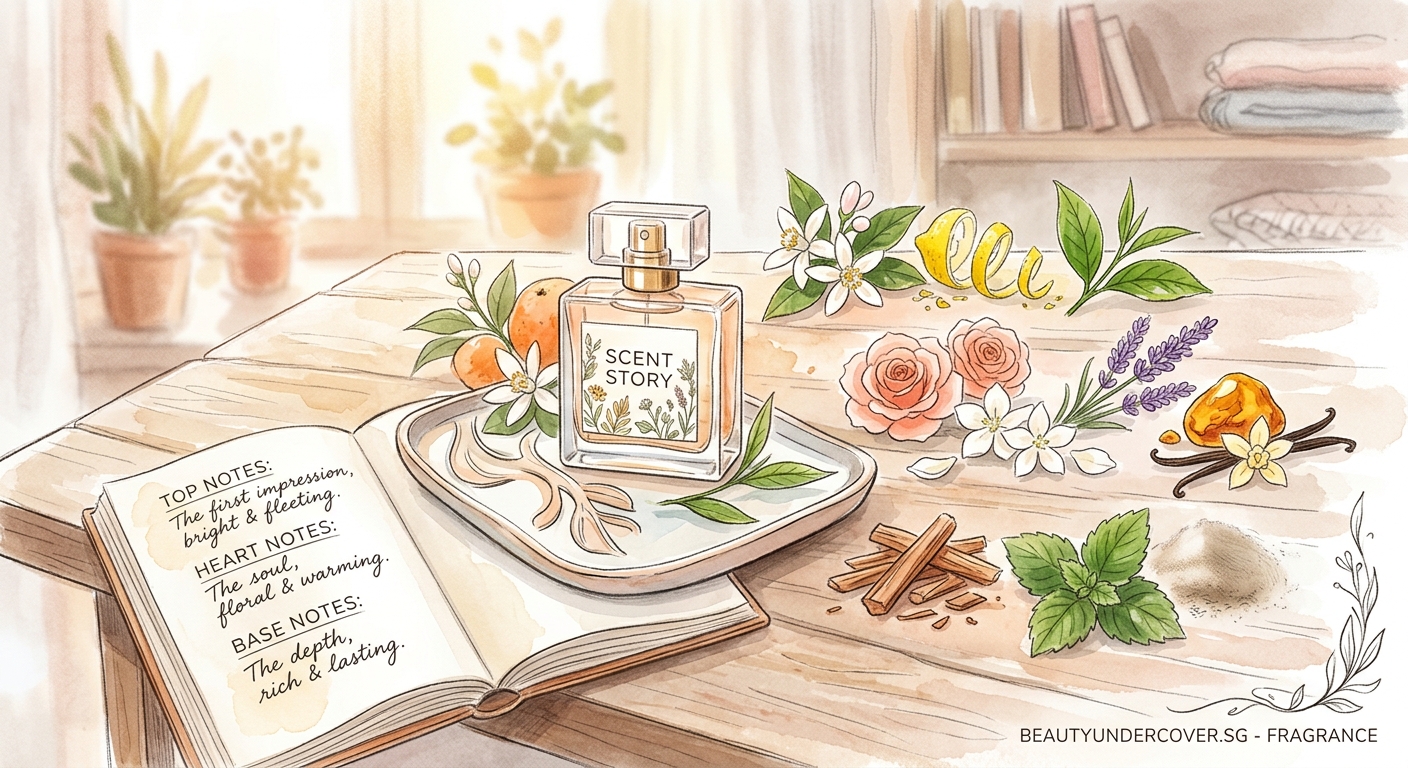
Most perfume descriptions organize notes into a pyramid structure. The top sits at the narrow point, the heart fills the middle, and the base forms the wide foundation.
Here’s an example breakdown:
| Layer | Timing | Example Notes |
|---|---|---|
| Top | 0-15 minutes | Bergamot, lemon, green apple |
| Heart | 15 minutes – 4 hours | Rose, jasmine, peony |
| Base | 4+ hours | Vanilla, sandalwood, musk |
When you see this structure on a website or perfume box, read it from top to bottom to understand the scent journey. The top tells you what grabs attention first. The heart reveals the main character. The base shows what lingers.
Some brands list notes differently. They might use “opening,” “development,” and “dry down” instead of top, heart, and base. Same concept, different words.
Why the same perfume smells different on everyone
Your skin chemistry affects how fragrance notes develop and last. Body temperature, pH level, moisture content, and even diet all influence the way molecules interact with your skin.
Warmer skin amplifies scents and makes them evaporate faster. Drier skin absorbs fragrance molecules, causing perfumes to fade sooner. Oily skin holds onto scents longer and can intensify certain notes.
This is why testing perfume on your actual skin matters more than smelling it from a bottle or card. A fragrance that smells amazing on your friend might turn sour or disappear completely on you.
Test new perfumes on your wrist or inner elbow, then wait at least 30 minutes before deciding. You need to experience all three note layers on your specific skin chemistry to know if you’ll actually enjoy wearing it.
The application method also matters. Spraying perfume on pulse points (wrists, neck, behind ears) where blood vessels sit close to the skin creates warmth that helps release the fragrance. If you want to make your perfume last all day, understanding these basics makes a huge difference.
Common note categories you’ll see everywhere
Perfume descriptions often group notes into families or categories. Learning these helps you identify patterns in fragrances you love.
Citrus notes bring freshness and energy. They almost always appear as top notes because they evaporate so rapidly. Think lemon, bergamot, mandarin, and grapefruit.
Floral notes dominate the heart layer. Rose, jasmine, and tuberose are classics. Some florals like neroli can appear as top notes, while heavier ones like gardenia sit deeper in the base.
Woody notes provide structure and warmth in the base. Sandalwood, cedarwood, vetiver, and patchouli are staples in both men’s and women’s fragrances.
Oriental or amber notes create richness through resins, vanilla, and spices. These warm, sweet, and sometimes powdery scents anchor many popular perfumes.
Aquatic or marine notes smell clean, fresh, and ozonic. They became popular in the 1990s and remain common in sport fragrances.
Gourmand notes are edible-smelling ingredients like vanilla, caramel, chocolate, coffee, and honey. They add sweetness and comfort to modern fragrances.
Understanding these categories helps you communicate what you like. Instead of saying “I want something that smells good,” you can say “I prefer woody base notes with fresh citrus on top.”
How to choose perfumes based on notes
Start by identifying notes you already know you enjoy. Think about scents outside of perfume that make you happy. Do you love the smell of fresh laundry? You might like clean musks and aldehydes. Obsessed with your vanilla candle? Look for gourmand fragrances with vanilla base notes.
Consider the season and occasion. Light citrus and aquatic notes work well in summer heat, while rich amber and woody notes feel more appropriate in winter. Summer perfumes that won’t overwhelm in the heat typically emphasize fresh top and heart notes over heavy bases.
Read multiple reviews before buying. People often describe how notes develop on their skin, which helps you predict your own experience. Look for reviews from people with similar preferences or skin types.
Sample before committing to a full bottle. Most department stores and specialty fragrance shops offer samples. Wear the sample for a full day to experience all three note layers in different environments (home, office, outdoors).
The difference between synthetic and natural notes
Modern perfumes contain both natural extracts and synthetic molecules. Natural notes come from flowers, fruits, woods, and resins through distillation or extraction. Synthetic notes are created in laboratories.
Synthetics aren’t inferior. Many beloved fragrances rely heavily on synthetic molecules that can’t be extracted from nature. Clean musks, certain fruits, and aquatic notes are almost always synthetic. They’re also more stable, affordable, and sustainable than some natural alternatives.
Natural notes tend to be more complex and nuanced but can vary between batches. A natural rose oil from Bulgaria might smell different from one harvested in Turkey or France.
Most perfumes use a combination of both. The jasmine in your favorite fragrance might be natural jasmine absolute enhanced with synthetic molecules that boost its projection or longevity.
How to layer fragrances without creating chaos
Once you understand individual notes, you can start layering fragrances like a pro. The key is choosing perfumes with complementary notes rather than competing ones.
Start with a base layer that has strong, simple base notes. Vanilla, musk, or sandalwood work well as foundations. Then add a second fragrance with lighter top and heart notes that won’t clash.
Avoid layering two perfumes with dominant floral hearts. They’ll compete for attention and create a muddled mess. Instead, pair a fresh citrus with a warm vanilla, or a light floral with a woody base.
You can also layer by using scented body products. A vanilla body lotion under a citrus perfume creates a custom blend that develops uniquely on your skin.
Test combinations on your wrist before applying to your whole body. Give the blend 20 minutes to develop before deciding if it works.
Common mistakes beginners make reading notes
Judging too fast. Spraying once and deciding within seconds means you’re only experiencing the top notes. Give every perfume at least 30 minutes on your skin.
Ignoring the base. A perfume might smell incredible when you first spray it, but if the base notes contain ingredients you dislike, you’ll hate it after an hour.
Assuming notes will smell literal. A “rose” note doesn’t always smell exactly like a fresh rose from your garden. Perfumers blend and modify notes to create specific effects. Rose can smell powdery, spicy, fresh, or jammy depending on how it’s treated.
Buying based on note lists alone. The quality and proportion of ingredients matter more than the list itself. Two perfumes with identical note pyramids can smell completely different based on the specific materials used and how they’re balanced.
Testing too many at once. Your nose gets overwhelmed after smelling three or four perfumes. Take breaks, smell coffee beans to reset, and limit testing sessions to avoid confusion.
Building your fragrance vocabulary
The more perfumes you smell, the better you’ll get at identifying specific notes. Visit fragrance counters and ask for samples of single-note perfumes or colognes that highlight one ingredient.
Smell individual ingredients when you encounter them in daily life. Notice the difference between fresh lemon and bergamot. Compare vanilla extract to tonka bean. Crush lavender leaves and smell real rose petals.
Keep a fragrance journal. Write down what you smell at each stage when testing new perfumes. Note which notes you can identify and which ones confuse you. Over time, patterns will emerge.
Join online fragrance communities where people discuss notes in detail. Reading how others describe scents helps train your nose and expand your vocabulary.
Notes that work well together
Certain note combinations appear repeatedly in perfumery because they create beautiful harmonies.
Citrus and woods balance freshness with warmth. Bergamot and cedarwood, lemon and sandalwood, or grapefruit and vetiver all work beautifully.
Florals and vanilla soften and sweeten floral notes while vanilla gains complexity from the flowers. Rose and vanilla, jasmine and vanilla, or orange blossom and vanilla are classic pairings.
Spices and amber create rich, warm fragrances perfect for cooler weather. Cinnamon with amber, cardamom with benzoin, or pink pepper with labdanum all feel cozy and inviting.
Aquatic and musk produce clean, modern scents. Marine notes with white musk or sea salt with ambroxan smell fresh and sophisticated.
Fruity and woody balance sweetness with earthiness. Peach and patchouli, plum and sandalwood, or berry and cedarwood prevent fruity scents from becoming too candy-like.
Reading between the marketing lines
Brands sometimes use poetic or vague language instead of specific note lists. “Sun-kissed skin” might mean coconut and vanilla. “Fresh laundry” could indicate clean musks and aldehydes. “Rainy day” often points to aquatic and green notes.
Learn to translate marketing speak into actual notes. This skill helps you predict whether you’ll actually like a fragrance based on the description alone.
Watch for terms like “accord” in note lists. An accord is a blend of multiple notes that creates a specific effect. “Leather accord” might contain birch tar, labdanum, and styrax rather than actual leather. “Chocolate accord” could be a mix of patchouli, vanilla, and tonka bean.
Some brands list fantasy notes that don’t exist as actual ingredients. “Angel food cake,” “cashmere,” or “skin musk” are impressions created through combinations of real materials. These descriptions tell you the intended effect rather than the actual formula.
When to trust your nose over the note list
Sometimes a perfume smells nothing like its listed notes suggest. This happens because of how ingredients interact, the quality of materials used, or simply how your brain interprets smells.
If a fragrance is supposed to contain rose but smells more like powder to you, trust your nose. Scent perception is personal. What one person identifies as jasmine might smell soapy to someone else.
The note list serves as a general guide, not an absolute truth. Use it as a starting point for understanding a fragrance, but let your actual experience be the final judge.
Your fragrance note journey starts now
Learning what fragrance notes are and how they work transforms perfume shopping from a guessing game into an informed choice. You’ll stop buying bottles that sit unused on your dresser and start building a collection of scents you genuinely love wearing.
Start simple. Test a few perfumes this week and focus on identifying just the top notes. Next week, pay attention to how the heart develops. The following week, notice what lingers as the base. This gradual approach trains your nose without overwhelming it.
Remember that becoming fluent in fragrance notes takes time and practice. Every perfume you smell teaches you something new about how notes combine and develop. Be patient with yourself and enjoy the learning process. Your nose will thank you for it.