You’re not imagining it. Back acne really is different from the pimples on your face. The skin on your back is thicker, has more oil glands, and gets trapped under clothes and backpack straps all day. That combination creates the perfect storm for breakouts that feel impossible to control.
Back acne develops when oil glands produce excess sebum that mixes with dead skin cells and bacteria, clogging pores. Friction from clothing, sweat buildup, hormonal fluctuations, and certain lifestyle habits make the back especially prone to breakouts. Understanding these specific triggers helps you target treatment effectively rather than guessing what might work.
Your back has more oil glands than you think
The skin on your back contains one of the highest concentrations of sebaceous glands on your entire body. These glands produce sebum, the natural oil that keeps your skin protected and hydrated.
When these glands go into overdrive, they pump out more oil than your pores can handle. The excess sebum mixes with dead skin cells that naturally shed from your skin’s surface. This sticky combination clogs your pores from the inside.
Here’s where it gets worse. Your back is harder to reach and clean thoroughly. Dead skin cells accumulate faster because you can’t exfoliate as easily as you do your face. The buildup creates more opportunities for pores to become blocked.
The thickness of back skin also plays a role. Thicker skin means deeper pores. When these pores get clogged, the blockage sits further beneath the surface, making those painful, under-the-skin bumps that take forever to heal.
Hormones don’t just affect your face
Hormonal fluctuations trigger oil production throughout your entire body, not just on your face. During puberty, menstrual cycles, or times of stress, androgen hormones spike. These hormones signal your oil glands to produce more sebum.
Your back responds to these hormonal signals just as intensely as your face does. Sometimes even more so, because of that higher concentration of oil glands.
Birth control pills, pregnancy, and hormonal conditions like polycystic ovary syndrome (PCOS) can all influence back acne severity. If your breakouts follow a monthly pattern or started around a major life change, hormones are likely involved.
Stress hormones like cortisol also increase oil production. That’s why your skin might flare up during exam weeks, job interviews, or family conflicts. Your back skin reacts to internal stress just like the rest of your body does.
Bacteria thrive in warm, covered areas
Cutibacterium acnes (formerly called Propionibacterium acnes) is the main bacterial player in acne development. This bacteria naturally lives on your skin, feeding on sebum and dead skin cells.
When pores become clogged, bacteria get trapped inside. They multiply rapidly in this oxygen-free environment, feeding on the sebum buildup. Your immune system detects this bacterial party and sends white blood cells to fight the infection.
This immune response causes inflammation. That’s what creates the redness, swelling, and pain you feel with deeper acne lesions.
Your back stays covered most of the day. Clothing traps heat and moisture against your skin, creating an ideal breeding ground for bacteria. Tight shirts, synthetic fabrics, and sweaty gym clothes make this problem worse.
“The combination of occlusion, friction, and moisture on the back creates a microenvironment that promotes bacterial growth and inflammation. This is why athletes and people who wear backpacks frequently often struggle with persistent back acne.” – Dermatology research on acne mechanica
Friction and pressure make everything worse
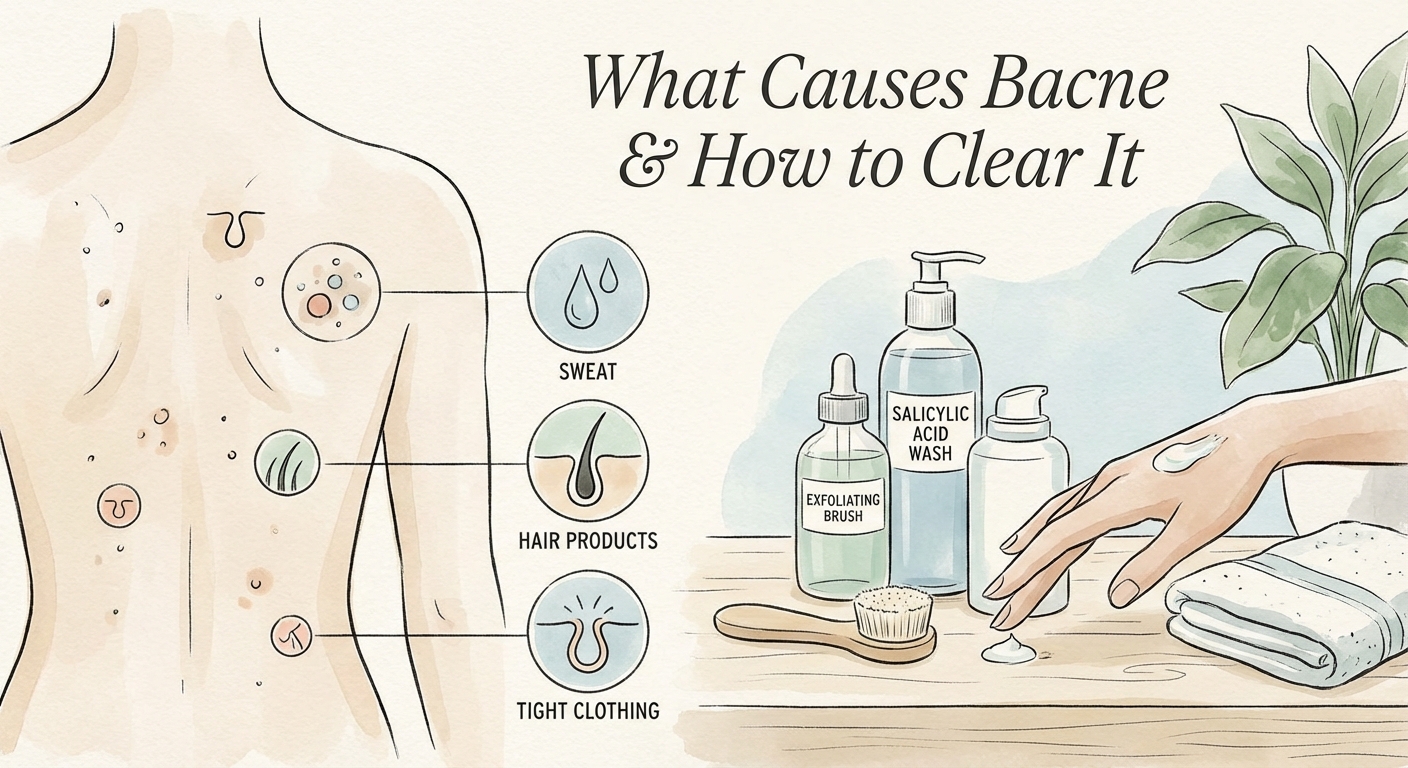
Acne mechanica is acne caused by friction, pressure, and heat. Your back experiences all three regularly.
Backpack straps create constant pressure on your shoulders. Tight sports bras and athletic gear rub against your skin during movement. Even your car seat presses against your back during your commute.
This repeated friction irritates your pores and pushes bacteria deeper into your skin. It also stimulates oil production as your skin tries to protect itself from the rubbing.
Common friction sources that trigger back acne:
- Backpack and purse straps
- Sports equipment and protective gear
- Tight workout clothes and bras
- Long hair rubbing against your back
- Sleeping on your back with rough bedding
- Carrying heavy bags or equipment
The pressure from these items doesn’t just cause surface irritation. It can rupture clogged pores beneath your skin, spreading bacteria and inflammation to surrounding tissue. This is why you might notice clusters of breakouts along your shoulder blades or down your spine where straps sit.
Sweat isn’t the enemy, but sitting in it is
Sweat itself doesn’t cause acne. In fact, sweating helps flush out pores. The problem starts when sweat sits on your skin for extended periods.
When sweat evaporates, it leaves behind salt, minerals, and any dirt or bacteria that were on your skin’s surface. This residue mixes with your natural oils and dead skin cells. The combination creates a film that can clog pores.
Sitting in sweaty clothes after a workout gives bacteria more time to multiply. The warm, damp environment is perfect for bacterial growth. This is especially true if you’re wearing synthetic fabrics that don’t breathe well.
If you play sports, work out regularly, or have a physically demanding job, you’re at higher risk. Not because exercise is bad, but because the timing of your shower matters more than you might think.
Your shower routine might be making it worse
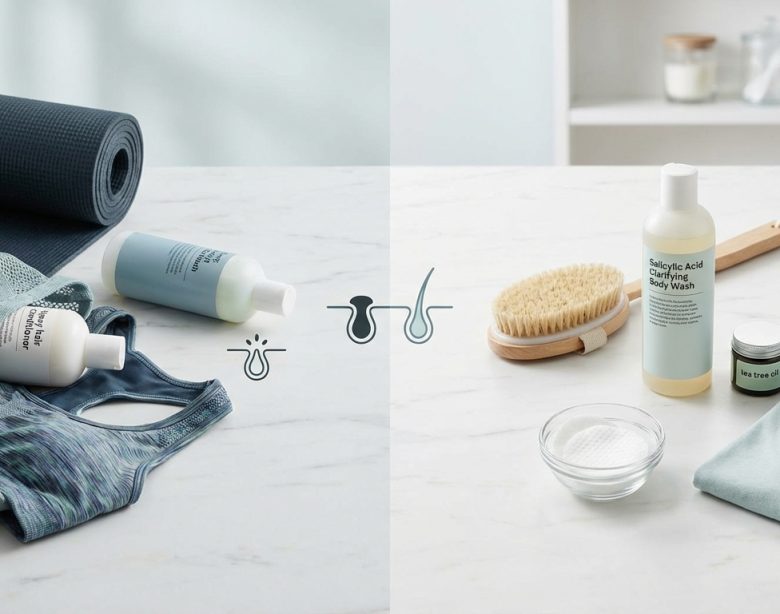
The products you use in the shower can contribute to back acne without you realizing it. Conditioner is one of the biggest culprits.
When you rinse conditioner from your hair, it runs down your back. The oils and silicones in hair conditioner can coat your skin and clog pores. If you condition your hair and then wash your body, you might not be removing all that residue.
Body lotions and oils can have the same effect. Heavy, pore-clogging ingredients sit on your skin’s surface, trapping oil and dead cells underneath.
Here’s a step-by-step shower routine to prevent product buildup:
- Wash and condition your hair first, rinsing thoroughly
- Clip your hair up or forward so it doesn’t touch your back
- Wash your body last, paying extra attention to your back
- Use a salicylic acid or benzoyl peroxide body wash on affected areas
- Rinse completely, making sure no product residue remains
Hot water can also overstimulate oil production. Your skin compensates for the drying effect by producing more sebum. Lukewarm water is better for acne-prone skin.
Diet connections are real for some people
The relationship between diet and acne is still being studied, but certain foods do trigger breakouts in some people. The connection isn’t the same for everyone, but patterns have emerged in research.
High-glycemic foods cause blood sugar spikes. Your body releases insulin to manage that sugar. Insulin triggers a cascade of hormones that increase oil production and inflammation.
Foods that commonly trigger breakouts:
- White bread, pasta, and rice
- Sugary snacks and sodas
- Dairy products, especially skim milk
- Whey protein supplements
- Processed foods with added sugars
Dairy deserves special attention. Milk contains hormones that can stimulate your oil glands. Some studies suggest that skim milk has a stronger association with acne than whole milk, possibly because of how it’s processed.
You don’t need to eliminate entire food groups. But if you notice breakouts after eating certain foods, try reducing them for a few weeks. Track your skin’s response in a simple journal.
Your laundry habits matter more than you think
Your sheets, towels, and clothes touch your back for hours every day. If they’re harboring bacteria, oil, and dead skin cells, they’re reintroducing those elements to your freshly cleaned skin.
Bedsheets should be washed weekly at minimum. You spend six to eight hours with your back pressed against those sheets every night. Dead skin cells, sweat, and body oils accumulate quickly.
Towels need washing after three to four uses. When you dry off, you’re not just removing water. You’re also transferring skin cells and bacteria onto the fabric. Using that same towel repeatedly means putting those elements back on your skin.
Workout clothes should never be worn twice without washing. The sweat and bacteria from one session create the perfect environment for more breakouts.
| Item | Washing Frequency | Why It Matters |
|---|---|---|
| Bedsheets | Weekly | You shed skin cells all night, creating bacterial breeding ground |
| Pillowcases | Every 3-4 days | Direct contact with skin and hair oils |
| Towels | After 3-4 uses | Bacteria multiply in damp fabric |
| Workout clothes | After each use | Sweat and bacteria transfer back to skin |
| Bras and tight tops | After 1-2 wears | Friction areas trap more oil and sweat |
Use hot water and a gentle, fragrance-free detergent. Fabric softener can leave a coating on clothes that irritates sensitive skin. Skip it for items that touch your back directly.
Medications and supplements can trigger breakouts
Some medications list acne as a side effect. If your back acne started after beginning a new prescription, the timing might not be coincidental.
Corticosteroids, lithium, and some anticonvulsants can all trigger or worsen acne. Anabolic steroids used for bodybuilding are notorious for causing severe back and shoulder acne.
Supplements can also play a role. Biotin supplements, often taken for hair and nail growth, can interfere with lab tests and may contribute to breakouts in some people. B12 supplements have also been linked to acne flares.
If you suspect a medication is causing your breakouts, talk to your doctor. Don’t stop taking prescribed medications without medical guidance. There might be alternative options that don’t affect your skin the same way.
Genetics load the gun, lifestyle pulls the trigger
If your parents had acne, you’re more likely to experience it too. Genetics influence how much oil your glands produce, how quickly your skin cells shed, and how your immune system responds to bacteria.
You can’t change your genetics, but you can manage the environmental and lifestyle factors that activate those genetic tendencies.
Think of it this way: your genes determine your skin’s potential for acne, but your daily habits determine whether that potential becomes reality.
Someone with acne-prone genes who manages stress well, showers after sweating, wears breathable fabrics, and follows a simple skincare routine will likely have clearer skin than someone with the same genes who ignores these factors.
Treatment works better when you know the cause
Understanding what triggers your back acne helps you choose the right treatment approach. Hormonal acne responds better to treatments that regulate oil production. Friction-based acne improves with clothing changes and barrier protection. Bacterial acne needs antimicrobial ingredients.
Salicylic acid works by penetrating pores and breaking down the plugs of dead skin cells and oil. It’s particularly effective for blackheads and surface-level breakouts.
Benzoyl peroxide kills acne-causing bacteria and reduces inflammation. It works well for inflamed, red pimples but can bleach fabrics, so be careful with towels and sheets.
Retinoids speed up cell turnover, preventing dead skin cells from clogging pores in the first place. They also have anti-inflammatory properties. Adapalene is available over the counter and works well for back acne.
For persistent or severe back acne, dermatologists can prescribe oral antibiotics, hormonal treatments like spironolactone, or isotretinoin for cystic cases.
Building a body care routine that actually works means addressing both prevention and treatment. You need to remove the triggers while also treating existing breakouts.
Comparison table: common mistakes vs. better approaches
| What Doesn’t Work | Why It Fails | What Works Instead |
|---|---|---|
| Scrubbing hard with loofahs | Irritates skin, increases inflammation | Gentle cleansing with soft cloth or hands |
| Using face products on your back | Not strong enough for thicker skin | Body-specific acne treatments with higher concentrations |
| Skipping moisturizer | Skin overproduces oil to compensate | Lightweight, non-comedogenic body lotion |
| Wearing the same sports bra all week | Bacteria and oil accumulate in fabric | Washing after each workout session |
| Only treating active breakouts | Doesn’t prevent new ones | Consistent prevention routine |
| Popping or picking at bumps | Spreads bacteria, causes scarring | Spot treatment and patience |
Prevention starts with awareness
You can’t control your genetics or completely eliminate hormonal fluctuations. But you can control most of the external factors that contribute to back acne.
Start by identifying your personal triggers. Do breakouts appear after certain workouts? After eating specific foods? During stressful weeks? Around your menstrual cycle?
Keep a simple log for a month. Note when breakouts appear and what happened in the day or two before. Patterns will emerge.
Once you know your triggers, you can make targeted changes. You don’t need to overhaul your entire life. Small, consistent adjustments often work better than dramatic changes you can’t maintain.
Change one thing at a time so you know what actually helps. If you change your diet, laundry routine, and shower products all at once, you won’t know which change made the difference.
Your skin is telling you something
Back acne isn’t just a cosmetic annoyance. It’s your skin’s way of signaling that something needs attention. Maybe it’s stress that needs managing, clothing that needs loosening, or a shower routine that needs adjusting.
The good news is that back acne is highly treatable once you understand the underlying causes. You don’t have to accept it as permanent or inevitable. With the right combination of prevention, treatment, and lifestyle adjustments, clear skin is absolutely possible.
Start with the basics: shower after sweating, wear breathable fabrics, wash your sheets weekly, and use the right products for your skin type. These simple changes address multiple causes at once. Then build from there based on what your skin tells you it needs.
Your back might be harder to see than your face, but it deserves the same level of care and attention. The effort you put in now will pay off in clearer, healthier skin that doesn’t hold you back from wearing what you want or doing what you love.