Standing in the body care aisle, staring at rows of jars and bottles, you’ve probably wondered which one will actually fix your dry skin. Body oils promise a lightweight glow. Body butters claim deep nourishment. Both sound great, but they work completely differently on your skin. Understanding these differences will save you money and finally get you the results you want.
Body oils absorb into skin to seal in existing moisture and create a protective barrier, working best on damp skin. Body butters combine oils with thicker ingredients to both hydrate and lock in moisture, ideal for very dry skin or cold weather. Your choice depends on your skin type, climate, and whether you need lightweight hydration or intensive repair.
What body oil actually does to your skin
Body oil isn’t a moisturizer in the traditional sense. It doesn’t add water to your skin. Instead, it acts as an occlusive, creating a barrier that prevents water loss from your skin’s surface.
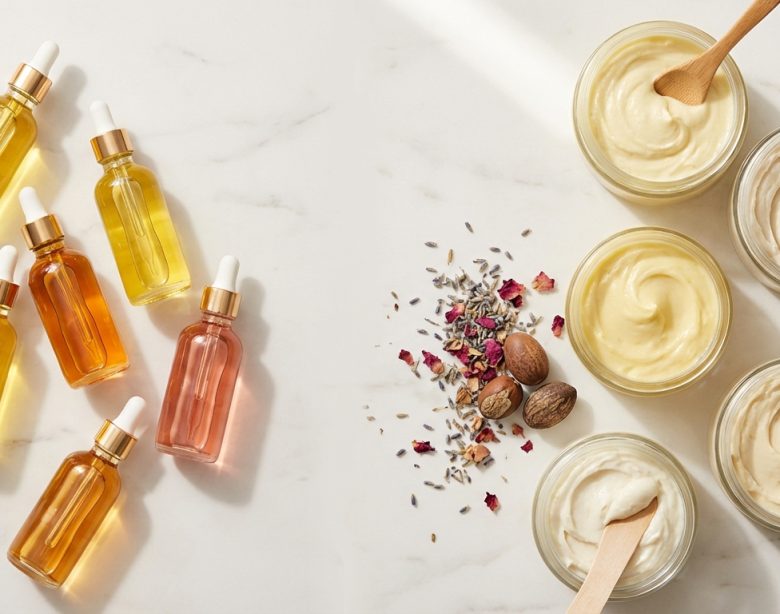
Most body oils contain plant-based oils like jojoba, almond, or coconut oil. These ingredients mimic your skin’s natural sebum. They sink into the outer layer of your skin and form a protective film.
The best time to apply body oil is right after showering, while your skin is still damp. The oil traps that water against your skin, preventing it from evaporating. Without that existing moisture, oil alone won’t hydrate you.
Think of it like this: oil is the lid on a jar. It keeps what’s already inside from escaping. But if the jar is empty to begin with, the lid doesn’t help much.
Body oils absorb faster than creams or butters. They leave a silky, sometimes slightly glossy finish. Many people love them for summer or humid climates where heavy creams feel suffocating.
How body butter works differently
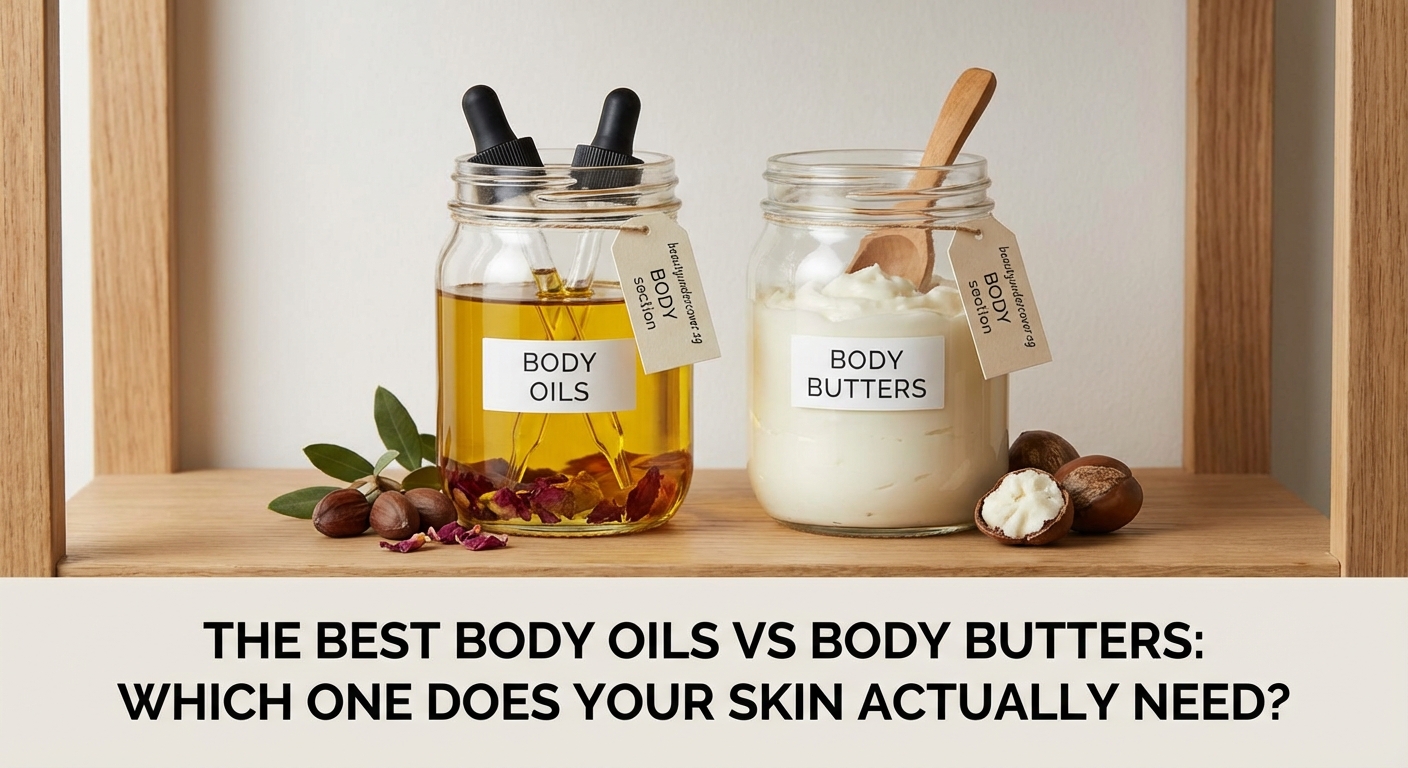
Body butter has a completely different formulation. It combines oils with water-based ingredients and emulsifiers that blend them together. This creates a thick, creamy texture that feels richer on your skin.
The water content in body butter actually adds hydration. The oils and butters (like shea butter or cocoa butter) then seal that moisture in. You’re getting both hydration and occlusion in one product.
Body butters typically contain humectants like glycerin or hyaluronic acid. These ingredients pull water from the air into your skin. Combined with the occlusive oils, you get a one-two punch of moisture delivery and retention.
The texture takes longer to absorb. You’ll feel it sitting on your skin for a few minutes before it fully sinks in. This makes body butter less ideal for getting dressed immediately or for hot weather when you’re already sweating.
But for cold, dry climates or skin conditions like eczema, body butter provides the intensive treatment your skin needs. It’s like wrapping your skin in a protective, nourishing cocoon.
Breaking down the key differences
Let’s get specific about how these two products compare across the factors that actually matter.
| Factor | Body Oil | Body Butter |
|---|---|---|
| Main function | Seals in existing moisture | Adds and seals moisture |
| Best applied | On damp skin | On dry or damp skin |
| Absorption time | 2-5 minutes | 5-15 minutes |
| Texture | Lightweight, silky | Thick, creamy |
| Ideal climate | Warm, humid | Cold, dry |
| Skin feel | Slightly glossy | Rich, protected |
| Ingredients | Pure oils, vitamin E | Oils, butters, water, emulsifiers |
The ingredient list tells you everything. Pick up a body oil and you’ll see maybe five ingredients, all oils. A body butter might have 15 or 20 ingredients, including water, preservatives, and stabilizers.
Neither approach is better or worse. They’re just designed for different purposes.
Matching products to your skin type
Your skin type matters more than marketing claims when choosing between oil and butter.
Oily or combination skin usually does better with body oil. It sounds counterintuitive, but lightweight oils can actually balance your skin’s oil production. Look for non-comedogenic oils like grapeseed or jojoba that won’t clog pores.
Dry skin benefits from both, depending on severity. Mildly dry skin might love a body oil applied after every shower. Very dry skin needs the extra hydration that body butter provides.
Sensitive skin can react to either product, but body oils with fewer ingredients give you less to react to. If you choose butter, scan the ingredient list for common irritants like fragrance or essential oils.
Normal skin can use either based on preference and season. You might switch between them as the weather changes.
“I tell my clients to think about their environment first, then their skin type. Someone with oily skin living in Minnesota winter still needs more than a light oil. Context matters as much as skin type.” – Dermatology nurse practitioner
When to use each product (and when to use both)
Timing and layering make a huge difference in how well these products work.
Best times for body oil
- Right after showering on damp skin
- Before bed for overnight absorption
- After shaving to soothe skin
- Mixed with body lotion for extra slip
- During summer months
- In humid climates
Best times for body butter
- On extremely dry patches (elbows, knees, feet)
- Before going outside in cold weather
- At night as an intensive treatment
- During winter months
- After exfoliating
- For skin conditions like eczema or psoriasis
You can absolutely use both. Apply body oil on damp skin right after your shower for baseline moisture. Then target specific dry areas with body butter before bed. This layering approach works beautifully if you have combination body skin (oily back, dry legs, for example).
Some people apply body oil in the morning for a lightweight feel under clothes, then use body butter at night when absorption time doesn’t matter. Building a body care routine that actually works means experimenting with timing until you find what fits your schedule.
How to apply each product correctly
Application technique changes everything. Using the right product the wrong way wastes money and leaves you disappointed.
Applying body oil properly
- Shower or bathe as usual, using a gentle cleanser
- Pat your skin with a towel until it’s damp, not soaking wet
- Pour a small amount of oil into your palm (a little goes far)
- Rub your hands together to warm the oil
- Apply in long, smooth strokes following your skin’s natural lines
- Focus on naturally dry areas first (shins, arms, torso)
- Wait 2-3 minutes before getting dressed
The damp skin step is critical. Water on your skin gives the oil something to seal in. Applying oil to completely dry skin won’t hydrate you nearly as well.
Applying body butter correctly
- Start with clean, dry skin (or damp if you prefer)
- Scoop out a small amount (body butter is concentrated)
- Warm it between your palms until it softens
- Massage into skin using circular motions
- Pay extra attention to rough patches
- Allow 5-10 minutes to absorb before dressing
- Reapply to problem areas as needed
Don’t rub body butter in frantically like you’re trying to erase a stain. Slow, massage-like movements help it absorb better and feel more luxurious.
Common mistakes that waste your money
Even with the right product, these errors sabotage your results.
Applying oil to bone-dry skin. You’re just making yourself shiny without getting real hydration. Always apply to damp skin or layer over a water-based product.
Using body butter in summer then complaining it’s greasy. Of course it is. You’re using a winter product in July. Switch to something lighter or use it only on specific dry spots.
Buying based on scent alone. That coconut vanilla body butter smells amazing, but if your skin hates coconut oil, you’ll break out. Check the actual ingredients, not just the fragrance.
Expecting immediate transformation. Neither product fixes chronic dryness overnight. Consistent use over two weeks shows real results.
Skipping problem areas because they’re “not that bad.” Your heels and elbows need extra attention. Don’t just do a cursory swipe and call it done.
Storing products in hot bathrooms. Heat degrades oils and can cause body butter to separate. Keep them in a cool, dry place.
Ingredient red flags and green lights
Not all body oils and butters are created equal. Knowing what to look for protects your skin and your wallet.
Ingredients to seek out
- Jojoba oil: Closely mimics skin’s natural oils, absorbs beautifully
- Shea butter: Intensely moisturizing, anti-inflammatory
- Squalane: Lightweight, non-greasy, suitable for all skin types
- Vitamin E: Antioxidant protection, helps products last longer
- Ceramides: Repair skin barrier, especially good for dry skin
- Hyaluronic acid (in butters): Pulls moisture into skin
Ingredients to watch carefully
- Fragrance or parfum: Common irritant, especially for sensitive skin
- Essential oils: Can cause reactions, particularly citrus oils
- Coconut oil: Comedogenic for many people, may cause breakouts
- Mineral oil: Not inherently bad, but some prefer plant-based alternatives
- Parabens: Preservatives some people prefer to avoid
- Alcohol (in butters): Can be drying, though not all alcohols are bad
The first five ingredients matter most. They make up the bulk of the formula. If you see water listed first in a “body butter,” you’re getting a thick lotion, not a true butter.
Budget-friendly options that actually work
You don’t need to spend a fortune. These affordable options perform as well as luxury versions.
For body oils:
– Pure sweet almond oil from the grocery store works beautifully
– Grapeseed oil is inexpensive and lightweight
– Jojoba oil costs more but lasts forever (you use very little)
– Baby oil (if you’re okay with mineral oil) is incredibly cheap
For body butters:
– Store brand body butters often use the same manufacturers as name brands
– Raw shea butter from natural food stores is affordable and pure
– CeraVe and Eucerin make excellent drugstore body creams with ceramides
– DIY body butter (shea butter plus oil) costs pennies per ounce
The fancy packaging and marketing add dollars to the price tag. A simple jar of quality shea butter from a natural foods store often outperforms a $40 department store body butter with 30 ingredients you can’t pronounce.
Seasonal switching strategies
Your skin’s needs change with the weather. Smart switching saves money and keeps your skin happy year-round.
Spring transition: Start mixing body oil with your winter body butter. This creates a lighter texture as temperatures warm up. Gradually use less butter and more oil.
Summer approach: Switch entirely to body oil or a light lotion. Use body butter only on persistently dry spots like heels. Keep a small travel size of butter for air-conditioned offices or planes.
Fall preparation: Begin introducing body butter back into your routine. Use oil during the day, butter at night. This gradual transition prevents your skin from freaking out when winter hits.
Winter survival: Body butter becomes your primary product. Keep body oil for immediate post-shower application, then layer butter on top for extra protection. Don’t forget hands and feet.
If you travel between climates, pack both. Your skin in Phoenix in January needs different care than your skin in Boston in January.
Combining with other body care products
Body oils and butters don’t exist in isolation. They work alongside your other products.
With body lotion: Apply lotion first for hydration, then seal with a thin layer of oil. This gives you the benefits of both without the heavy feel of butter.
With exfoliants: Always moisturize after exfoliating. Your freshly buffed skin absorbs products better. Body butter works especially well here because exfoliation can be drying.
With retinol body products: If you use retinol on your body (yes, it’s a thing), follow with body butter. Retinol can be drying, and the extra moisture helps prevent irritation.
With sunscreen: Apply sunscreen first, let it absorb completely, then use body oil if needed. Never mix them or apply oil first, as it can interfere with sunscreen effectiveness.
In your overall routine: Just like building a simple skincare routine for your face, your body care needs consistency. Pick products that work together and use them regularly.
Special considerations for specific concerns
Some skin situations need special attention when choosing between oil and butter.
Keratosis pilaris (those little bumps on your arms): Body oil with gentle exfoliation works better than thick butter, which can trap dead skin cells.
Eczema or psoriasis: Body butter provides the intensive moisture these conditions require. Look for fragrance-free formulas with colloidal oatmeal or ceramides.
Aging skin: Both work, but oils rich in antioxidants (like rosehip or argan) offer extra benefits. Layer oil under butter for maximum effect.
Pregnancy: Body butter applied consistently can help with stretching skin. Choose unscented versions to avoid nausea triggers.
Athletic skin: If you shower multiple times daily, lightweight body oil prevents over-moisturizing while still protecting your skin barrier.
Tattoos: Fresh tattoos need fragrance-free, gentle products. Once healed, body oil keeps colors vibrant without the heaviness of butter.
Making the right choice for you right now
Stop overthinking this decision. Your skin is telling you what it needs.
If your skin feels tight after showering, you need more moisture. If it looks flaky or rough, you need intensive treatment. If it feels fine but looks dull, you might just need the glow that oil provides.
Start with one product and use it consistently for two weeks. Your skin needs time to respond. If you’re still dry after two weeks of proper application, switch to something richer. If you’re breaking out or feeling greasy, go lighter.
The best product is the one you’ll actually use. A $10 body oil you apply daily beats a $50 body butter that sits in your cabinet because it takes too long to absorb.
Pay attention to how your skin feels at different times of day and in different situations. You might realize you need body oil for your arms and torso but body butter for your legs and feet. That’s completely normal.
Your skin is unique. What works for your best friend or your favorite influencer might not work for you. Trust your own experience over marketing claims, and don’t be afraid to experiment until you find your perfect match.