Your skin has different needs at 8 AM than it does at 10 PM. Understanding this simple truth can transform your complexion, save you money on products that don’t work, and prevent you from accidentally sabotaging your own efforts.
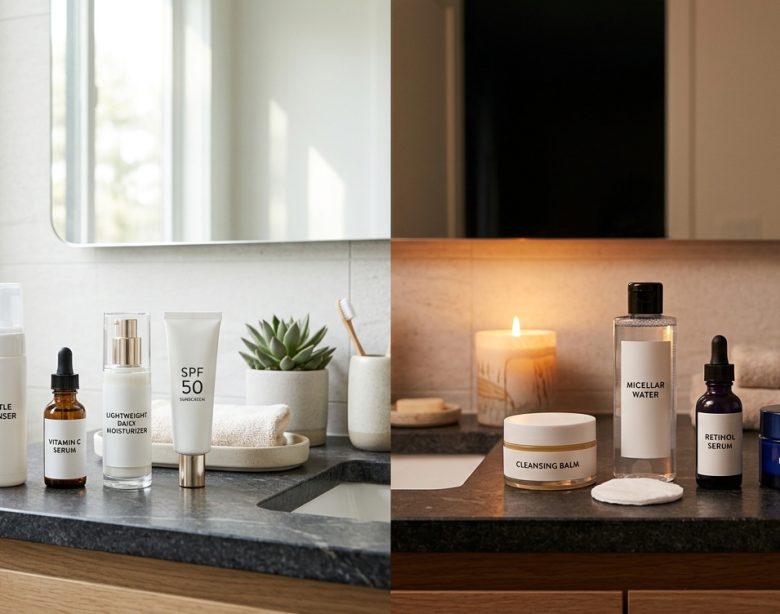
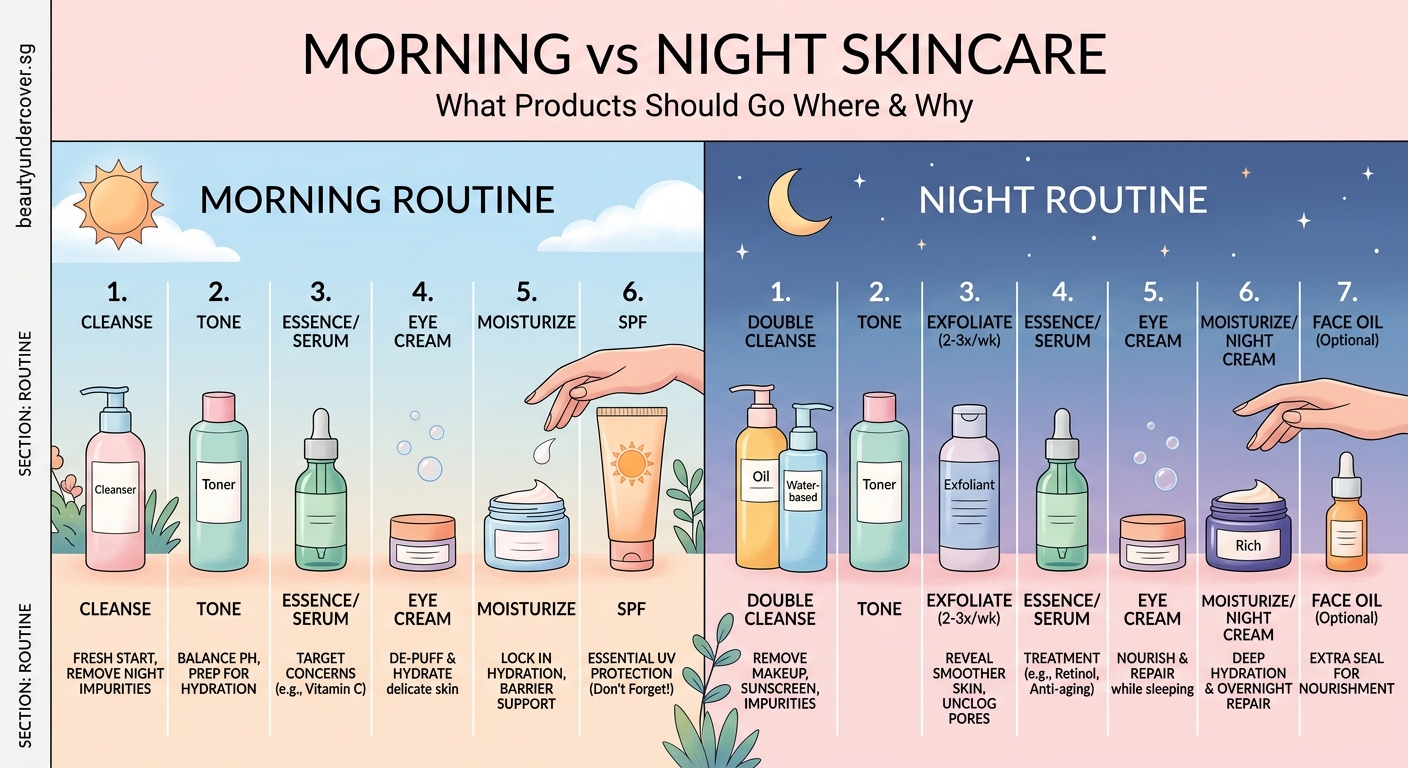
Your morning vs night skincare routine should reflect what your skin faces during each period. Mornings require protection from UV rays, pollution, and environmental stress. Nights focus on repair, cell turnover, and deep hydration while you sleep. Using the right products at the right time maximizes results and prevents irritation, wasted effort, and ingredient conflicts that can damage your skin barrier.
Why Your Skin Needs Different Care at Different Times
Your skin operates on a circadian rhythm just like the rest of your body.
During the day, your skin goes into defense mode. It produces more sebum to protect against environmental stressors. Blood flow increases. Your skin cells focus on shielding you from UV radiation, pollution particles, and temperature changes.
At night, everything shifts. Cell regeneration peaks between 11 PM and midnight. Your skin loses more water while you sleep, making it more permeable to active ingredients. Collagen production increases. Your body redirects energy from protection to repair.
This is why slathering on retinol before heading to the beach is a terrible idea. And why skipping SPF in your morning routine but using it at night makes zero sense.
If you’re just starting to build a consistent regimen, understanding these biological differences will help you make smarter choices about how to build a simple 3-step skincare routine for absolute beginners.
Your Complete Morning Skincare Routine
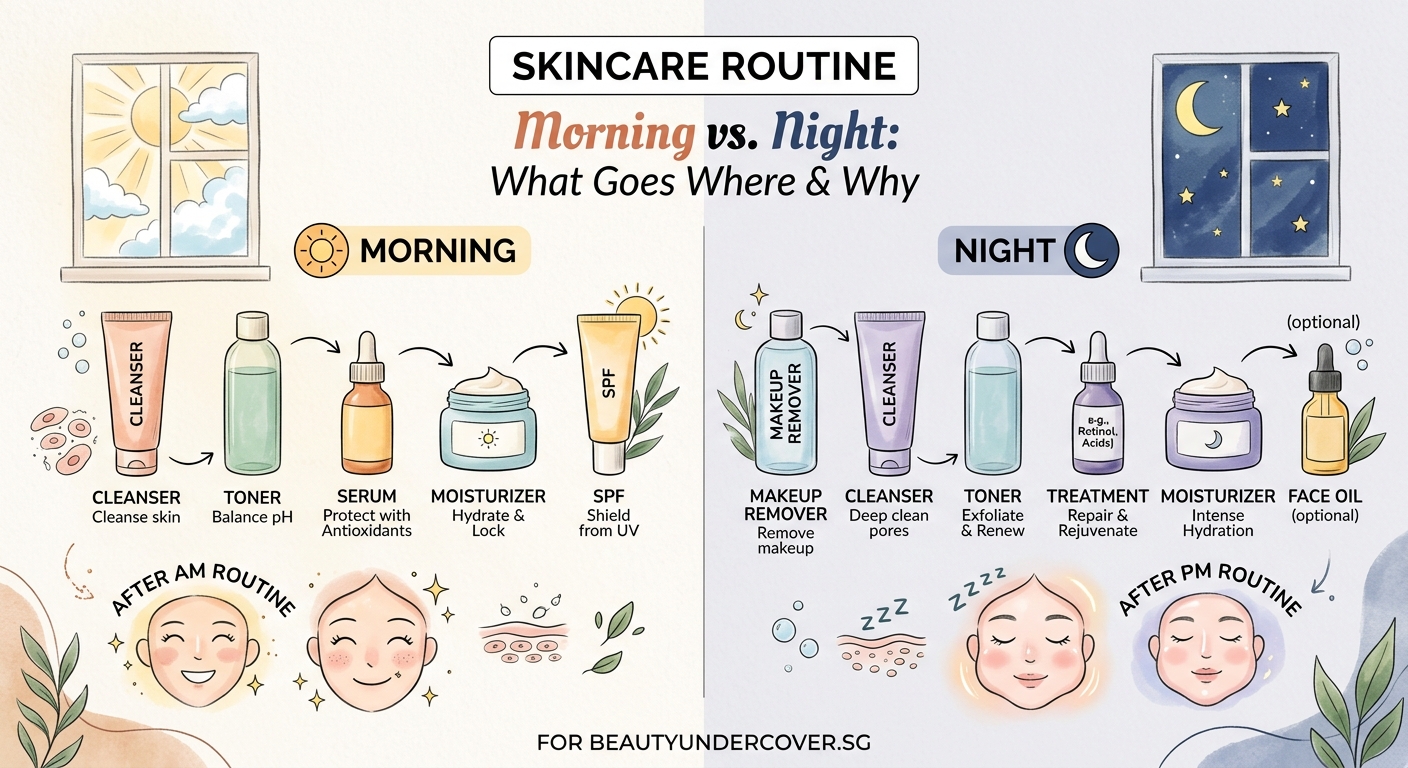
Morning routines should be lightweight, protective, and prep your skin for makeup if you wear it.
Step 1: Gentle Cleanser
Start with a mild, pH-balanced cleanser. Your skin isn’t dirty in the morning unless you sweat heavily at night.
Skip harsh foaming cleansers that strip your skin. You want to remove overnight oils and prep for the next steps, not leave your face tight and squeaky.
For most people, a gel or cream cleanser works best. Oily skin types can use a light foaming formula.
Step 2: Toner or Essence (Optional)
If you use a toner, morning is fine. Look for hydrating formulas with ingredients like hyaluronic acid or glycerin.
Avoid exfoliating toners with AHAs or BHAs in the morning. These make your skin more sun-sensitive.
Step 3: Treatment Serums
Morning serums should focus on protection and brightening.
Best morning actives:
– Vitamin C (antioxidant protection, brightens)
– Niacinamide (reduces inflammation, controls oil)
– Hyaluronic acid (hydration)
– Peptides (strengthening)
Apply serums from thinnest to thickest consistency. Most people only need one or two serums. More isn’t better, and you can easily overwhelm your skin if you layer too many skincare products.
Step 4: Eye Cream
If you use eye cream, morning application helps with puffiness and preps the delicate area for concealer.
Look for caffeine to reduce puffiness or peptides for fine lines.
Step 5: Moisturizer
Choose a lighter moisturizer for daytime. You want hydration without heaviness, especially if you’re applying makeup.
Gel-creams work well for oily skin. Lightweight lotions suit normal to dry skin. Very dry skin might need a richer cream even in the morning.
Step 6: Sunscreen (Non-Negotiable)
This is the most important step. SPF 30 minimum, broad-spectrum, every single day.
Apply sunscreen as the final step in your skincare routine. Wait for it to set before makeup.
Mineral sunscreens (zinc oxide, titanium dioxide) sit on top of skin. Chemical sunscreens absorb into skin. Both work, pick what you like.
Reapply every two hours if you’re outdoors. Most people skip this, and it’s why sunscreen “doesn’t work” for them.
Your Complete Night Skincare Routine
Night routines can be richer, more treatment-focused, and include ingredients that don’t play well with sunlight.
Step 1: First Cleanse (If You Wear Makeup/Sunscreen)
Use an oil-based cleanser, cleansing balm, or micellar water to break down makeup and SPF.
This step is crucial. Regular cleansers can’t fully remove these products alone.
Step 2: Second Cleanse
Follow with your regular water-based cleanser. This removes any remaining residue and actually cleans your skin.
Double cleansing might seem excessive, but it’s the difference between clean skin and clogged pores.
Step 3: Exfoliation (2-3 Times Per Week)
Chemical exfoliants belong in your nighttime routine.
AHAs (glycolic, lactic, mandelic acid) work on the skin’s surface. Great for dullness, texture, and fine lines.
BHAs (salicylic acid) penetrate pores. Better for oily, acne-prone skin.
Start with 2-3 times per week. More frequent exfoliation isn’t better and can damage your skin barrier.
If you’re new to acids, expect a potential adjustment period where your skin purges when you start new products.
Step 4: Treatment Serums
Night is when you bring out the big guns.
Best nighttime actives:
– Retinol/retinoids (cell turnover, anti-aging, acne)
– Peptides (collagen support)
– Niacinamide (if not using in morning)
– Azelaic acid (brightening, acne)
Never use retinol and AHAs/BHAs on the same night when starting out. Your skin needs time to build tolerance.
Step 5: Eye Cream
Nighttime eye creams can be richer. Look for retinol (if your regular retinol doesn’t go near eyes), peptides, or ceramides.
Step 6: Moisturizer
Go richer at night. Your skin loses more water while you sleep, so a heavier cream helps prevent trans-epidermal water loss.
Ingredients like ceramides, squalane, and shea butter work beautifully at night.
Step 7: Face Oil or Sleeping Mask (Optional)
If your skin is very dry, add a face oil or sleeping mask as the final step.
This seals everything in and provides extra nourishment while you sleep.
Products That Should Only Go in Your Morning Routine
| Product Type | Why Morning Only | What Happens If Used at Night |
|---|---|---|
| Sunscreen | Protects from UV damage during day | Wastes product, can clog pores overnight |
| Vitamin C (L-ascorbic acid) | Protects against free radicals, works with SPF | Less effective without UV exposure, can oxidize |
| Mattifying products | Controls oil during active hours | Unnecessary, can over-dry skin |
| Makeup primers | Preps skin for cosmetics | Clogs pores, prevents nighttime repair |
Products That Should Only Go in Your Night Routine
| Product Type | Why Night Only | What Happens If Used in Morning |
|---|---|---|
| Retinol/retinoids | Sun-sensitive, increases photosensitivity | Degrades in sunlight, increases sun damage risk |
| AHA/BHA exfoliants | Makes skin sun-sensitive | Higher risk of sunburn and hyperpigmentation |
| Rich sleeping masks | Too heavy for daytime | Feels greasy, doesn’t work under makeup |
| Prescription treatments | Often photosensitive | Can cause irritation, reduce effectiveness |
Products You Can Use Morning or Night
Some products work equally well at any time. Use them based on your routine needs and preferences.
- Niacinamide: Works morning or night, pairs well with most ingredients
- Hyaluronic acid: Hydrates anytime, layer under moisturizer
- Peptides: Beneficial at any time, often better at night for uninterrupted work
- Ceramides: Strengthen barrier anytime, especially good at night
- Basic moisturizers: Use lighter versions in AM, richer ones at PM
The key is not doubling up unnecessarily. If you use niacinamide in the morning, you don’t need it again at night unless you have specific reasons.
Common Mistakes That Sabotage Your Routine
Using too many actives at once
Your skin can’t process five different treatment serums simultaneously. Pick one or two key concerns and address them consistently.
Skipping sunscreen because you used retinol at night
Retinol makes your skin more sun-sensitive for days, not just hours. Morning SPF is non-negotiable when using any retinoid.
Applying products in the wrong order
The general rule: thinnest to thickest consistency. Serums before creams. Oils last (except sunscreen, which always goes last in AM).
For a detailed breakdown, check out the right order to apply your skincare products for maximum results.
Using daytime products at night and vice versa
This wastes money and reduces effectiveness. A mattifying moisturizer at night dries out your skin unnecessarily. A rich night cream in the morning feels awful under makeup.
Expecting overnight results
Skincare takes time. Most products need 6-12 weeks of consistent use before you see real changes.
“The biggest mistake I see is people switching products every two weeks because they don’t see instant results. Your skin needs consistency and time to respond to new ingredients. Give products at least 8 weeks before deciding they don’t work.” – Board-certified dermatologist Dr. Michelle Wong
Building Your Personalized Morning vs Night Skincare Routine
Not everyone needs a 10-step routine. Start with the basics and add as needed.
Minimal Morning Routine (5 Minutes)
- Gentle cleanser or just water
- Moisturizer with SPF or separate sunscreen
- Done
Minimal Night Routine (7 Minutes)
- Cleanser (double cleanse if wearing makeup/SPF)
- Treatment serum (if using one)
- Moisturizer
- Done
Full Morning Routine (10-12 Minutes)
- Gentle cleanser
- Toner or essence
- Vitamin C serum
- Eye cream
- Moisturizer
- Sunscreen
Full Night Routine (15 Minutes)
- Oil cleanser
- Water-based cleanser
- Exfoliant (2-3x weekly)
- Treatment serum (retinol, niacinamide, etc.)
- Eye cream
- Moisturizer
- Face oil or sleeping mask (optional)
The “right” routine is the one you’ll actually do consistently. A simple routine you follow daily beats an elaborate one you do sporadically.
How to Transition Between Routines
Your skin’s needs change with seasons, stress, hormones, and age.
Summer to fall: Add richer moisturizers at night, keep morning light
Winter to spring: Reduce heavy creams, increase exfoliation frequency gradually
Starting new actives: Introduce one product at a time, wait 2-4 weeks before adding another
Dealing with irritation: Strip back to basics (cleanser, moisturizer, SPF), rebuild slowly
If you notice your skin acting up when seasons change, you might benefit from knowing how to transition your skincare routine from summer to fall without breaking out.
Special Considerations for Different Skin Types
Oily skin: Lighter textures morning and night, don’t skip moisturizer at night
Dry skin: May need richer morning moisturizer, definitely need it at night
Combination skin: Use different products on different face zones if needed
Sensitive skin: Fewer products, simpler routines, patch test everything
Acne-prone skin: Consistent gentle cleansing, targeted treatments at night, never skip SPF
What About Weekends and Days Off?
Your skin doesn’t take weekends off, and neither should your routine.
But you can simplify on days when you’re home all day. Still cleanse and moisturize. Still use SPF if you’re near windows (UVA rays penetrate glass).
You might skip makeup, but don’t skip skincare basics.
Consider the weekend reset routine as a way to give your skin extra attention without daily time pressure.
Making Your Routine Work With Real Life
Traveling? Bring travel sizes of your core products: cleanser, moisturizer, SPF, one treatment serum.
Late night out? At minimum, remove makeup and apply moisturizer. Do the full routine in the morning.
Extremely tired? Keep micellar water and moisturizer by your bed for absolute emergencies. Not ideal, but better than sleeping in makeup.
Working night shifts? Follow the routine based on your sleep schedule, not the clock. “Morning” routine when you wake up, “night” routine before bed.
Time Your Routine Around Your Life, Not Perfection
The best morning vs night skincare routine is the one that fits your actual schedule and that you’ll maintain for months and years.
A rushed 3-step routine done consistently beats an elaborate 12-step routine you abandon after two weeks. Start simple, add products slowly, and pay attention to how your skin responds. Your skin will tell you what it needs if you listen. Give products time to work, protect your skin during the day, repair it at night, and remember that consistency always beats complexity.