Black Friday beauty sales can feel like a gold rush. Hundreds of emails flood your inbox promising 50% off, limited-time offers, and deals that seem too good to pass up. But here’s the truth: not every discount is worth your money. Some products get marked up before the sale just to look like a bargain. Others are being discontinued or reformulated. And plenty are items you never needed in the first place.
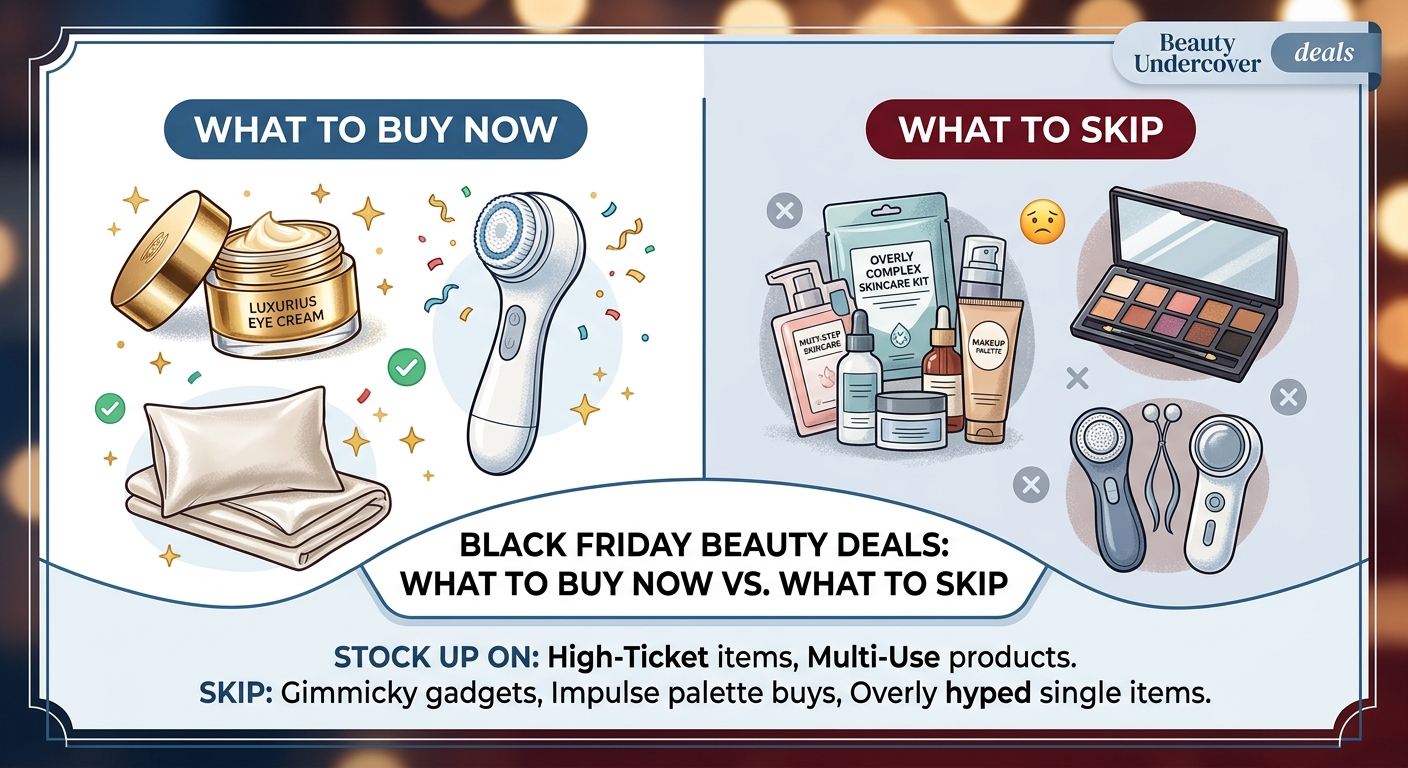
Black Friday beauty deals can save you real money, but only if you shop strategically. Focus on staples you already use, value sets with full-sized products, and tools that last years. Skip limited editions, unfamiliar brands without reviews, and anything marketed as “exclusive” without clear ingredient lists. Plan ahead, set a budget, and ignore the countdown timers designed to rush your decisions.
What actually goes on sale during Black Friday
Retailers plan their Black Friday promotions months in advance. They know exactly which products to discount and which ones to keep at full price.
Skincare sets and holiday bundles typically see the deepest cuts. Brands package their bestsellers together and offer 30% to 50% off the combined retail value. These sets work well if you already love the brand and use multiple products from their line.
Makeup palettes and limited edition collections also get heavy discounts. But there’s a catch. Many of these items were created specifically for the holiday season. The formulas might differ from the permanent line. The shades might not suit your everyday routine.
Tools and devices see moderate discounts, usually 20% to 30% off. Hair dryers, curling irons, and facial cleansing brushes rarely go deeper than that. If you’ve been eyeing a specific tool all year, Black Friday might be your best window.
Fragrance deals can be excellent or terrible. Full-sized bottles from established brands often hit 40% off. But gift sets with tiny samples and body lotions you’ll never use? Those are designed to look like value without delivering it.
Here’s what rarely goes on sale: newly launched products, cult favorites that sell out regularly, and prestige skincare with waiting lists. If a product is already flying off shelves, brands have zero incentive to discount it.
The buy now category
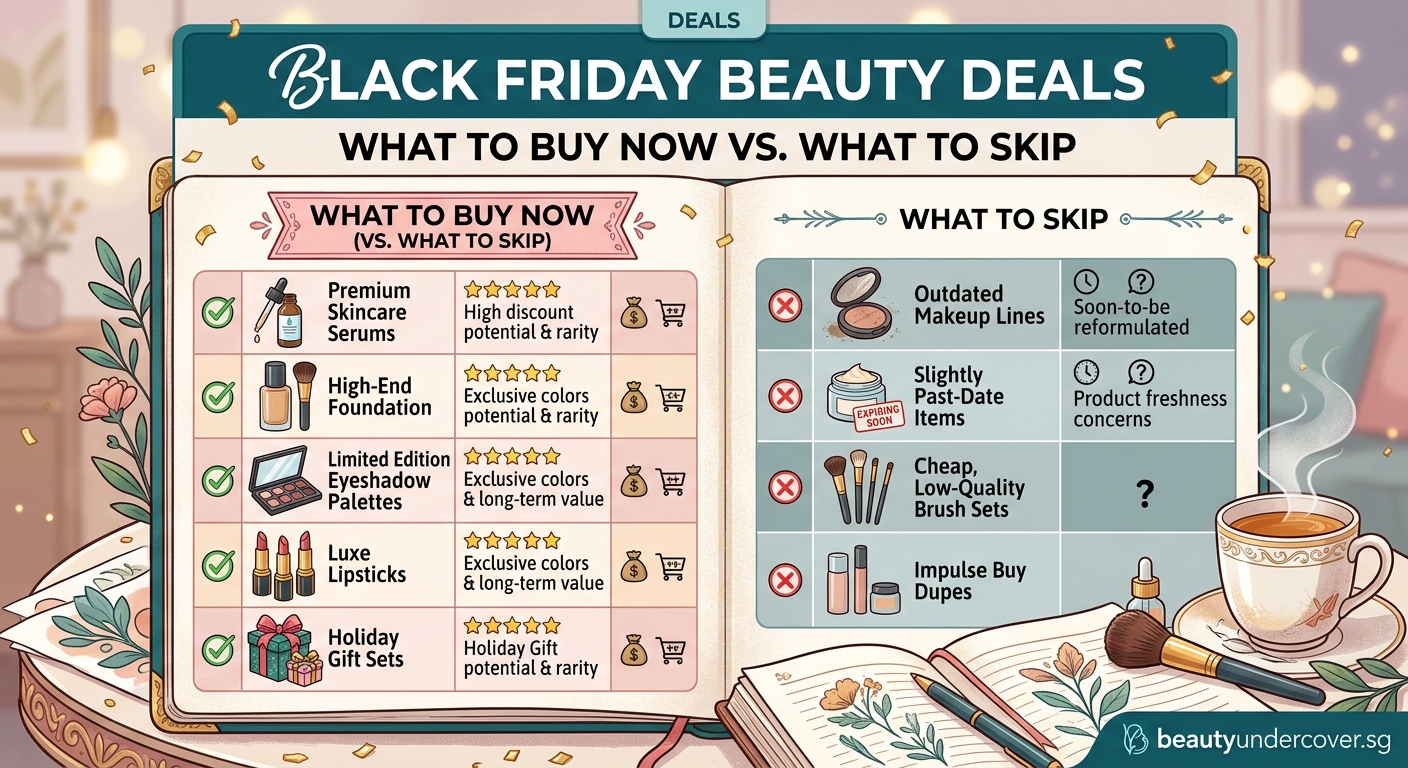
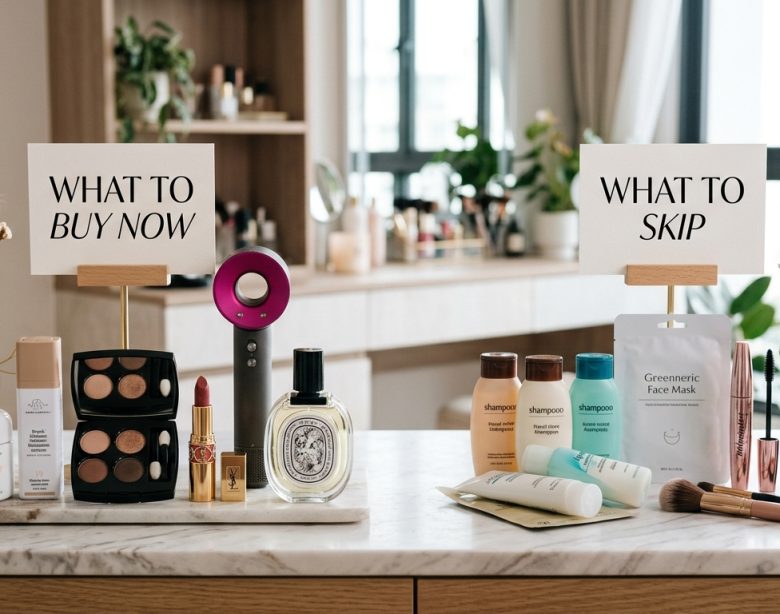
Some products genuinely deserve your Black Friday budget. These are items you’ll use completely, products with proven track records, and purchases that save you money over time.
Staples you already repurchase
If you buy the same cleanser, moisturizer, or sunscreen every two months, Black Friday is your moment to stock up. Look for bundles or multipacks of your go-to products.
A simple skincare routine doesn’t need constant experimentation. When you find products that work, buying them at 40% off makes perfect financial sense.
Check expiration dates before you buy six bottles of anything. Most skincare products last 12 to 24 months unopened. If you won’t use them within that window, you’re wasting money regardless of the discount.
Value sets with full-sized products
Not all sets are created equal. The good ones include full-sized versions of products you’d buy separately. The bad ones pad the value with deluxe samples and filler items.
Read the fine print. A $100 set “valued at $250” might contain four full-sized products worth $200 and ten sample packets worth $50 in imaginary retail value.
Look for sets from brands you trust. If you’ve never tried the brand, a Black Friday set isn’t the time to start. You might end up with five products that don’t work for your skin.
Tools and devices you’ll use for years
A quality hair dryer lasts five to seven years. A good curling iron can last even longer. If you’re still using a $20 drugstore dryer from 2018, upgrading during Black Friday makes sense.
Focus on tools from established brands with warranties. A 30% discount on a device that breaks in six months isn’t a deal.
Avoid trendy gadgets with one-star reviews and no track record. That viral face massager might look amazing in ads, but if real users say it breaks after three uses, skip it.
Makeup brushes and application tools
Brushes are one of the best Black Friday investments. Quality synthetic brushes can last a decade with proper care.
Look for sets from brands known for their tools, not their makeup. Companies that specialize in brushes typically offer better construction and materials.
Avoid sets with 32 brushes for $40. You don’t need that many, and the quality will reflect the price. A focused set of eight to ten well-made brushes beats a drawer full of shedding bristles.
The skip it category
Some Black Friday deals exist purely to move inventory. Others prey on impulse buying. Here’s what to leave in your cart.
Limited edition anything
Limited edition products create urgency. They’re designed to make you buy now without thinking. But most limited edition items are reformulated versions of existing products with different packaging.
That holiday eyeshadow palette with 24 shades? You’ll use six of them. The rest will sit untouched until you throw them away in two years.
Fragrance limited editions often smell different from the permanent line. You might love the original scent and hate the “holiday edition” with added vanilla and spice notes.
Unfamiliar brands without research
Black Friday introduces dozens of new-to-you brands at tempting prices. But a 60% discount on a serum you’ve never heard of isn’t a bargain if it breaks you out.
Some brands inflate their “regular” prices to make discounts look dramatic. A $80 serum marked down to $32 might actually be worth $25 based on ingredients and formulation.
Check reviews before buying unknown brands. Look for detailed feedback from people with your skin type. If you can’t find substantial reviews, that’s a red flag.
Skincare products that might cause purging
Starting new active ingredients during the holiday season is risky. Retinol, AHAs, and BHAs can cause skin purging that lasts four to six weeks.
Do you really want to deal with breakouts during family gatherings and New Year’s parties? Probably not.
If you’re committed to trying new actives, buy them on sale but wait until January to start. Your skin will thank you.
Anything marketed as “exclusive” without clear details
“Exclusive Black Friday formula” should raise immediate suspicion. What changed? Why isn’t this information front and center?
Sometimes exclusive means improved. Often it means cheaper ingredients packaged to look premium.
If a brand won’t clearly explain what makes their exclusive product different, assume it’s a marketing gimmick.
How to spot fake discounts
Retailers use psychological tricks to make mediocre deals look incredible. Here’s how to see through them.
The price history check
Many products get “discounted” to their regular price from six months ago. A moisturizer that costs $45 all year gets bumped to $60 in October, then “slashed” to $45 for Black Friday.
Use price tracking tools or check the Wayback Machine to see historical pricing. If the product was cheaper in July, the Black Friday deal isn’t special.
The value calculation trap
Brands love to tout total value. “Six products worth $200 for just $60!” sounds amazing until you realize you’d never buy five of those products separately.
Calculate the value based only on items you’d actually purchase. If only two products interest you, and they retail for $70 combined, you’re paying $60 for $70 worth of product. That’s a 14% discount, not the 70% the marketing claims.
The countdown timer scam
“Only 3 hours left!” creates panic. But most Black Friday sales run for days, and many deals return during Cyber Monday.
Ignore countdown timers. If you need time to research, take it. The deal will either still be there, or it wasn’t worth buying in the first place.
Your Black Friday shopping strategy
Going in with a plan prevents impulse purchases and buyer’s remorse.
Step 1: Inventory what you have
Before you buy anything, check your current stash. Do you really need another cleanser when you have two unopened backups?
Make a list of products you’re actually running low on. These are your priority purchases.
Step 2: Set a realistic budget
Decide how much you can spend without guilt or financial stress. Write it down.
Allocate your budget across categories. Maybe $100 for skincare staples, $50 for a new tool, and $30 for trying one new product.
Step 3: Research before the sales start
Don’t wait until Black Friday morning to start researching. By then, you’ll make rushed decisions.
Read reviews now. Watch comparison videos. Check ingredient lists. Know exactly which products you want before the sales begin.
Step 4: Sign up for early access
Many retailers offer early access to email subscribers or loyalty program members. Sign up a week before Black Friday.
Early access means less competition for limited stock and more time to make thoughtful decisions.
Step 5: Compare across retailers
The same product might be 30% off at one store and 50% off at another. Check multiple retailers before buying.
Factor in shipping costs and return policies. A slightly smaller discount with free shipping and easy returns beats a bigger discount with $15 shipping and restocking fees.
Category-by-category buying guide
Different product categories require different strategies.
| Category | Buy | Skip | Why |
|---|---|---|---|
| Cleansers | Multipacks of your current favorite | Trendy cleansing balms you’ve never tried | Cleansers get used up fast, making bulk purchases worthwhile |
| Moisturizers | Full-sized duos from trusted brands | Limited edition textures or scents | You know what works for your skin; stick with it |
| Serums | Proven formulas you’ve tested before | New launches with minimal reviews | Serums are expensive; buy only what you know performs |
| Sunscreen | Stock up for the entire year | Face/body combo products that compromise on both | Sunscreen expires, but buying 6-8 bottles for the year saves money |
| Masks | Individual masks you love, not variety packs | 20-piece sets with random assortments | Most variety packs include masks that don’t suit your skin type |
| Makeup palettes | Neutral everyday palettes you’ll use completely | Colorful palettes with 18+ shades | Be honest about which shades you’ll actually wear |
The real cost of impulse buying
That $40 serum on sale for $16 feels like a steal. But if it sits unused for a year, you wasted $16, not saved $24.
Beauty products expire. Mascara lasts three months after opening. Sunscreen degrades after a year. Vitamin C serums oxidize within six months of opening.
Buying products you won’t use immediately means some will expire before you get to them. You’re literally throwing money away.
There’s also an emotional cost. A bathroom cluttered with half-used products creates stress. You feel guilty about the waste. You feel overwhelmed by choices.
Buying less but buying smarter feels better than hoarding products you’ll never finish.
What the pros actually buy on Black Friday
Beauty editors and makeup artists have seen every sale and tried every product. Here’s what they prioritize.
They stock up on basics. Micellar water, cotton pads, makeup remover, and other unglamorous essentials that get used daily.
They invest in tools. A professional-quality brush set or hair tool at 40% off is a genuine investment that improves their work for years.
They try expensive products they’ve been researching. If they’ve spent months reading about a $90 serum, getting it for $45 makes the experiment less risky.
They skip trends entirely. Pros know that viral products rarely live up to the hype. They wait for trends to prove themselves over months, not days.
When to buy after Black Friday
Not everything needs to be purchased during Black Friday weekend. Some categories go on deeper discount later.
Fragrance sees major sales in January when retailers clear holiday inventory. You’ll often find better deals in early January than late November.
Skincare sets get marked down further in December. Retailers need to move holiday inventory before year-end. Boxing Day sales often beat Black Friday prices.
Makeup palettes hit clearance in February. Once Valentine’s Day passes, holiday palettes get slashed to 70% off or more.
Tools sometimes see better deals during summer sales. Hair tools and devices get promoted heavily before summer vacations.
If you can wait, waiting often pays off. But if you need something now and the Black Friday price is fair, buy it. Waiting to save $5 more isn’t worth running out of your daily moisturizer.
Red flags that scream skip this deal
Some deals reveal themselves as traps with a closer look.
“Mystery boxes” or “surprise sets” are almost always disappointments. You’re buying blind, and retailers use these to dump products that don’t sell.
“Doorbuster” quantities of one or two units per store create artificial scarcity. If a retailer truly wanted to offer a great deal, they’d stock enough for actual customers.
Products labeled “compare to” or “similar to” luxury brands are admitting they’re not the real thing. You’re buying a knockoff at a discount, not a luxury product on sale.
Sets that include “deluxe samples” instead of specifying sizes are hiding something. A deluxe sample might be 0.5 oz when the full size is 3 oz. That’s not value.
Brands you’ve never seen in stores suddenly appearing with 70% off everything. If it sounds too good to be true, it probably is. Research the company before buying.
Building your Black Friday shortlist
Three days before Black Friday, create your final shopping list. Include only items that meet these criteria:
- You’ve researched the product and read reviews from people with your skin type or hair type.
- The product solves a specific problem you currently have.
- You’ll use it within the next six months.
- The Black Friday price is the lowest you’ve seen in the past year.
- You can afford it without touching your emergency fund or going into debt.
If an item doesn’t meet all five criteria, remove it from your list. Be ruthless.
Rank your list by priority. Put must-haves at the top and nice-to-haves at the bottom. If you hit your budget before reaching the bottom, that’s fine. Those items weren’t essential anyway.
Share your list with a friend who can hold you accountable. Tell them your budget and your priorities. Give them permission to talk you out of impulse additions.
The 24-hour rule for unplanned purchases
You’ll see deals you didn’t plan for. A product you’ve been curious about drops to an incredible price. A brand you love launches a surprise set.
Before buying anything not on your list, wait 24 hours. Add it to your cart but don’t check out.
During those 24 hours, research the product. Read reviews. Check if you already own something similar. Calculate whether the discount is actually good.
Most of the time, the urgency fades. You realize you don’t need it. The cart abandonment email might even offer an additional discount, making the deal better.
If after 24 hours you still want it, you’ve researched it, and it fits your budget, go ahead. But that waiting period eliminates most impulse purchases.
What to do with products that don’t work out
Even with careful planning, some purchases won’t work for you. A foundation might oxidize on your skin. A serum might cause irritation. A palette might look different in person.
Know the return policies before you buy. Some retailers offer 60-day returns on beauty products. Others have strict no-return policies on opened items.
Keep your receipts and packaging until you’ve tested the product. Don’t throw away boxes if you might need to return something.
If you can’t return a product, don’t force yourself to use it. Continuing to use something that breaks you out or irritates your skin causes more damage than the money you’d lose by stopping.
Consider giving unopened or gently used products to friends or family. Someone else might love what doesn’t work for you.
Learn from what went wrong. If a highly-rated product failed you, analyze why. Was it the wrong formula for your skin type? Did you not research thoroughly enough? Use that information to shop smarter next time.
“The best Black Friday deal is the one you don’t make. Every product you don’t buy is money saved, clutter avoided, and decision fatigue eliminated. Buy what you need, skip what you don’t, and ignore everything designed to make you feel like you’re missing out.” – Beauty industry insider
Making your money work harder
Black Friday beauty deals can genuinely save you money when you shop strategically. Focus on replenishing staples, investing in quality tools, and trying products you’ve thoroughly researched.
Skip the limited editions, mystery boxes, and unfamiliar brands with inflated “retail values.” Ignore countdown timers and artificial scarcity. Take your time, stick to your list, and remember that the best deal is the one that actually improves your routine.
Your bathroom doesn’t need more products. It needs the right products. Black Friday is your chance to get those right products at better prices, not to accumulate more things you’ll never finish. Shop with intention, and you’ll actually enjoy the savings instead of regretting the spending.