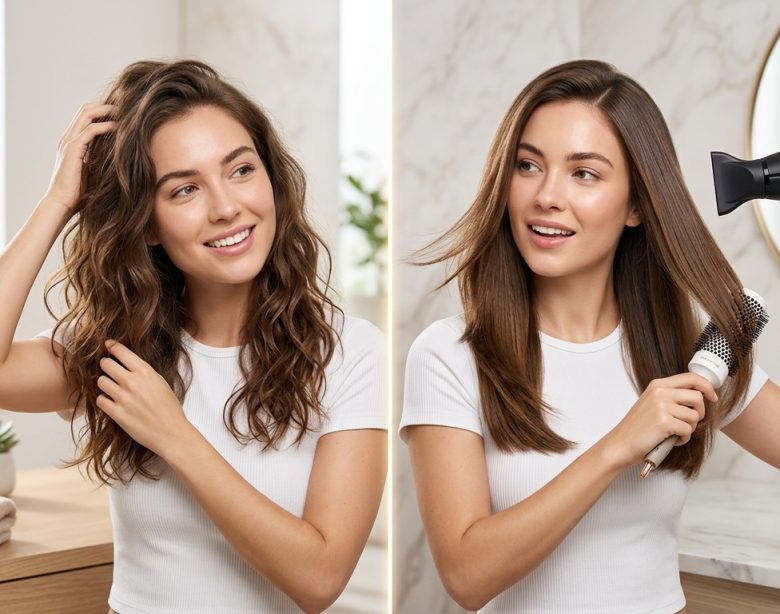
You step out of the shower, towel wrapped around your head, and face the same decision you make several times a week. Should you let your hair air dry while you get ready, or reach for the blow dryer to speed things up? The debate between air dry vs blow dry hair has divided hair care enthusiasts for years, with passionate advocates on both sides claiming their method is superior.
Neither method is universally better. Air drying can cause hygral fatigue from prolonged wetness, while blow drying risks heat damage if done incorrectly. The healthiest approach depends on your hair type, texture, and technique. Fine hair often benefits from gentle blow drying, while thick or coarse hair typically handles air drying well. Both methods require specific products and practices to minimize damage and maximize results.
What actually happens to your hair when it dries
Hair is most vulnerable when wet. The cuticle swells and lifts, making each strand fragile and prone to damage. Water causes the hydrogen bonds in your hair’s keratin structure to break temporarily, which is why wet hair stretches more easily than dry hair.
When hair dries, these bonds reform. How this happens matters more than you might think.
The process takes anywhere from 30 minutes to several hours depending on your hair’s thickness, porosity, and length. During this time, your hair remains in a weakened state. Every manipulation, from brushing to touching, creates friction that can roughen the cuticle or even break strands.
The truth about air drying and hair health
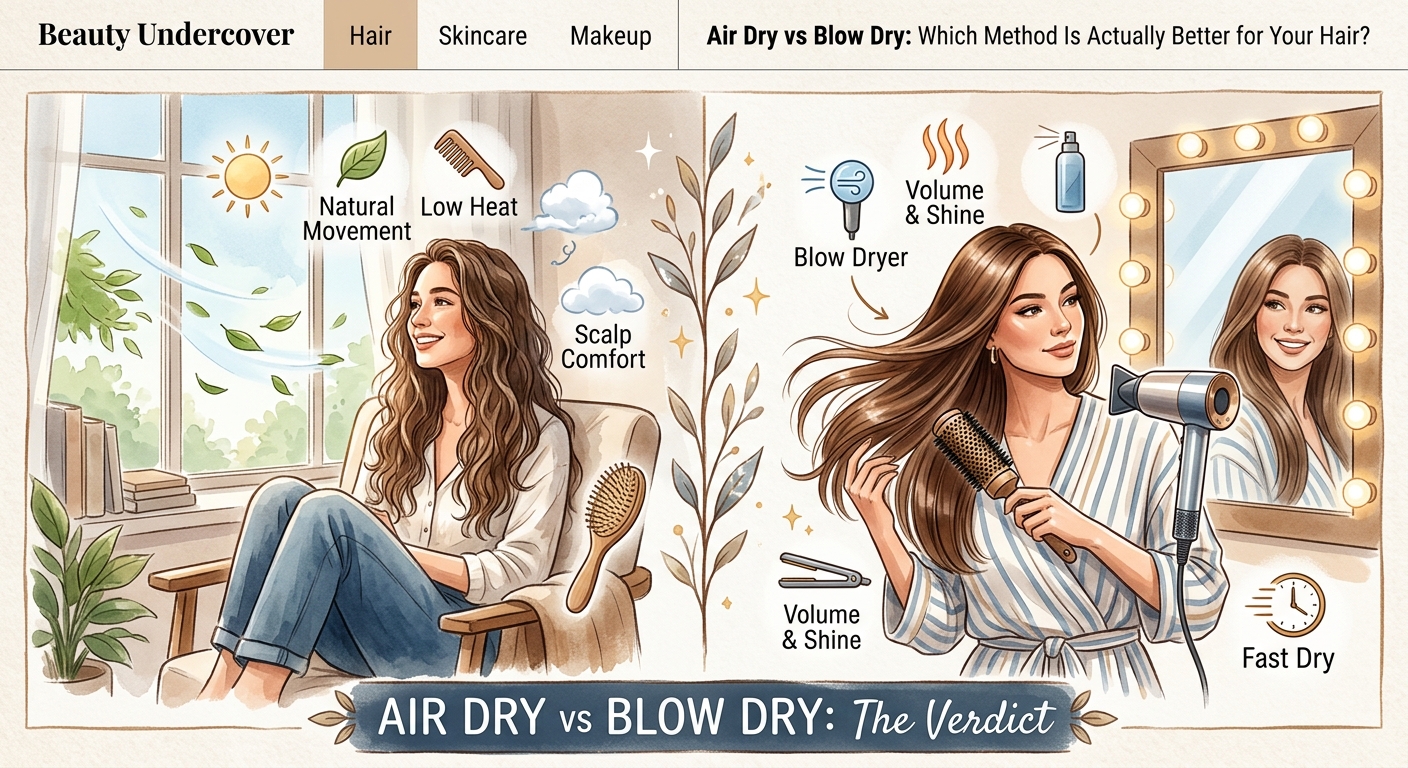
Air drying sounds like the gentlest option. No heat, no tools, just natural evaporation. But research tells a more complicated story.
A 2011 study published in the Annals of Dermatology found that while heat can damage the hair surface, keeping hair wet for extended periods causes damage to the cortex, the inner structure of the hair shaft. This phenomenon is called hygral fatigue.
Hygral fatigue happens when hair repeatedly swells with water and then contracts as it dries. Over time, this expansion and contraction weakens the internal structure, leading to breakage, split ends, and loss of elasticity.
Hair that takes hours to air dry stays in this vulnerable swollen state much longer than hair dried with moderate heat.
When air drying works best
Air drying suits certain hair types better than others:
- Thick, coarse hair that naturally resists damage
- Wavy or curly textures that benefit from minimal manipulation
- Hair with high porosity that dries relatively fast
- Healthy hair without chemical processing or color treatment
If you choose to air dry, timing matters. The faster your hair dries, the less opportunity for hygral fatigue to develop. Using a microfiber towel or t-shirt to remove excess water before air drying significantly reduces drying time.
How blow drying affects your hair structure
Blow drying gets a bad reputation, but the reality is more nuanced. Yes, excessive heat damages hair. But controlled heat application can actually be less damaging than prolonged wetness.
The same study that identified hygral fatigue found that blow drying at a distance of 15 centimeters with continuous motion caused less internal damage than air drying, even though it created more surface damage to the cuticle.
Heat temporarily softens the hair’s protein structure, allowing you to reshape it. This is why blow dried hair often looks smoother and more polished than air dried hair. The key is using enough heat to dry efficiently without causing protein degradation.
The temperature threshold that matters
Hair protein begins to degrade around 230°F (110°C). Most modern blow dryers reach temperatures between 140°F and 180°F on medium settings, well below the danger zone when used correctly.
The damage comes from three factors:
- Temperature too high for your hair type
- Dryer held too close to the hair
- Concentrating heat on one section for too long
Fine or chemically treated hair requires lower temperatures and more distance. Thick, healthy hair can tolerate higher heat with less risk.
Comparing damage patterns between both methods
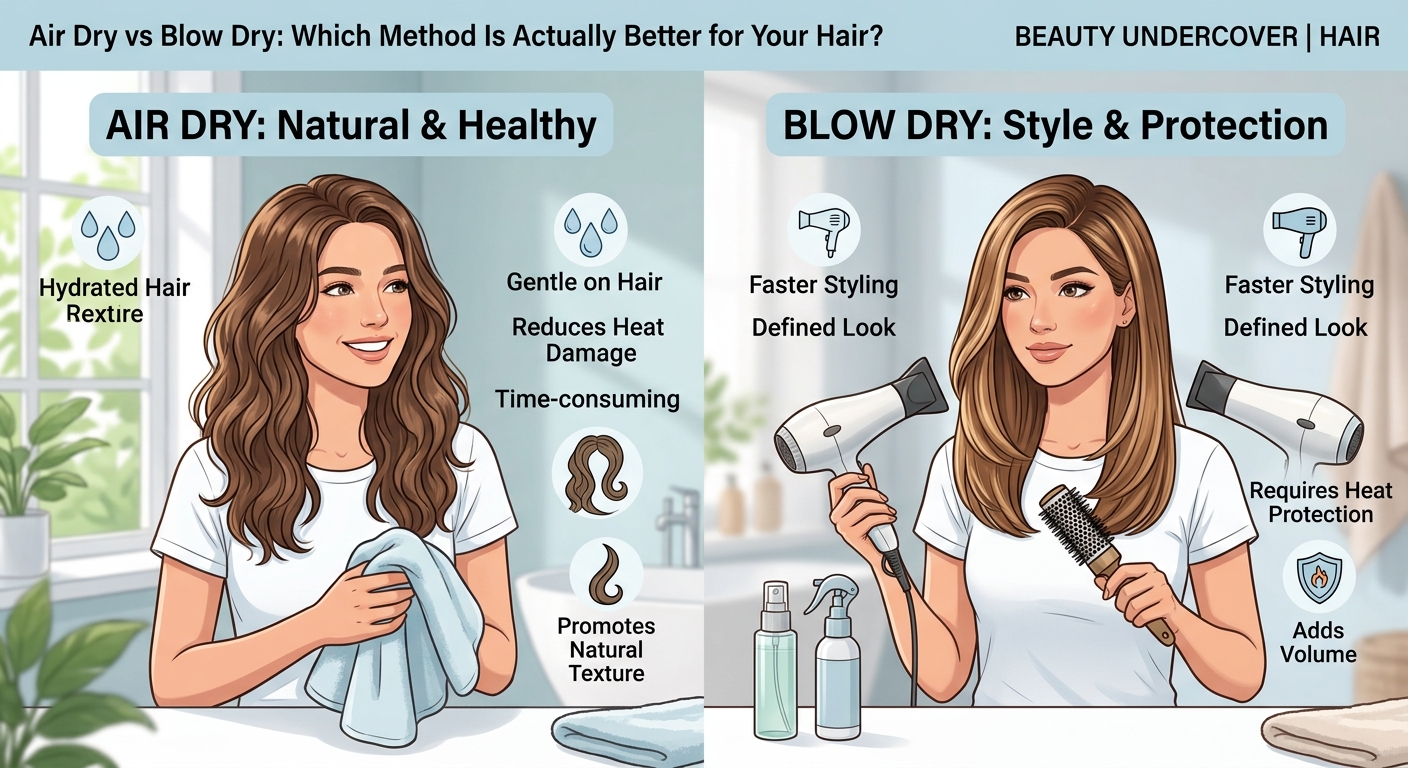
Different drying methods create different types of stress on your hair. Understanding these patterns helps you choose the better option for your specific situation.
| Drying Method | Primary Damage Type | Most Affected Area | Risk Level for Fine Hair | Risk Level for Thick Hair |
|---|---|---|---|---|
| Air Drying | Hygral fatigue, prolonged swelling | Hair cortex (internal) | High | Moderate |
| Blow Drying (improper) | Heat damage, protein degradation | Cuticle (surface) | Very High | Moderate |
| Blow Drying (proper technique) | Minor cuticle roughness | Cuticle surface only | Low to Moderate | Low |
The table shows that proper technique makes all the difference with blow drying. Meanwhile, air drying carries consistent internal damage risk regardless of technique, especially for hair that takes a long time to dry.
Step-by-step guide to healthier blow drying
If you choose to blow dry, following these steps minimizes damage while maximizing results:
- Remove excess water with a microfiber towel or cotton t-shirt using gentle squeezing motions, never rubbing.
- Apply a heat protectant product to damp hair, distributing it evenly from roots to ends.
- Rough dry your hair on a low or medium heat setting until it’s about 60% dry, keeping the dryer moving constantly.
- Section your hair and dry each section with the dryer held at least 6 inches away from your head.
- Use the concentrator nozzle to direct airflow down the hair shaft, smoothing the cuticle as you dry.
- Finish with a blast of cool air to seal the cuticle and add shine.
The entire process should take 10 to 15 minutes for most hair types. If it takes significantly longer, your hair might be too wet when you start or your dryer might not be powerful enough.
“The biggest mistake I see is people starting to blow dry immediately after the shower when hair is dripping wet. Remove as much water as possible first. Your hair should be damp, not soaking, when you start heat styling.” – Celebrity hairstylist and hair health educator
Making air drying work without the damage
Air drying can be healthy when you minimize the time hair stays wet and protect it during the drying process.
Start by gently squeezing water out with a microfiber towel. Regular cotton towels create too much friction and absorb water slowly. A t-shirt works as a good alternative if you don’t have a microfiber towel.
Apply a leave-in conditioner or air-dry cream while hair is still damp. These products provide a protective barrier and help hair dry in a more controlled way. For those interested in how to repair heat damaged hair at home without cutting it all off, understanding proper drying techniques is essential.
Avoid touching, brushing, or manipulating your hair while it dries. Each touch creates friction on the lifted cuticle. If you need to detangle, do it immediately after applying leave-in product, then leave your hair alone.
Consider the environment. Humid conditions slow evaporation, keeping hair wet longer. A dehumidifier or fan can speed up air drying without adding heat.
The role of hair type in choosing your method
Your hair’s natural characteristics should guide your drying method more than any general advice.
Fine hair: Typically benefits from blow drying because it dries faster with heat and gains volume. Air drying often leaves fine hair flat and limp. The shorter drying time also reduces hygral fatigue risk.
Thick hair: Can handle either method well. Air drying works because the hair structure is naturally stronger. Blow drying requires more time and heat exposure, so technique becomes crucial.
Curly or wavy hair: Often looks better air dried because heat can disrupt the curl pattern. However, diffuser attachments allow you to blow dry while maintaining texture. Many people with curly hair find why is my hair so frizzy becomes less of an issue with proper drying techniques.
Color-treated or chemically processed hair: Already compromised, so it requires the gentlest approach possible. This usually means low-heat blow drying or air drying with protective products.
Damaged hair: Needs to avoid both prolonged wetness and high heat. The solution is often a combination approach: air dry until 70% dry, then finish with low heat.
Products that protect hair during drying
The right products make either drying method safer and more effective.
Heat protectants: Essential for blow drying. Look for ingredients like silicones, which create a barrier between hair and heat. Apply to damp hair before any heat exposure.
Leave-in conditioners: Beneficial for both methods. They provide moisture and protection during the vulnerable drying phase. Lightweight formulas work best for fine hair, while thick hair can handle richer products.
Air-dry creams: Specifically formulated to help hair dry smoothly without heat. They typically contain humidity-resistant ingredients and light hold agents.
Hair oils: Best applied to the ends of air-dried or blow-dried hair after it’s mostly dry. Applying oil to wet hair can seal in too much moisture. For guidance on selecting the right option, check out the best hair oils for every hair type.
Avoid products with high alcohol content, which can dry out hair regardless of your drying method.
Common mistakes that increase damage with both methods
Even people committed to hair health often make these errors:
With air drying:
– Going to bed with wet or damp hair, causing friction damage from tossing and turning
– Putting wet hair in a tight bun or ponytail, creating tension on weakened strands
– Skipping detangling until hair is completely dry, when it’s harder to work through knots
– Air drying in cold environments where hair takes hours to dry
With blow drying:
– Using the highest heat setting by default
– Holding the dryer in one spot instead of keeping it moving
– Blow drying soaking wet hair instead of towel-drying first
– Skipping heat protectant to save time
– Using a brush to pull and tension hair while applying direct heat
The most damaging habit? Inconsistent technique. Switching between careful and careless drying based on how rushed you feel creates unpredictable stress on your hair.
Creating a hybrid approach for optimal results
You don’t have to choose one method exclusively. Many hair professionals recommend a combination approach that minimizes the drawbacks of each method.
The 70/30 method works well for most hair types:
– Air dry until hair is about 70% dry
– Finish the last 30% with a blow dryer on medium heat
This approach reduces total heat exposure while avoiding prolonged wetness. Your hair spends less time in the vulnerable wet state, but you use significantly less heat than full blow drying requires.
Another option is alternating methods based on your schedule and hair’s condition. Blow dry when you’re short on time or want a polished look. Air dry on relaxed days when your hair can dry within an hour or two.
Adjusting your technique for different seasons
Environmental factors change how hair responds to drying methods.
Summer: Higher humidity slows air drying and can make blow-dried hair frizzy. Consider blow drying with a concentrator nozzle to seal the cuticle against humidity. Air drying works better in dry climates.
Winter: Indoor heating creates dry air that can make blow-dried hair brittle. Use more moisturizing products and lower heat settings. Air drying in heated indoor spaces actually works well because hair dries faster.
Rainy seasons: Hair takes longer to air dry in humid conditions, increasing hygral fatigue risk. Blow drying becomes more advantageous during extended rainy periods.
Your scalp care routine also needs adjustment based on how you dry your hair and the season.
Signs your current method isn’t working
Your hair tells you when your drying routine needs adjustment. Watch for these indicators:
- Increased breakage, especially mid-shaft breaks rather than just split ends
- Hair that feels gummy or stretchy when wet, indicating weakened protein structure
- Excessive frizz that doesn’t respond to products
- Hair that tangles more easily than it used to
- Loss of natural texture or curl pattern
- Dullness that doesn’t improve with conditioning treatments
These signs suggest damage from either too much heat or too much time spent wet. The solution might be switching methods, improving technique, or adopting a hybrid approach.
Tools that make drying safer and more effective
Investing in quality tools reduces damage regardless of which method you prefer.
For blow drying:
– Ionic dryers that break up water molecules for faster drying at lower temperatures
– Ceramic or tourmaline technology that distributes heat more evenly
– Multiple heat and speed settings for better control
– A concentrator nozzle to direct airflow precisely
– A diffuser attachment for curly hair
For air drying:
– Microfiber towels or hair wraps that absorb water without friction
– Wide-tooth combs for gentle detangling
– Silk or satin pillowcases if you air dry overnight
– A soft-bristle brush for smoothing once hair is mostly dry
The quality difference between a cheap blow dryer and a professional-grade one is substantial. A better dryer dries faster at lower temperatures, reducing total heat exposure.
What hair professionals actually recommend
Hairstylists and trichologists generally agree that technique matters more than the method itself.
Most professionals suggest blow drying for clients with fine hair or those who want specific styling results. The control and speed of blow drying outweigh the heat concerns when done properly.
For clients with thick, curly, or textured hair, air drying often gets the recommendation, especially when paired with products designed to enhance natural texture.
The universal advice? Never let hair stay wet for more than two hours. Whether you choose heat or air, get your hair dry within that window to minimize structural damage.
Finding what works for your lifestyle and hair
The best drying method is the one you’ll do correctly and consistently. A perfect technique you never follow helps less than an imperfect one you can maintain.
Consider your daily routine. If you shower at night, air drying might not be practical unless your hair dries within an hour. Morning showers give you more flexibility to air dry while getting ready.
Think about your styling goals. Sleek, smooth styles almost always require some blow drying. Natural texture and volume often develop better with air drying or diffusing.
Factor in your hair’s current condition. Damaged hair needs the gentlest approach possible, which might mean learning better blow-drying technique rather than defaulting to air drying that takes three hours.
Making your choice and sticking with it
You now understand that the air dry vs blow dry hair debate doesn’t have a simple answer. Both methods can be healthy or damaging depending on how you execute them.
Your hair type, lifestyle, and styling preferences should guide your decision more than blanket recommendations. Fine hair often thrives with proper blow drying. Thick or curly hair frequently looks and feels better with air drying or diffusing. Damaged hair needs whichever method minimizes stress, which usually means a hybrid approach.
Start by honestly assessing how long your hair takes to air dry completely. If it’s more than two hours, incorporating some heat might actually protect your hair’s internal structure. If you blow dry, invest in a quality dryer with temperature control and always use heat protectant.
The healthiest hair routine is one you can maintain consistently. Choose the method that fits your life, then refine your technique to minimize damage. Your hair will respond better to a good routine you follow daily than a perfect routine you only manage occasionally.