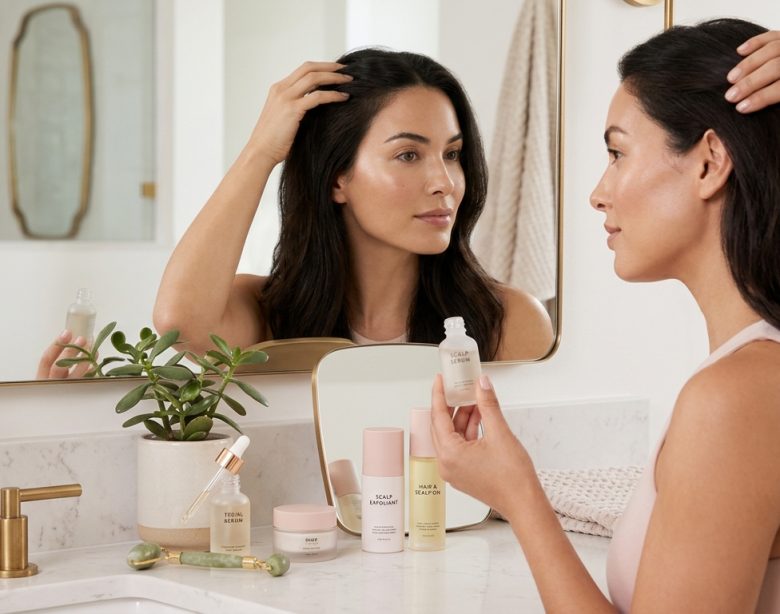
Your scalp is skin. Just like the skin on your face, it needs cleansing, exfoliating, hydration, and protection. Yet most of us spend hundreds on facial serums while ignoring the skin that grows our hair. The scalp skinification movement changes that, bringing the same thoughtful care you give your complexion to the top of your head. The results? Less flaking, reduced oiliness, stronger hair growth, and a healthier foundation for everything that grows from it.
Treating your scalp like facial skin means adopting a routine of gentle cleansing, regular exfoliation, targeted treatments, and daily protection. Your scalp has pores, produces oil, sheds dead cells, and responds to the same active ingredients as your face. By applying skincare principles to your scalp, you address issues like buildup, inflammation, and imbalance that affect hair health from the root.
Understanding your scalp as skin
Your scalp contains the same structures as facial skin. It has pores, sebaceous glands, and a protective barrier. It produces sebum, sheds dead skin cells, and can experience inflammation, sensitivity, and clogged follicles.
The difference? Your scalp produces more oil than your face. It has a higher density of hair follicles and sebaceous glands. This makes it more prone to buildup from products, sweat, and environmental pollutants.
Many scalp issues stem from treating it like an afterthought. We focus shampoo on hair length instead of the skin underneath. We skip exfoliation entirely. We apply heavy styling products directly to roots without considering pore congestion.
When you shift your perspective and see your scalp as an extension of your skincare routine, the logic becomes clear. The same principles that keep facial skin balanced apply here too.
The essential scalp skinification routine
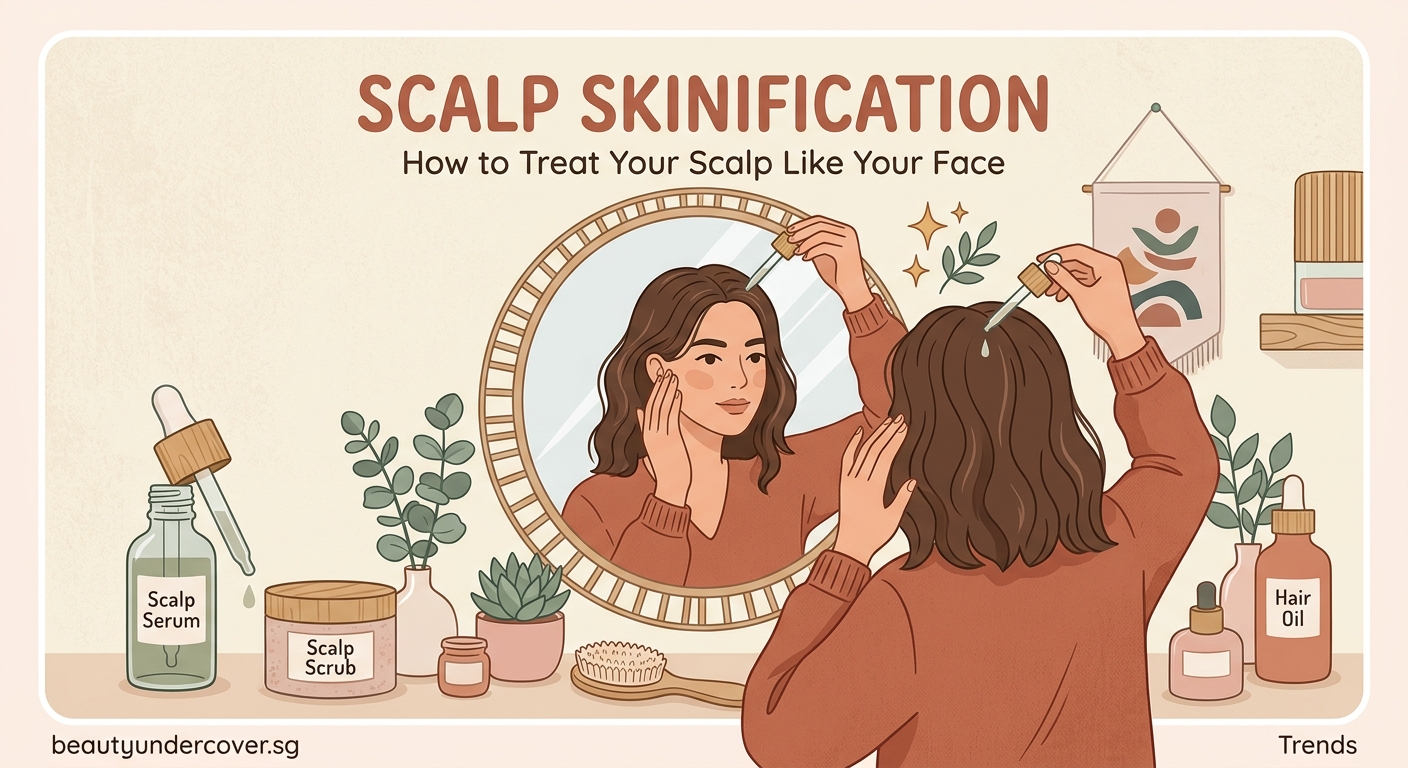
Just as you would never use the same product for every step of facial care, your scalp needs a multi-step approach. Here is how to build a routine that mirrors your skincare habits.
Step 1: Deep cleansing
Start with a clarifying or scalp-focused shampoo once or twice weekly. These formulas contain ingredients like salicylic acid, glycolic acid, or tea tree oil that dissolve buildup and excess sebum.
Apply shampoo directly to your scalp, not your hair. Use your fingertips (not nails) to massage in circular motions for at least 60 seconds. This physical action helps lift debris and stimulates circulation.
For daily washing, choose a gentle, pH-balanced shampoo. Your scalp’s natural pH sits around 5.5. Harsh sulfates can strip this balance and trigger overproduction of oil.
If you already follow how to build a simple 3-step skincare routine for absolute beginners, apply that same minimalist logic here. You don’t need ten products. You need the right ones used consistently.
Step 2: Exfoliation
Scalp exfoliation removes dead skin cells, product residue, and excess oil that regular shampooing misses. This step prevents clogged follicles and creates an optimal environment for hair growth.
Physical exfoliants use fine granules or brushes. Chemical exfoliants rely on AHAs (alpha hydroxy acids) or BHAs (beta hydroxy acids) to dissolve buildup.
Use a scalp scrub or exfoliating treatment once weekly. Apply to damp hair, focusing on the scalp. Massage gently for two to three minutes, then rinse thoroughly.
Avoid over-exfoliating. Your scalp can become irritated and produce more oil to compensate. Once a week is sufficient for most people.
Step 3: Treatment and nourishment
After cleansing and exfoliating, your scalp is primed to absorb active ingredients. This is where targeted treatments make a difference.
Scalp serums and tonics deliver concentrated actives directly to the skin. Look for ingredients that address your specific concerns:
- Niacinamide: Regulates oil production and reduces inflammation
- Peptides: Support hair follicle health and growth
- Hyaluronic acid: Provides lightweight hydration without heaviness
- Caffeine: Stimulates circulation to follicles
- Zinc: Controls sebum and addresses flaking
Apply these treatments to clean, towel-dried scalp. Part your hair in sections and apply drops or mist directly to the skin. Massage gently to aid absorption.
Understanding what does niacinamide really do for your skin helps you see why this ingredient works equally well on your scalp.
Step 4: Protection
Your scalp faces the same environmental stressors as your face. UV rays, pollution, and free radicals all cause damage.
Use a scalp sunscreen or wear a hat when spending extended time outdoors. Some leave-in treatments and styling products now include SPF specifically for scalp protection.
At night, consider a lightweight scalp oil or serum that supports barrier repair while you sleep. Just as you would never skip nighttime skincare, your scalp benefits from this restorative period too.
Matching scalp treatments to skin concerns
Your scalp can experience the same issues as facial skin. Here is how to address them with familiar skincare solutions.
| Scalp Concern | Facial Equivalent | Treatment Approach |
|---|---|---|
| Excess oil and greasiness | Oily T-zone | BHA exfoliants, clay masks, niacinamide serums |
| Flaking and dryness | Dehydrated skin | Gentle hydrating shampoos, hyaluronic acid treatments |
| Sensitivity and redness | Reactive skin | Fragrance-free products, centella, ceramides |
| Buildup and clogged follicles | Congested pores | Regular exfoliation, clarifying treatments |
| Thinning and hair loss | Aging skin concerns | Peptides, caffeine, growth-supporting actives |
This comparison makes treatment selection intuitive. If you know what works for your facial skin type, you can apply similar logic to your scalp.
Common mistakes when treating your scalp
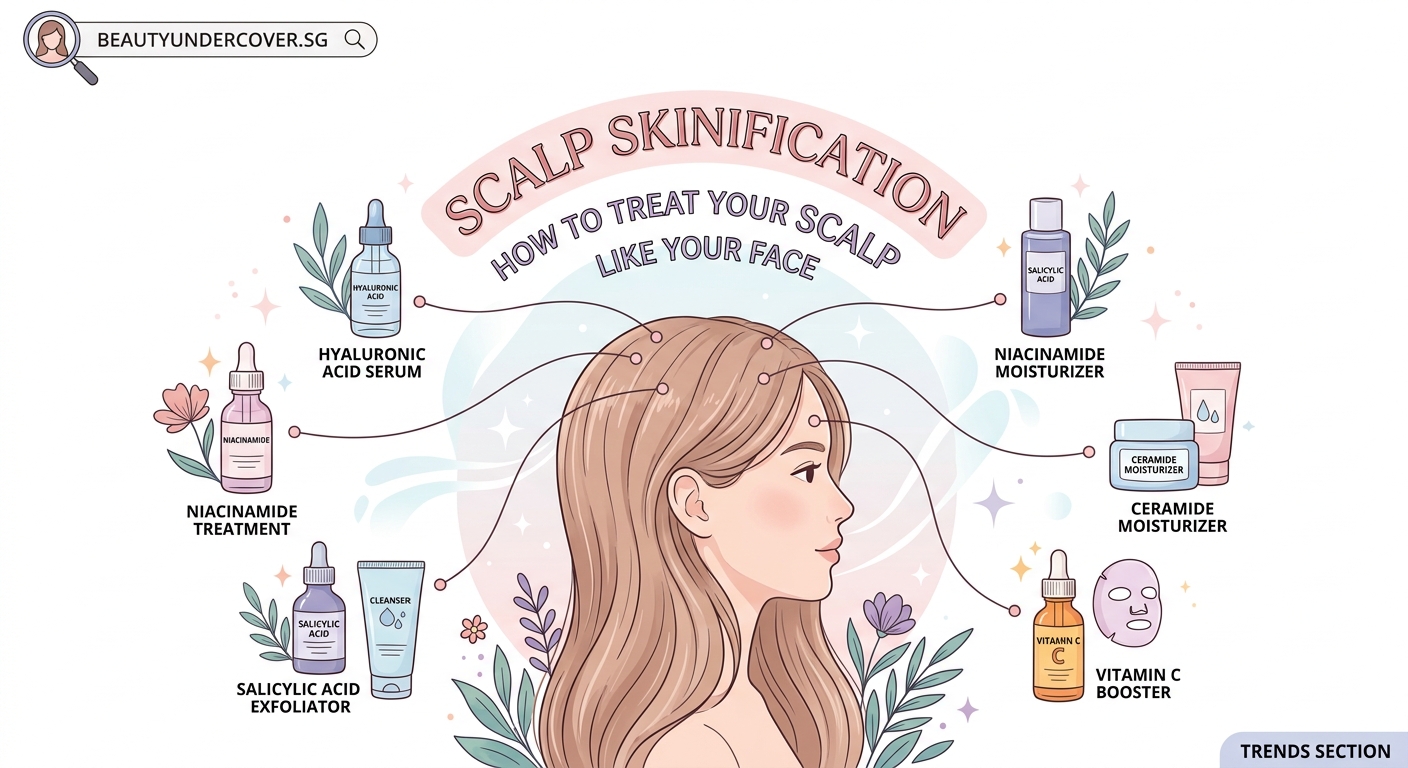
Even with good intentions, certain habits undermine scalp health. Avoid these pitfalls:
Using products meant for hair on your scalp. Conditioners and masks are formulated for hair strands, not skin. Keep them away from your roots to prevent pore congestion.
Applying too many heavy oils. While facial oils work for some skin types, thick oils on the scalp can clog follicles and worsen oiliness. Choose lightweight, non-comedogenic options.
Skipping scalp care when hair looks fine. Hair appearance doesn’t reflect scalp health. You can have shiny hair and an unhealthy, congested scalp underneath.
Over-washing or under-washing. Find your balance. Some scalps need daily cleansing; others thrive with less frequent washing. Pay attention to how your scalp feels, not arbitrary rules.
Ignoring ingredient lists. Sulfates, silicones, and heavy waxes contribute to buildup. Read labels as carefully as you do for facial products.
If you have experienced issues when starting new products, understanding why your skin purges when you start new products and what to do about it provides helpful context for similar scalp reactions.
Building your personalized scalp routine
Start by identifying your scalp type. Is it oily, dry, combination, or sensitive? This determines which products and frequency work best.
For oily scalps: Focus on oil control and thorough cleansing. Use BHA exfoliants, lightweight serums with niacinamide, and clarifying shampoos two to three times weekly.
For dry scalps: Prioritize hydration without heavy oils. Look for hyaluronic acid-based treatments, gentle sulfate-free shampoos, and barrier-supporting ingredients like ceramides.
For combination scalps: Treat different zones accordingly. You might need oil control at the crown and hydration at the hairline. Multi-masking works for scalps too.
For sensitive scalps: Choose fragrance-free, minimal-ingredient formulas. Avoid physical scrubs; opt for gentle chemical exfoliants instead. Introduce new products slowly.
Here is a weekly schedule that balances all essential steps:
- Monday: Regular gentle shampoo and scalp serum
- Wednesday: Clarifying shampoo or exfoliating treatment
- Friday: Regular shampoo and nourishing scalp mask
- Sunday: Gentle shampoo and protective treatment
Adjust frequency based on your scalp’s response. Some people need more frequent exfoliation; others require less.
Ingredients that work for both face and scalp
Many skincare actives perform equally well on your scalp. This makes building a routine simpler since you already understand how these ingredients function.
Salicylic acid penetrates pores to dissolve oil and debris. It works for facial breakouts and scalp buildup alike. Use it in shampoos or pre-wash treatments.
Glycolic acid provides gentle chemical exfoliation. It removes dead skin cells and improves product absorption on both face and scalp.
Niacinamide regulates sebum production, reduces inflammation, and strengthens the skin barrier. It addresses oiliness and sensitivity wherever applied.
Hyaluronic acid draws moisture into skin without adding weight. It hydrates dry scalps just as effectively as dry facial skin.
Peptides support collagen production and cellular communication. They help maintain scalp elasticity and follicle health.
Centella asiatica calms irritation and supports healing. Perfect for sensitive or reactive scalps.
Understanding hyaluronic acid vs. glycerin which hydrator your skin actually needs helps you choose the right humectant for your scalp’s hydration needs.
Tools and techniques for scalp care
The right tools enhance product effectiveness and make the routine more enjoyable.
Scalp brushes with silicone bristles provide gentle exfoliation during shampooing. They stimulate circulation and help distribute product evenly. Use them with light pressure in circular motions.
Applicator bottles with pointed tips allow precise serum application directly to the scalp. This prevents waste and ensures treatments reach the skin rather than sitting on hair.
Sectioning clips help divide hair for thorough treatment application. Part hair into quadrants or smaller sections depending on thickness.
Massage tools increase blood flow and help actives penetrate. Even using your fingertips works. Spend three to five minutes massaging your scalp several times weekly.
The technique matters as much as the tools. Always apply treatments to the scalp itself, not the hair. Work in sections to ensure complete coverage. Massage gently to avoid irritation.
Addressing specific scalp concerns
Different issues require targeted approaches. Here is how to tackle common problems using skincare logic.
Dandruff and flaking
This often results from a yeast overgrowth or dry, irritated skin. Use anti-fungal ingredients like zinc pyrithione or ketoconazole. Add hydrating treatments with hyaluronic acid to address dryness.
Exfoliate regularly to remove flakes, but don’t overdo it. Over-exfoliation can worsen the problem.
Excess oil production
Treat this like an oily T-zone. Use BHA exfoliants to keep pores clear. Apply niacinamide serums to regulate sebum. Avoid heavy conditioners near roots.
Consider whether over-washing triggers rebound oil production. Sometimes washing less frequently with the right products improves balance.
Scalp acne and bumps
Clogged follicles cause these breakouts. Use clarifying shampoos with salicylic acid. Avoid pore-clogging styling products. Keep hair accessories clean.
Apply spot treatments with benzoyl peroxide or tea tree oil to affected areas. Just as you would treat facial acne, consistency matters.
Thinning hair and hair loss
While this involves hair follicles specifically, scalp health plays a crucial role. Ensure your scalp environment supports growth.
Use treatments with caffeine, peptides, and growth-supporting actives. Maintain a clean, uncongested scalp. Address inflammation that might impede follicle function.
If thinning persists, consult a dermatologist. Some causes require medical intervention beyond topical care.
“The scalp is an extension of facial skin and deserves the same level of attention and care. A healthy scalp creates the optimal environment for hair growth and overall hair health.” – Board-certified dermatologist
Adapting your routine through seasons
Just as facial skin needs seasonal adjustments, so does your scalp. Temperature, humidity, and environmental factors all impact scalp condition.
Winter: Cold air and indoor heating cause dryness. Increase hydrating treatments. Reduce exfoliation frequency if needed. Consider a humidifier to maintain moisture levels.
Summer: Heat and humidity trigger excess oil and sweat. Use clarifying treatments more frequently. Apply scalp sunscreen. Rinse hair after swimming to remove chlorine or salt.
Spring and fall: These transition periods often bring scalp sensitivity. Maintain a balanced routine. Adjust gradually rather than making dramatic changes.
Pay attention to how your scalp responds to seasonal shifts. What works in July might not work in January.
Integrating scalp care with your existing routine
You don’t need to overhaul your entire regimen. Integrate scalp care into habits you already maintain.
When you apply your facial serum, take an extra minute to apply scalp treatment. When you exfoliate your face weekly, add scalp exfoliation to the same session.
Store scalp products with your skincare so you remember to use them. Visual cues help build consistency.
If you follow the right order to apply your skincare products for maximum results, apply the same layering logic to scalp treatments: cleanse, exfoliate, treat, protect.
Measuring progress and adjusting
Track how your scalp responds over four to six weeks. Look for these improvements:
- Reduced flaking or oiliness
- Less itching or irritation
- Improved hair texture and shine
- Healthier-looking roots
- Reduced product buildup
Take photos of your scalp and hairline to document changes. Sometimes progress happens gradually and is easier to see in comparison photos.
If you don’t see improvement after six weeks, reassess your routine. You might need different actives, adjusted frequency, or professional guidance.
Remember that why your skin purges when you start new products and what to do about it applies to scalp treatments too. Initial adjustment periods are normal.
When to seek professional help
Some scalp conditions require dermatological care. Consult a professional if you experience:
- Severe, persistent flaking that doesn’t respond to treatment
- Painful sores or lesions
- Significant hair loss or bald patches
- Intense itching that interferes with daily life
- Signs of infection like oozing or crusting
A dermatologist can diagnose underlying conditions like seborrheic dermatitis, psoriasis, or folliculitis. These often need prescription treatments.
Don’t hesitate to seek help. Early intervention prevents worsening conditions and potential scarring.
Your scalp deserves the same care as your face
Treating your scalp like facial skin isn’t complicated. It requires the same thoughtful approach you already apply to your complexion. Cleanse thoroughly. Exfoliate regularly. Apply targeted treatments. Protect from damage.
Your scalp is the foundation for healthy hair. When you invest in its health with the same dedication you give your face, you create optimal conditions for strong, vibrant hair growth. The skin on top of your head works just like the skin you see in the mirror. Treat it accordingly, and both your scalp and hair will show the difference.