You don’t need to spend $80 on a foundation when a $12 option performs just as well. That’s not an opinion anymore. It’s backed by ingredient lists, dermatologist testing, and thousands of real reviews from people who’ve tried both versions.
The beauty industry wants you to believe that price equals quality. But formulation technology has leveled the playing field. Many drugstore brands now use the same active ingredients, similar concentrations, and comparable manufacturing processes as their luxury counterparts. The main difference? Marketing budgets and fancy packaging.
Drugstore beauty products can match or outperform high-end alternatives because they often contain identical active ingredients at similar concentrations. Smart shoppers focus on formulation quality rather than brand prestige. This guide reveals which affordable products deliver luxury results, how to identify genuine dupes, and why ingredient knowledge matters more than price tags when building an effective beauty routine.
Understanding what makes a product actually work
Active ingredients determine results. Not brand names.
A retinol serum works because of retinol concentration and supporting ingredients. Whether that bottle costs $15 or $150 doesn’t change the science. The expensive version might include fancier preservatives or a silkier texture. But your skin responds to the active ingredients doing the work.
Many drugstore brands invest heavily in research and development. They just skip the luxury retail markups. L’Oréal owns both budget lines and prestige brands. The same labs often develop formulas across price points.
Here’s what actually matters when comparing products:
- Active ingredient type and concentration
- pH level for acids and vitamin C
- Packaging that protects light-sensitive ingredients
- Texture and absorption rate
- Potential irritants or allergens
Price rarely appears on that list for good reason.
How to spot genuine performance matches
Not every drugstore product rivals luxury versions. Some truly deliver inferior results. The trick is knowing which factors predict performance.
Start by reading ingredient lists. Active ingredients appear in order of concentration. If a drugstore moisturizer lists hyaluronic acid as the third ingredient and a luxury cream lists it fifth, the affordable option likely contains more.
Check independent testing when available. Consumer Reports and dermatology journals test products blind. They measure actual results without brand bias.
Look for products from brands with strong research backing. CeraVe, developed with dermatologists, uses patented delivery systems. The Ordinary publishes exact percentages of active ingredients. Neutrogena funds clinical studies on their formulations.
| What to check | Why it matters | How to verify |
|---|---|---|
| Active ingredient percentage | Determines efficacy | Read ingredient order or brand disclosure |
| pH level for acids | Affects penetration and irritation | Check brand websites or third-party testing |
| Packaging type | Protects unstable ingredients | Opaque, airless pumps preserve vitamin C and retinol |
| Fragrance placement | High on list means more irritation risk | Fragrance near the end is safer |
The categories where drugstore wins consistently
Certain product types show minimal difference between price points. Others depend more on formulation expertise than ingredient cost.
Cleansers rarely justify luxury prices. You rinse them off within 60 seconds. A $10 cleanser with the right pH removes makeup and dirt just as effectively as a $60 option. The expensive version might smell nicer. That’s about it.
Sunscreen performance depends entirely on SPF level and proper application. A $15 drugstore SPF 50 protects better than a $75 luxury SPF 30 if you apply the same amount. Many dermatologists prefer affordable options because patients actually use them daily instead of rationing expensive tubes.
Basic moisturizers work through simple occlusive and humectant ingredients. Petrolatum, glycerin, and ceramides cost pennies per bottle to manufacture. A $8 CeraVe moisturizer contains the same ceramide blend as products costing ten times more.
If you’re building a simple 3-step skincare routine for absolute beginners, starting with affordable basics makes perfect sense. You can always upgrade specific products later.
Makeup primers often show identical performance. Many use the same silicone bases. A $8 primer with dimethicone performs identically to a $45 version with the same ingredient list.
Where luxury products sometimes justify the cost
Fairness requires acknowledging when premium prices deliver real advantages.
Complex serums with multiple actives benefit from sophisticated formulation. Stabilizing vitamin C with ferulic acid and vitamin E requires expertise. Some luxury brands nail this better than budget alternatives. Though the best hydrating serums for dry skin under $30 prove exceptions exist.
Foundations vary wildly in shade range and undertone accuracy. Drugstore lines historically offered limited options for deeper skin tones. That’s changing, but luxury brands still lead in shade diversity. However, the best drugstore foundations that rival high-end luxury brands now include impressive shade ranges.
Eye creams represent the biggest scam in both categories. The skin around your eyes needs moisturizer. Any good face moisturizer works. Spending $120 on half an ounce of eye cream rarely makes sense when a $15 face cream contains better ingredients.
Prestige perfumes use higher-quality fragrance oils and more complex compositions. A $20 body spray won’t match a $200 perfume’s sophistication. Though affordable perfume dupes for luxury fragrances under $30 come surprisingly close.
Breaking down the best category-by-category swaps
Let’s get specific about which products deliver identical or better results for less money.
Face care essentials
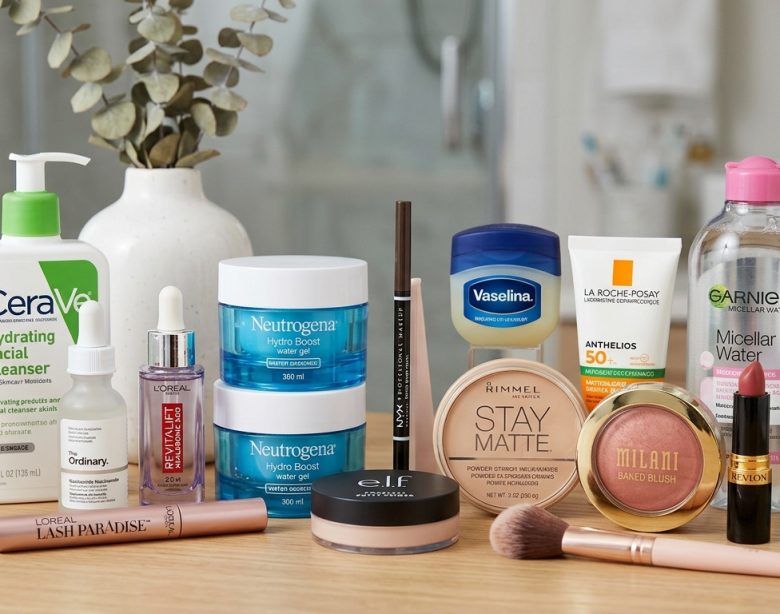
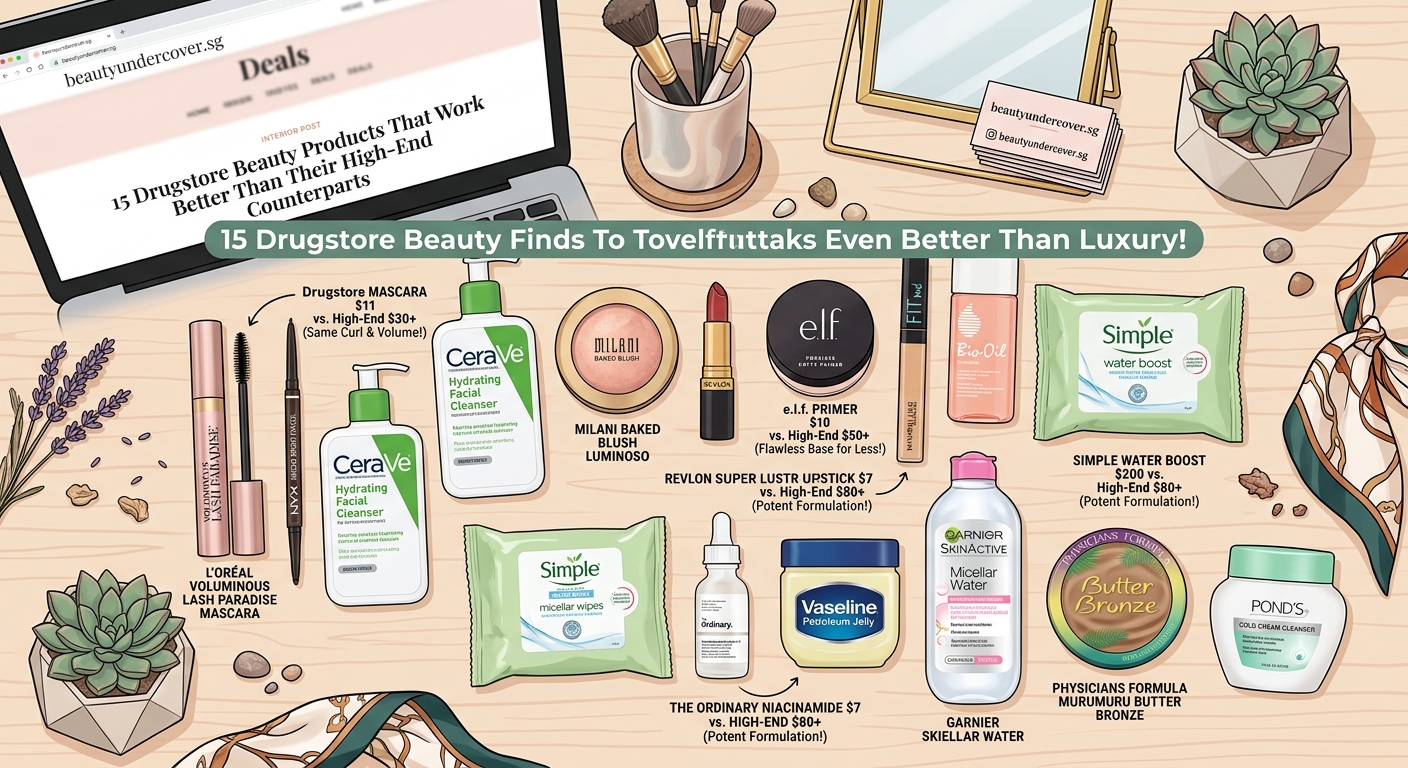
Cleanser champion: CeraVe Hydrating Facial Cleanser ($15) matches or beats cleansers costing $40+. It contains ceramides and hyaluronic acid. Most luxury cleansers rinse those beneficial ingredients down the drain anyway.
Retinol winner: The Ordinary Retinol 1% in Squalane ($7) delivers the same retinol concentration as products costing $80. The texture feels less luxurious. The results look identical after 12 weeks. Understanding why your skin purges when you start new products matters more than bottle design.
Niacinamide standout: The Ordinary Niacinamide 10% + Zinc 1% ($6) contains higher concentrations than most luxury serums. Some users find the texture slightly pilling. Applying it correctly solves that issue. Learn more about what niacinamide really does for your skin.
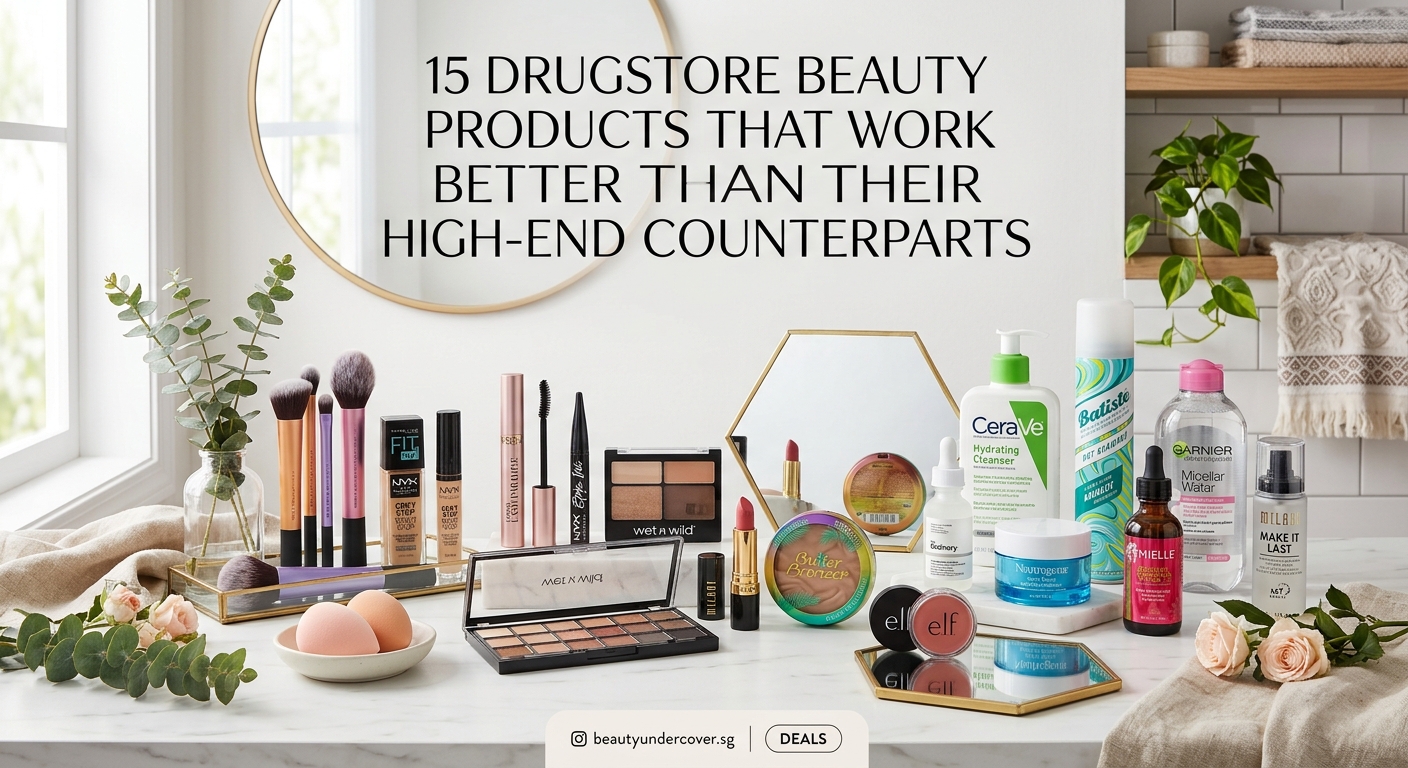
Moisturizer hero: Neutrogena Hydro Boost Water Gel ($18) uses hyaluronic acid as effectively as $70 gel creams. The fragrance-free version works for sensitive skin. Comparing hyaluronic acid vs. glycerin helps you choose the right hydrator.
Makeup must-haves
Foundation favorite: L’Oréal Infallible Pro-Matte ($13) rivals foundations three times its price. The shade range improved dramatically in recent years. It wears for 12+ hours without oxidizing.
Mascara marvel: Maybelline Lash Sensational ($8) performs identically to luxury mascaras in blind tests. Mascara formulas expire after three months anyway. Spending $30 on something you’ll toss quarterly makes no sense.
Lipstick gem: NYX Soft Matte Lip Cream ($7) delivers pigmentation and wear time matching $35 liquid lipsticks. The shade range includes 36 colors. Knowing how to stop your lipstick from bleeding matters more than price.
Setting spray steal: NYX Matte Finish Setting Spray ($8) keeps makeup in place just as well as Urban Decay’s $33 version. Both use similar silicone-based formulas.
“I’ve formulated products at every price point. The dirty secret? A $15 drugstore moisturizer often contains better actives than a $150 luxury cream. You’re paying for marketing, not science.” — Anonymous cosmetic chemist
Hair care heroes
Shampoo surprise: Neutrogena Anti-Residue Shampoo ($7) clarifies better than $40 salon formulas. Use it weekly to remove buildup. Your regular shampoo works better afterward.
Conditioner champion: Garnier Fructis Sleek & Shine ($4) smooths frizz using the same silicones as $30 salon conditioners. It won’t repair damage. No conditioner can. But it makes hair look healthy. Understanding why your hair is so frizzy helps you address root causes.
Hair oil winner: OGX Renewing Argan Oil of Morocco ($8) contains the same argan oil as products costing $40. The ingredient list shows argan oil second, indicating high concentration. Compare options in the best hair oils for every hair type.
Reading labels like a professional formulator
Ingredient lists tell you everything if you know the language.
Ingredients appear in descending order by weight. The first five ingredients typically comprise 80% of the formula. Everything after preservatives exists in tiny amounts, regardless of marketing claims.
Water usually appears first in skincare. That’s normal. Look at ingredients two through seven for the real story.
“Active” ingredients include:
– Retinol, retinaldehyde, or retinyl palmitate
– Vitamin C as ascorbic acid or derivatives
– Niacinamide (vitamin B3)
– AHAs like glycolic or lactic acid
– BHAs like salicylic acid
– Peptides with specific names (not just “peptide complex”)
“Filler” ingredients aren’t useless. Emulsifiers, preservatives, and stabilizers keep products safe and effective. But if a cream costs $200 and lists only basic emollients after water, you’re paying for packaging.
Compare two similar products by photographing their ingredient lists. Line them up side by side. You’ll often find identical formulas with different price tags.
Common mistakes when switching to affordable alternatives
Even smart shoppers make these errors when trading down in price.
Mistake 1: Switching everything at once. Your skin might react to one new product. If you change five products simultaneously, you won’t know which one caused problems. Introduce new items one at a time, waiting two weeks between additions.
Mistake 2: Expecting identical textures. Luxury products often feel silkier or smell better. That sensory experience doesn’t affect results. A slightly grittier exfoliant works just as well if the active ingredients match.
Mistake 3: Ignoring your skin’s response. Some people react to specific preservatives or fragrances more common in drugstore lines. If a product irritates your skin, the bargain price doesn’t matter. Learning about retinol alternatives that actually work for sensitive skin helps you find gentler options.
Mistake 4: Assuming all drugstore products perform equally. Quality varies tremendously. Research individual products rather than judging by price alone.
Mistake 5: Skipping patch tests. Test new products on your inner arm for 48 hours before applying to your face. This matters regardless of price.
Building a complete routine without breaking the bank
You can assemble an effective skincare and makeup collection for under $150.
Morning routine essentials
- Cleanser: CeraVe Foaming Facial Cleanser ($15)
- Vitamin C serum: The Ordinary Ascorbic Acid 8% + Alpha Arbutin 2% ($9)
- Moisturizer: Neutrogena Hydro Boost ($18)
- Sunscreen: La Roche-Posay Anthelios Melt-In Milk SPF 60 ($20)
Total: $62
That routine rivals collections costing $400+. The sunscreen represents the most expensive item, but sun protection matters too much to compromise. See morning vs. night skincare for proper application timing.
Evening routine essentials
- Oil cleanser: The Inkey List Oat Cleansing Balm ($10)
- Water-based cleanser: CeraVe Hydrating Facial Cleanser ($15)
- Treatment: The Ordinary Retinol 0.5% in Squalane ($6)
- Moisturizer: CeraVe Moisturizing Cream ($16)
Total: $47
This evening routine costs less than most single luxury serums. Results match or exceed expensive alternatives after consistent use. Check how to layer your nighttime skincare products for proper sequencing.
Basic makeup kit
- Primer: NYX Pore Filler ($14)
- Foundation: L’Oréal Infallible Pro-Matte ($13)
- Concealer: Maybelline Fit Me ($6)
- Powder: Rimmel Stay Matte ($5)
- Blush: Milani Baked Blush ($8)
- Mascara: Maybelline Lash Sensational ($8)
- Lipstick: NYX Soft Matte Lip Cream ($7)
Total: $61
This complete face makeup collection costs less than one luxury foundation. Each product performs comparably to high-end alternatives in wear time and finish. Creating a flawless no-makeup makeup look becomes affordable.
When to ignore the budget option
Sometimes paying more makes sense.
Prescription alternatives work better. If you have severe acne or significant aging concerns, prescription tretinoin outperforms any over-the-counter retinol at any price. Talk to a dermatologist before spending hundreds on products that might not address your specific needs.
Specific allergies require careful formulation. If you react to common preservatives like methylisothiazolinone, you might need products from brands specializing in sensitive skin. These sometimes cost more but prevent reactions.
Professional treatments deliver different results. No at-home product replicates professional microneedling, chemical peels, or laser treatments. Save money on daily products to afford occasional professional services instead.
Shade matching matters more than price. A perfectly matched $40 foundation looks better than a poorly matched $8 option. If drugstore lines don’t offer your shade, invest in better color matching. Though many affordable brands now offer 40+ shades.
The psychology of luxury beauty marketing
Understanding why expensive products feel better helps you make rational choices.
Luxury brands invest millions in packaging design. Heavy glass bottles, magnetic closures, and embossed logos trigger pleasure responses in your brain. That dopamine hit has nothing to do with skincare efficacy.
Exclusive retail environments create perceived value. Buying foundation at a gleaming department store counter feels different than grabbing it at Target. The product inside often contains identical ingredients.
Limited editions and seasonal collections manufacture scarcity. “Limited” doesn’t mean “better.” It means “buy now before thinking too hard.”
Celebrity endorsements and influencer partnerships build aspirational associations. You’re not buying a lipstick. You’re buying the lifestyle that celebrity represents. Except you’re not. You’re buying a lipstick.
Recognizing these tactics doesn’t make you immune. But awareness helps you evaluate products based on performance rather than emotional manipulation.
Smart shopping strategies for maximum savings
Stretch your budget further with these practical approaches.
Buy during sales cycles. Drugstores run beauty sales every few weeks. Stock up on staples when they’re buy-one-get-one-half-off. Check the best time to buy beauty products for seasonal patterns.
Use store loyalty programs. CVS ExtraBucks and Walgreens Balance Rewards effectively discount products 20-30% when used strategically. Combine with manufacturer coupons for deeper savings.
Test before committing. Many drugstores now offer generous return policies on opened beauty products. Try that $12 foundation. If it doesn’t work, return it. You’re out nothing.
Follow budget beauty accounts. Instagram and TikTok creators specialize in finding drugstore gems. They do the testing so you don’t waste money on duds.
Consider subscription services carefully. Beauty subscription boxes sometimes offer value, but calculate the per-product cost. You might pay less buying individually.
Addressing common concerns about affordable products
Let’s tackle the questions that stop people from trying drugstore alternatives.
“Will my skin know the difference?” Your skin responds to ingredients, not price tags. A well-formulated $15 serum delivers identical results to a $150 version with the same actives.
“Are cheaper products less safe?” All cosmetics sold in the US must meet FDA safety standards regardless of price. Luxury and drugstore products follow identical regulations.
“Do expensive products last longer?” Sometimes yes, sometimes no. A concentrated luxury serum might require less product per application. But many drugstore products come in larger sizes that last months.
“Will people judge my makeup?” Nobody examines your foundation bottle during application. They see the finish on your face. A flawless $13 foundation looks better than a poorly applied $65 one.
“Are drugstore products tested on animals?” Many affordable brands offer cruelty-free options. Check Leaping Bunny certification rather than assuming price correlates with ethics.
Real results from real people
Testimonials matter less than your own experience, but these patterns appear consistently.
Dermatologists regularly recommend CeraVe, Neutrogena, and La Roche-Posay. These brands fund clinical research and publish results. Many luxury brands rely on marketing claims without independent verification.
Makeup artists use drugstore products professionally. They need reliable performance under harsh lighting and long days. Many reach for Maybelline mascara and L’Oréal foundation because they work.
Beauty editors with access to free luxury products often purchase drugstore alternatives with their own money. When someone who tests hundreds of products annually chooses to buy an $8 moisturizer, that signals real value.
Your own testing matters most. What works for someone else might not suit your skin type, tone, or preferences. But starting with proven affordable options reduces financial risk while you figure out what works for you.
Making the switch without regret
Transitioning from luxury to drugstore products feels risky. These steps minimize that anxiety.
Start with one category. Replace your cleanser first since results appear fastest. Success builds confidence for switching other products.
Keep your luxury favorites initially. You don’t need to purge your entire collection immediately. Replace items as they run out, evaluating each switch individually.
Document your skin’s response. Take photos weekly. Track any changes in texture, tone, or concerns. This objective record helps you assess whether affordable alternatives work as well.
Give products time to work. Most skincare requires 4-6 weeks to show results. Don’t judge a new product after three days unless it causes obvious irritation.
Remember that luxury products aren’t inherently bad. They’re just overpriced for what they deliver. If you love the experience and can afford it, that’s fine. But understanding you’re paying for packaging rather than superior performance makes the choice conscious rather than manipulated.
Your beauty budget reflects your priorities, not your worth
Spending less on beauty products doesn’t mean caring less about your appearance.
Smart consumers recognize that drugstore beauty products better than high end options exist across every category. They make informed choices based on ingredients and performance rather than marketing and prestige.
The money you save buying affordable alternatives funds other priorities. Maybe that’s building an emergency fund, taking a vacation, or investing in professional treatments that actually require expertise. Maybe it’s just not wasting money on overpriced moisturizer.
Your skincare and makeup routine should make you feel confident and cared for. Whether that comes from a $7 serum or a $70 one matters less than finding products that work for your skin, your budget, and your values. The beauty industry wants you to believe expensive equals better. Your ingredient knowledge and smart shopping prove otherwise.
Start with one product swap this week. See the results for yourself. Your skin won’t know the difference, but your wallet definitely will.