
Your skin has different needs at sunrise than it does at bedtime. Using the same products morning and night isn’t just inefficient. It can actually work against you.
Some ingredients protect. Others repair. Mixing them up means you’re missing out on benefits and potentially wasting money on products that cancel each other out.
Your morning vs night skincare routine should serve different purposes. Mornings focus on protection from UV rays, pollution, and environmental damage with antioxidants and SPF. Nights prioritize repair and renewal with active ingredients like retinol, acids, and heavier moisturizers. Using the right products at the right time maximizes effectiveness and prevents ingredient conflicts that reduce results.
Why timing matters for your skincare products
Your skin operates on a natural cycle. During the day, it defends itself against UV radiation, pollution, and free radicals. At night, it shifts into repair mode, producing new cells and rebuilding collagen.
This isn’t marketing talk. It’s biology.
Using active repair ingredients during the day wastes their potential. Many break down in sunlight. Retinol, for example, degrades when exposed to UV rays. You’re essentially applying an ingredient that stops working the moment you step outside.
The reverse is also true. Sunscreen at night does nothing. Your skin needs different support while you sleep.
Understanding this split helps you build a routine that actually works with your skin’s natural rhythm instead of fighting against it.
Your complete morning skincare routine
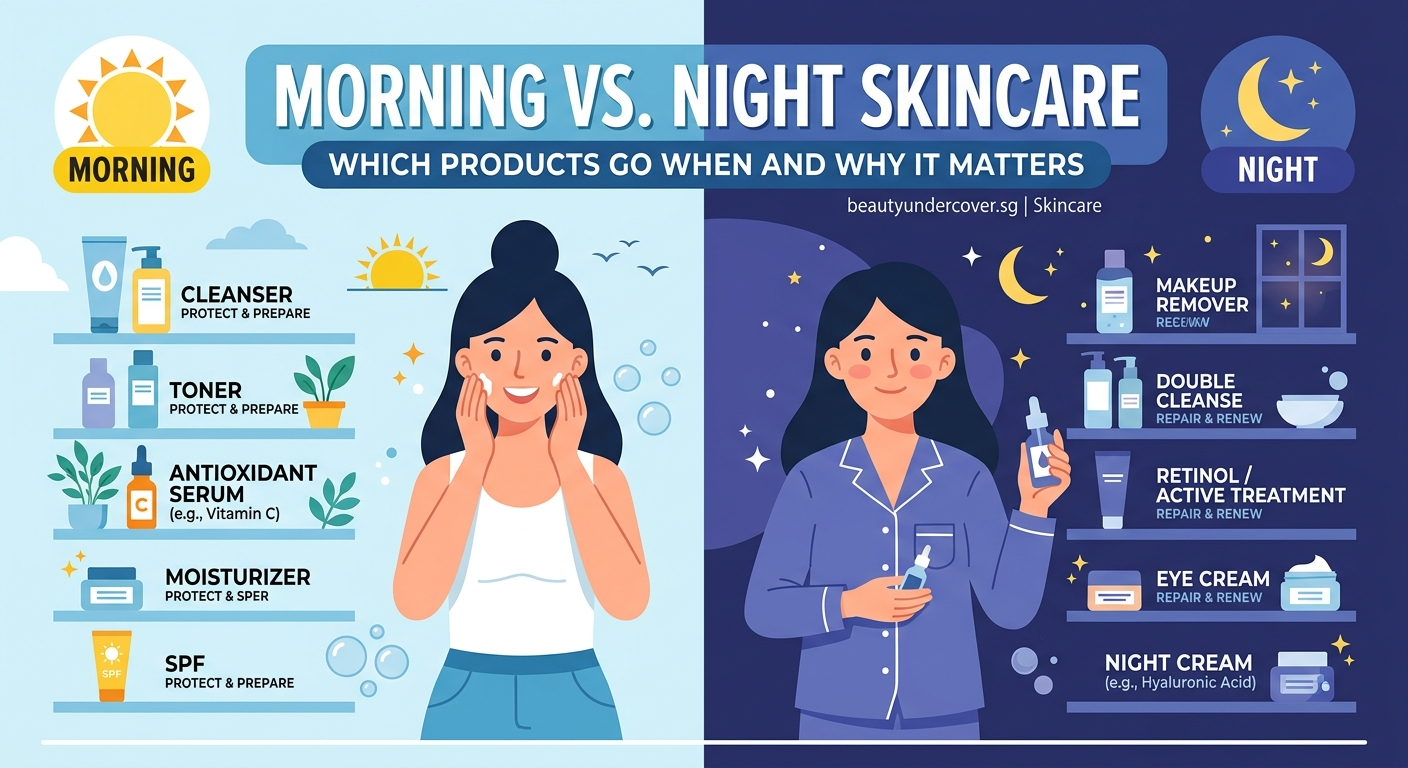
Morning routines protect. That’s the entire goal.
Here’s the order that makes sense:
- Gentle cleanser to remove overnight oil and prep your skin
- Antioxidant serum (usually vitamin C) to neutralize free radicals
- Lightweight moisturizer to hydrate without feeling heavy
- Sunscreen (SPF 30 minimum) as your final step
Keep it simple. You’re heading into the world, not a spa.
Vitamin C works beautifully in the morning because it boosts your sunscreen’s effectiveness. Studies show it provides additional protection against UV damage when layered under SPF.
Skip heavy creams. They feel uncomfortable under makeup and can make you look shiny by noon. Save the rich textures for bedtime.
If you’re just starting out, how to build a simple 3-step skincare routine for absolute beginners breaks down the basics without overwhelming you.
Products that belong in your morning routine
Certain ingredients shine brightest when used during daylight hours.
Vitamin C serums top the list. They fight free radical damage from pollution and UV exposure. Look for L-ascorbic acid formulations between 10% and 20% concentration.
Niacinamide calms inflammation and controls oil production throughout the day. It plays well with almost everything, making it perfect for morning layering. Learn more about what does niacinamide really do for your skin.
Hyaluronic acid provides lightweight hydration that won’t interfere with makeup. It holds up to 1,000 times its weight in water, plumping skin without greasiness.
Caffeine eye creams reduce puffiness and wake up tired-looking eyes. The temporary tightening effect works best when you need to look alert.
Broad-spectrum SPF is non-negotiable. Mineral or chemical, it doesn’t matter. Just wear it every single day, even when it’s cloudy.
Your complete night skincare routine

Nighttime is when the magic happens. Your skin repairs itself while you sleep, making it the perfect time for active ingredients.
Follow this order:
- Oil-based cleanser to remove makeup and sunscreen
- Water-based cleanser to clean your skin thoroughly
- Treatment products (retinol, acids, prescription actives)
- Hydrating serum to support moisture levels
- Rich moisturizer to seal everything in
- Eye cream if you use one
This might seem like a lot. It is. But each step serves a purpose.
The double cleanse ensures you’re actually clean. Sunscreen and makeup create a film that water alone won’t remove. If you skip the oil cleanse, your treatments can’t penetrate properly.
Treatments go on clean, dry skin. Wait a few minutes before adding other products. This gives actives time to absorb without dilution.
For detailed guidance, check out how to layer your nighttime skincare products in the correct order.
Products that belong in your night routine
Night is when you bring out the heavy hitters.
Retinol accelerates cell turnover and builds collagen. It makes skin sensitive to sunlight, which is why it only goes on at night. Start with 0.25% or 0.5% if you’re new to it.
Expect some adjustment. Why your skin purges when you start new products and what to do about it explains the temporary breakout phase many people experience.
AHA and BHA acids exfoliate dead skin cells and clear pores. Glycolic acid, lactic acid, and salicylic acid all work best at night when you won’t face sun exposure.
Peptides signal your skin to produce more collagen. They work slowly but consistently, making them ideal for overnight repair.
Rich moisturizers and face oils lock in all your treatments. Heavier textures that would feel suffocating during the day feel luxurious at bedtime.
Overnight masks provide an extra boost of hydration or treatment. Use them once or twice a week, not daily.
Morning vs night ingredient conflicts you need to know
Some ingredients fight each other. Using them together wastes product and can irritate your skin.
| Ingredient Pair | Why It’s a Problem | Solution |
|---|---|---|
| Retinol + Vitamin C | Can cause irritation and reduce effectiveness | Vitamin C in morning, retinol at night |
| Retinol + AHA/BHA acids | Too much exfoliation leads to damaged skin barrier | Use acids 2-3x weekly, retinol on alternate nights |
| Niacinamide + Vitamin C | Old myth, actually fine together | Use either time, or both |
| Benzoyl peroxide + Retinol | Deactivates retinol and causes extreme dryness | Benzoyl peroxide morning, retinol night |
| Oil-based products + Water-based actives | Oil blocks water-based ingredients from absorbing | Apply water-based first, oils last |
The niacinamide and vitamin C conflict is outdated science. Modern formulations work fine together. But if you experience irritation, separate them anyway.
“The biggest mistake I see is people using retinol in the morning and then wondering why they’re getting red and peeling. It degrades in sunlight and makes your skin photosensitive. Save it for bedtime and you’ll see actual results without the irritation.” — Board-certified dermatologist
How to adjust your routine for different skin concerns
Your specific skin type changes what you emphasize morning and night.
For dry skin, focus on hydration both times. Morning gets a lightweight hydrating serum for dry skin under SPF. Night gets multiple layers of moisture, possibly ending with a facial oil.
For oily skin, use gel-based products in the morning to control shine. Night is when you can use richer textures since you won’t see the results until morning anyway.
For acne-prone skin, salicylic acid works morning or night. Just don’t use it twice daily at first. Start with nights only, then add mornings if needed.
For aging concerns, antioxidants protect during the day. Retinol and peptides repair at night. This combination addresses both prevention and correction.
For sensitive skin, less is more. Stick to gentle, fragrance-free options and introduce new products slowly. One change every two weeks prevents overload.
Common mistakes that waste your products
Using expensive serums incorrectly is like buying premium gas for a car that doesn’t need it.
Here’s what not to do:
- Applying retinol in the morning because you “forgot” at night. Just skip it. Using it during the day does more harm than good.
- Mixing all your serums together to save time. They need to absorb individually for maximum effect.
- Skipping SPF on cloudy days or when you’re “just at home.” UV rays penetrate windows and clouds.
- Using too many actives at once because you want faster results. This destroys your skin barrier and sets you back weeks.
- Not waiting between steps when using treatments. Give products 30-60 seconds to sink in.
- Applying products in the wrong order. Thinnest to thickest isn’t just a rule. It’s how absorption works.
The right order to apply your skincare products for maximum results takes the guesswork out of layering.
Simplified routines for people short on time
Not everyone can commit to seven steps twice daily. That’s fine.
Minimum morning routine:
– Cleanser
– Moisturizer with SPF
That’s it. Two products. If you only do these two things, you’re already ahead of most people.
Minimum night routine:
– Cleanser
– Treatment (retinol or acid)
– Moisturizer
Three products that actually make a difference.
You can build from here. But these basics cover protection, treatment, and hydration. Everything else is extra.
For busy mornings, the ultimate 10-minute morning skincare routine for busy people streamlines the process without sacrificing results.
When to switch products between morning and night
Some products work both times. Others need dedicated slots.
Morning or night:
– Niacinamide
– Hyaluronic acid
– Peptides
– Gentle moisturizers
– Most serums without actives
Morning only:
– Sunscreen (obviously)
– Vitamin C
– Lightweight, non-comedogenic formulas
Night only:
– Retinol and retinoids
– Strong AHA/BHA acids
– Heavier creams and oils
– Prescription treatments
If you’re using a product that causes sun sensitivity, it goes at night. Check the label. Most will tell you directly.
Building your personalized routine from scratch
Start with the basics and add complexity slowly.
Week 1-2: Cleanser, moisturizer, SPF in morning. Cleanser and moisturizer at night.
Week 3-4: Add one serum. Vitamin C in morning or gentle acid at night.
Week 5-6: Introduce a second treatment if your skin tolerates the first one well.
Week 7-8: Add eye cream or targeted treatments for specific concerns.
This gradual approach helps you identify what actually works versus what breaks you out. If you add five products at once and get a reaction, you won’t know which one caused it.
Track your routine in your phone’s notes app. Write down what you use and when you started it. Three months later, you’ll have data instead of guesses.
Adjusting your routine with the seasons
Your skin’s needs change throughout the year.
Summer adjustments:
– Lighter moisturizers in the morning
– Higher SPF or more frequent reapplication
– Skip heavy oils that might feel suffocating
– Consider adding antioxidant boosters for extra sun protection
Winter adjustments:
– Richer moisturizers both morning and night
– Add a hydrating serum if you experience dryness
– Reduce exfoliating acids if your skin feels sensitive
– Layer products more generously to combat indoor heating
Spring and fall:
– Transition gradually between your summer and winter routines
– Pay attention to how your skin responds to temperature changes
– Adjust product weights accordingly
Don’t completely overhaul everything at once. Swap one or two products as needed.
Making your routine actually sustainable
The best routine is the one you’ll actually do.
If your current setup takes 45 minutes twice daily, you’ll quit within a month. Be honest about your lifestyle.
Work night shifts? Your “morning” routine happens at 6 PM. That’s fine. The timing that matters is before sun exposure and before sleep, not the actual clock time.
Travel frequently? Keep a simplified travel routine with mini versions of your essentials. Three products you use consistently beat ten products that sit in your bathroom.
Have kids? Do your routine while they’re eating breakfast or right after their bedtime. Tie it to an existing habit.
Hate mornings? Do most of your routine the night before. Just add SPF when you wake up.
Your routine should fit your life, not the other way around.
Your skin is smarter than you think
Understanding the difference between your morning vs night skincare routine isn’t complicated once you grasp the basic principle. Protect during the day. Repair at night.
You don’t need 15 products. You need the right products at the right time.
Start simple. Add thoughtfully. Pay attention to how your skin responds. Give changes at least four weeks before deciding if something works.
Your bathroom counter doesn’t need to look like a beauty store. It needs to hold products that serve a purpose in your specific routine. Everything else is just clutter.
Build your routine around your skin’s natural rhythm. The results will follow.