You’ve seen the Instagram posts. Rows of perfectly arranged bottles. Glass skin that seems to glow from within. The promise that if you just follow these ten steps, twice a day, you’ll finally have the complexion of your dreams. But here’s what nobody’s telling you: more steps don’t automatically mean better skin. In fact, for many people, that elaborate routine might be doing more harm than good.
A 10 step skincare routine isn’t necessary for most people. Your skin only needs cleansing, hydration, and sun protection to stay healthy. While some steps like serums and treatments can address specific concerns, piling on products often leads to irritation, wasted money, and minimal additional benefits. A simplified routine tailored to your actual skin needs will deliver better results than following a one-size-fits-all multi-step system.
Where the 10 Step Routine Actually Came From
Korean beauty culture popularized the elaborate skincare routine in the mid-2010s. The original concept wasn’t about using exactly ten products every single day. It was about having options for different skin needs and rotating products based on what your skin required at that moment.
The Western beauty industry saw an opportunity. Brands marketed pre-packaged routines. Influencers created sponsored content. Suddenly, doing all ten steps every morning and night became the baseline expectation.
But here’s the reality: most Korean women don’t actually do ten steps daily. They adapt based on their schedule, skin condition, and the weather. The rigid interpretation we adopted in the West? That’s marketing genius, not dermatological necessity.
What Each Step Actually Does
Let’s break down what you’re really getting from each layer:
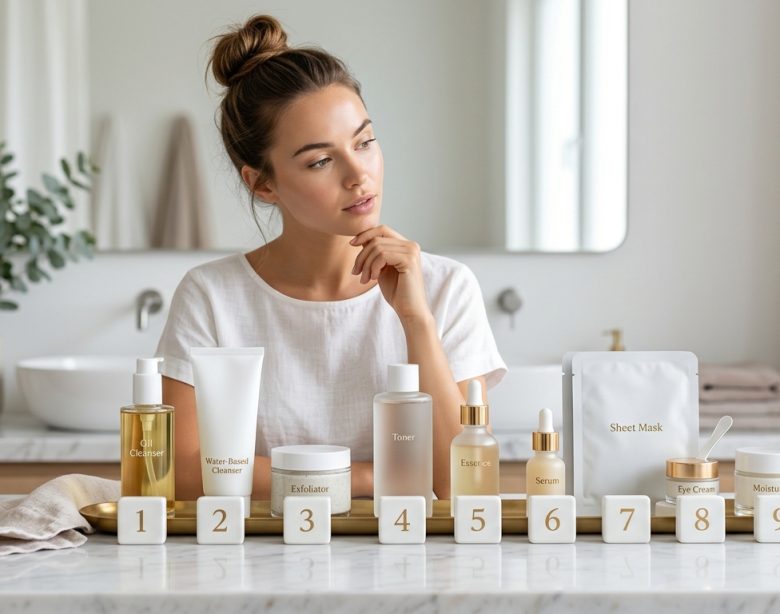
- Oil cleanser removes makeup and sunscreen
- Water-based cleanser removes sweat and dirt
- Exfoliator sloughs off dead skin cells
- Toner balances pH and preps skin
- Essence provides lightweight hydration
- Serum delivers active ingredients
- Sheet mask gives an extra hydration boost
- Eye cream targets the delicate eye area
- Moisturizer seals in hydration
- Sunscreen protects from UV damage
Some of these steps overlap significantly. Others address concerns you might not even have.
The Real Science Behind Layering Products
Your skin has a moisture barrier made of lipids and proteins. This barrier protects you from environmental damage and keeps water from evaporating out of your skin.
When you apply too many products, especially ones with different pH levels or conflicting active ingredients, you can actually compromise this barrier. Your skin becomes more sensitive. You might develop redness, breakouts, or that tight, uncomfortable feeling that makes you think you need even more products.
“The skin can only absorb so much at once. After three or four well-chosen products, you’re mostly just sitting product on top of your skin rather than allowing penetration of beneficial ingredients.” – Dr. Michelle Wong, cosmetic chemist
Research shows that product penetration decreases significantly after the first few layers. That seventh or eighth step? It’s probably just sitting on your face until you wash it off.
When More Steps Actually Make Sense
Some situations genuinely benefit from additional products:
- Severe acne that requires multiple targeted treatments
- Hyperpigmentation needing layered brightening ingredients
- Very dry skin in harsh climates requiring extra hydration
- Post-procedure care after treatments like chemical peels
- Specific medical conditions like rosacea or eczema
Notice what these all have in common? They’re addressing real skin concerns with specific products chosen for a reason. Not just adding steps because a routine template says to.
If you’re dealing with a particular skin issue, check out why your skin purges when you start new products and what to do about it before adding multiple new treatments at once.
The Minimum Your Skin Actually Needs
Every dermatologist will tell you the same thing. Your skin requires three basic steps:
- Cleanse to remove dirt and buildup
- Moisturize to maintain your barrier
- Protect with sunscreen during the day
That’s it. Everything else is optional enhancement based on your specific goals.
For people just starting out, how to build a simple 3-step skincare routine for absolute beginners provides a solid foundation without overwhelming your skin or your schedule.
Common Mistakes People Make With Multi-Step Routines
| Mistake | Why It’s Problematic | Better Approach |
|---|---|---|
| Using every step twice daily | Overloads skin and wastes product | Reserve intensive steps for evening only |
| Mixing too many actives | Causes irritation and cancels benefits | Alternate actives on different nights |
| Not waiting between steps | Products don’t absorb properly | Allow 30-60 seconds between layers |
| Following someone else’s routine exactly | Your skin has different needs | Customize based on your concerns |
| Never skipping steps | Skin gets overwhelmed | Listen to your skin and adjust |
What Happens When You Simplify
People who cut their routine from ten steps down to four or five often report:
- Less redness and irritation
- Fewer random breakouts
- Better product absorption
- Significant money saved
- More consistent routine adherence
- Clearer understanding of what actually works
Your skin doesn’t need to be confused by mixed messages from ten different products. It needs consistent, targeted care.
How to Build Your Actually Necessary Routine
Start with the basics and add only what addresses your specific concerns:
Morning essentials:
– Gentle cleanser or water rinse
– Moisturizer with SPF or separate sunscreen
Evening essentials:
– Cleanser to remove the day
– Moisturizer to repair overnight
Optional additions based on goals:
– Vitamin C serum for brightness
– Retinol for aging concerns
– Niacinamide for pore appearance
– Hydrating serum for extra moisture
Want to understand which hydrating ingredient actually suits your skin? Read about hyaluronic acid vs glycerin and which hydrator your skin actually needs.
The Time Investment Reality Check
A true 10 step routine, done properly with wait times between products, takes 30-45 minutes. Twice a day, that’s up to 90 minutes dedicated to skincare.
Most people don’t have that time. They rush through steps, don’t let products absorb, or skip the routine entirely when life gets busy.
A streamlined routine you actually do consistently beats an elaborate routine you abandon after two weeks. For those with packed schedules, the ultimate 10-minute morning skincare routine for busy people proves effective skincare doesn’t require hours.
The Cost Factor Nobody Talks About
Let’s do the math. If each product costs $25 on average (a conservative estimate), and you’re using 10 products that need replacing every 3-4 months:
- Initial investment: $250
- Annual replacement cost: $750-1000
- Five-year total: $3,750-5,000
That’s a significant beauty budget. For many people, that money could be better spent on fewer, higher-quality products or professional treatments that deliver more dramatic results.
Looking to maximize your beauty spending? Check out how to build a luxury skincare routine without breaking the bank.
When Product Layering Becomes Counterproductive
Your skin can handle multiple products, but certain combinations create problems:
- Vitamin C + Retinol can be too irritating together
- AHA/BHA + Retinol often causes excessive dryness
- Multiple serums with the same ingredient provides no extra benefit
- Too many oils can clog pores despite being “natural”
Understanding the right order to apply your skincare products for maximum results matters more than the number of products you use.
Signs Your Routine Is Too Complicated
Your skin will tell you when you’ve gone overboard:
- Increased sensitivity to products that never bothered you before
- Breakouts in areas you normally don’t get them
- Skin that feels tight or uncomfortable
- Redness that doesn’t calm down
- Products pilling or not absorbing
- Feeling overwhelmed or dreading your routine
These signs mean it’s time to strip back and rebuild more thoughtfully.
The Psychological Appeal of More Steps
There’s a reason elaborate routines feel so satisfying. The ritual provides structure. The multiple steps feel productive. The visible shelf of products signals self-care and investment in yourself.
But self-care shouldn’t feel like a chore. And investing in yourself doesn’t require buying everything a brand offers.
True skincare confidence comes from understanding what your skin actually needs, not from following someone else’s routine blindly.
Building a Routine That Actually Fits Your Life
Consider these factors when deciding your necessary steps:
- Your actual skin concerns (not invented ones from marketing)
- Time available morning and evening
- Budget for products and replacements
- Lifestyle factors like gym schedules or travel
- Climate where you live
- Skin sensitivity and how much your skin tolerates
A working professional with combination skin in a humid climate needs different products than a student with dry skin in a cold, dry area. One-size-fits-all routines ignore these realities.
What Dermatologists Actually Recommend
Most dermatologists suggest 3-5 products as the sweet spot. This allows for:
- Proper cleansing without stripping
- Targeted treatment for one or two concerns
- Adequate hydration and protection
- Consistency you can maintain long-term
They also emphasize that expensive doesn’t mean better. Some of the most effective ingredients come in affordable formulations. For budget-friendly options that actually work, see the best hydrating serums for dry skin under $30.
Adjusting Your Routine Seasonally
Your skin’s needs change with the weather. This doesn’t mean adding more products. It means swapping some out:
Summer adjustments:
– Lighter moisturizer
– Gel-based products
– Higher SPF or more frequent reapplication
Winter modifications:
– Richer moisturizer
– Hydrating serum
– Possibly an occlusive at night
You’re still doing the same number of steps. You’re just choosing different products for those steps based on what your skin needs right now.
The Environmental Impact of Excessive Routines
Ten products means ten bottles. Twice the packaging of a five-step routine. Triple the waste of a three-step approach.
Each product requires:
– Plastic or glass containers
– Shipping materials
– Transportation emissions
– Water for production
– Energy for manufacturing
Simplifying your routine isn’t just better for your skin and wallet. It’s also more sustainable.
Creating Your Personal Baseline
Here’s how to figure out what’s actually necessary for you:
- Strip back to the absolute basics for two weeks (cleanser, moisturizer, SPF)
- Assess your skin’s true baseline without extra products
- Add back one product at a time with two-week intervals
- Evaluate whether each addition makes a noticeable difference
- Keep only what demonstrably improves your skin
This process takes patience. But it gives you real data about what your skin responds to instead of guessing based on marketing claims.
When to Seek Professional Guidance
Sometimes DIY skincare isn’t enough. Consider seeing a dermatologist if:
- You have persistent acne or skin conditions
- Products consistently irritate your skin
- You’re not seeing results after 3-4 months
- You want to address specific concerns like scarring
- You’re considering prescription treatments
A professional can often solve in one visit what months of trial-and-error product purchases couldn’t fix.
The Freedom of a Simpler Approach
Reducing your routine from ten steps to four or five doesn’t mean you care less about your skin. It means you’re being smarter about skincare.
You’ll spend less time in the bathroom. Less money replacing products. Less mental energy remembering which product goes when. And often, you’ll see better results because your skin isn’t overwhelmed.
The beauty industry wants you to believe that more products equal better skin. But your skin just wants what it actually needs, consistently applied, without unnecessary extras creating problems that require even more products to fix.
Your Skin Doesn’t Need Permission to Be Simple
The 10 step skincare routine isn’t necessary for the vast majority of people. It’s a marketing concept that became a beauty standard, but it was never based on what skin actually requires to be healthy.
Your routine should serve your skin, your schedule, and your life. Not the other way around. Start with the basics, add only what addresses real concerns, and ignore the pressure to do more just because someone on social media does. Your skin will likely thank you for the simplicity.