You’ve probably noticed both glycerin and hyaluronic acid listed on nearly every moisturizer and serum in your bathroom. These two ingredients dominate the hydration conversation, but they work in completely different ways. Choosing the wrong one for your skin type can leave you dealing with dryness, breakouts, or that frustrating tight feeling by midday.
Glycerin and hyaluronic acid both hydrate skin but through different mechanisms. Glycerin works as a humectant that draws moisture from the air and deeper skin layers, while hyaluronic acid holds up to 1,000 times its weight in water. Your climate, skin type, and specific concerns determine which ingredient delivers better results. Many people benefit from using both strategically in their routine.
How Glycerin Actually Hydrates Your Skin
Glycerin is a simple humectant that’s been used in skincare for over a century. It pulls water molecules from two sources: the surrounding air and the deeper layers of your skin called the dermis.
This dual action makes glycerin incredibly reliable. It works by creating a moisture gradient, drawing hydration up to the surface where your skin needs it most. The molecule is small enough to penetrate the outer skin barrier without any special delivery system.
Your skin also produces glycerin naturally as part of its moisturizing process. When you use products with glycerin, you’re essentially supplementing what your skin already makes. This is why glycerin rarely causes irritation or sensitivity reactions.
The ingredient feels slightly sticky when you first apply it, but that tackiness disappears once you layer other products on top. This texture is actually a sign that it’s working, creating that moisture binding effect on your skin’s surface.
What Makes Hyaluronic Acid Different
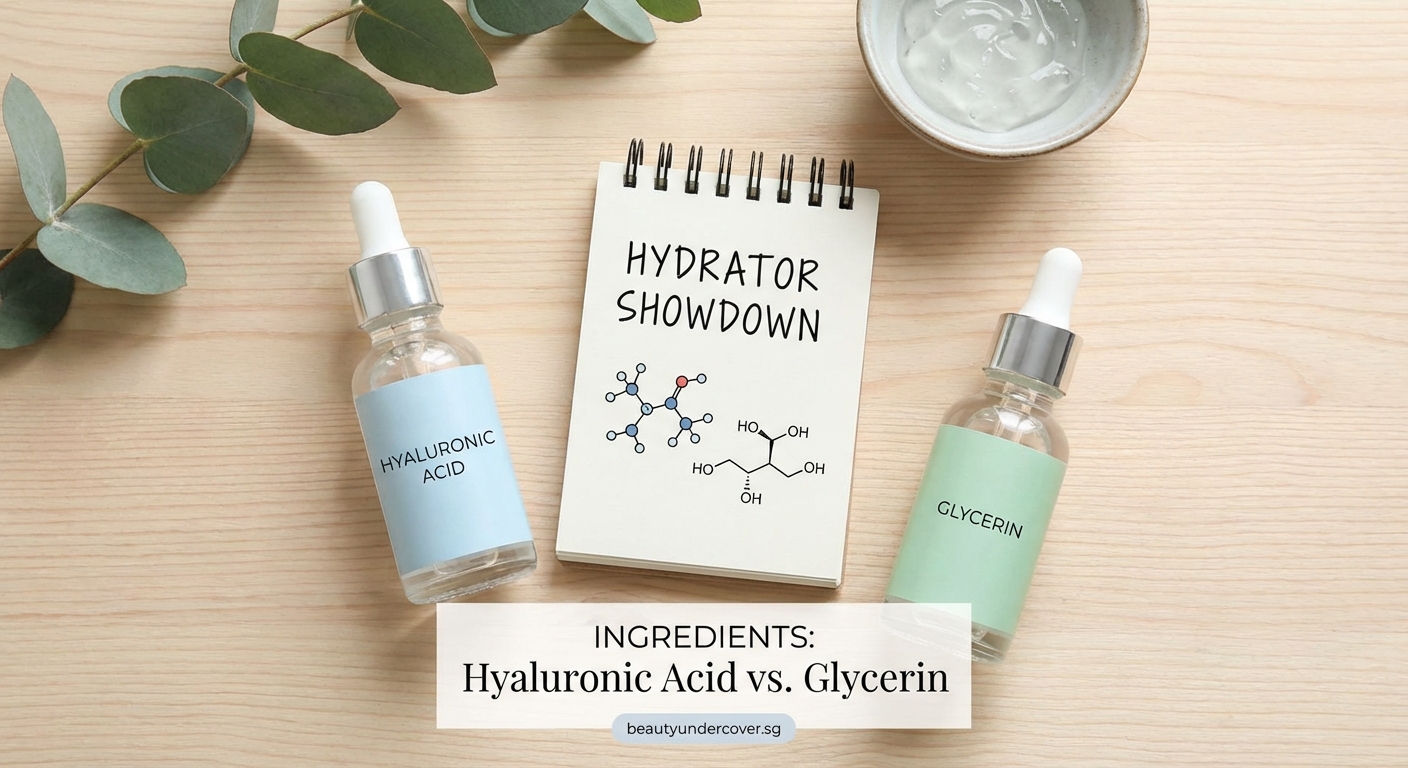
Hyaluronic acid is a larger molecule that exists naturally in your skin’s connective tissue. Unlike glycerin, it doesn’t pull moisture from deeper skin layers. Instead, it acts like a sponge that absorbs water from the environment and holds it on your skin’s surface.
The “holds 1,000 times its weight in water” claim you see everywhere is accurate. One gram of hyaluronic acid can bind to six liters of water. This makes it incredibly effective at plumping the skin and smoothing fine lines temporarily.
However, molecular size matters here. Regular hyaluronic acid molecules are too large to penetrate past the outer skin layer. They sit on top and create a hydrating film. Some formulas use multiple molecular weights, including low molecular weight versions that can penetrate deeper.
Your skin’s natural hyaluronic acid production decreases as you age. By your 40s, you’ve lost about half of what you had in your 20s. This is one reason why mature skin tends to look less plump and more prone to fine lines.
Performance Based on Your Climate
Where you live dramatically affects how these ingredients perform. Glycerin and hyaluronic acid both need environmental humidity to work properly.
In humid climates above 60% humidity, both ingredients pull moisture from the air beautifully. Your skin stays hydrated throughout the day without much effort. This is why people in tropical areas often rave about lightweight hyaluronic acid serums.
Dry climates below 30% humidity create problems. When there’s no moisture in the air, humectants will pull water from your deeper skin layers instead. This can actually make dehydration worse if you don’t seal everything in with an occlusive moisturizer.
Glycerin handles low humidity slightly better than hyaluronic acid because it’s more versatile. It can work with whatever moisture is available, whether from air or skin. Hyaluronic acid becomes less effective when humidity drops and needs to be paired with richer creams.
Air conditioned offices and heated homes create artificial dry environments. If you spend most of your day indoors, you’re essentially in a low humidity climate regardless of what’s happening outside.
Choosing Based on Your Skin Type
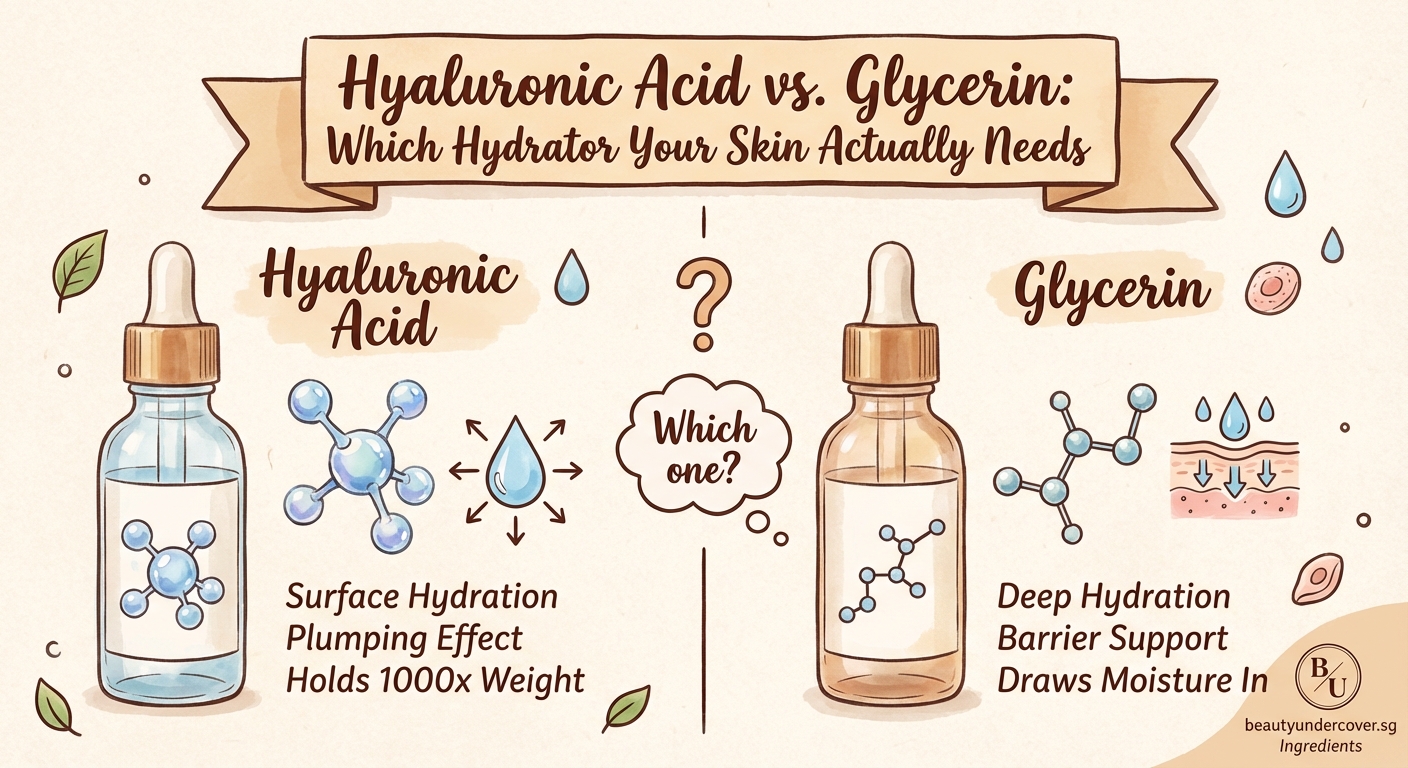
Your skin type determines which ingredient should take priority in your routine.
Oily and acne prone skin responds better to hyaluronic acid. The lightweight texture won’t add extra oil or clog pores. Look for serums with multiple molecular weights to get both surface and deeper hydration without heaviness.
Dry and mature skin typically needs glycerin’s more robust hydration. The ingredient works well in richer formulas and helps repair a compromised skin barrier. Pair it with ceramides and fatty acids for maximum benefit.
Combination skin can use both ingredients in different areas. Apply hyaluronic acid to your T-zone and glycerin based products to drier cheeks and jaw areas. This targeted approach prevents overloading oily zones while properly hydrating dry patches.
Sensitive skin often tolerates glycerin better. It’s been used longer, has more safety data, and causes fewer reactions. Start with a 3% to 5% glycerin formula before experimenting with hyaluronic acid.
Dehydrated skin (which is different from dry skin) benefits from hyaluronic acid first. This condition means your skin lacks water, not oil. Hyaluronic acid’s water binding capacity addresses the core issue directly.
How to Layer Them in Your Routine
You can absolutely use both ingredients together. In fact, many dermatologists recommend this approach for comprehensive hydration.
Here’s the correct order:
- Cleanse your face and pat it until slightly damp, not completely dry
- Apply hyaluronic acid serum to damp skin so it has moisture to bind to
- Wait 30 to 60 seconds for absorption
- Apply a glycerin containing moisturizer to seal everything in
- Add sunscreen during daytime or a heavier night cream before bed
The damp skin step is critical for hyaluronic acid. If you apply it to bone dry skin in a low humidity environment, it can actually pull moisture out and leave your skin feeling tight.
Glycerin works better in the moisturizer step because it helps create a protective barrier. It prevents water loss while continuing to attract moisture from the environment.
Never use hyaluronic acid as your final step. It needs an occlusive layer on top to prevent the water it’s holding from evaporating. This is a common mistake that leads people to think hyaluronic acid doesn’t work for them.
Common Mistakes That Reduce Effectiveness
Many people unknowingly sabotage these ingredients through improper use.
Applying too much product is surprisingly counterproductive. A pea sized amount of hyaluronic acid serum is enough for your entire face. More product doesn’t mean more hydration, it just creates a sticky layer that pills under makeup.
Skipping the occlusive moisturizer leaves humectants exposed. They’ll lose the water they’ve gathered to evaporation, especially in air conditioned spaces. Always seal your hydrating layers with something richer.
Using these ingredients with harsh actives at the wrong time causes problems. If you apply glycerin or hyaluronic acid right after strong retinoids or acids, you might drive those actives deeper and increase irritation. Wait 10 to 15 minutes between layers.
Expecting instant permanent results leads to disappointment. Both ingredients provide temporary hydration that lasts 8 to 12 hours. You need consistent daily use to maintain the plumping and smoothing effects.
Ignoring concentration matters more than you think. Effective glycerin concentrations range from 3% to 10%. For hyaluronic acid, 0.5% to 2% is the sweet spot. Higher concentrations don’t necessarily work better and can feel unpleasant on skin.
Product Formulation Differences
Not all glycerin and hyaluronic acid products are created equal. The supporting ingredients make a huge difference in performance.
| Ingredient Focus | Best Supporting Ingredients | Avoid Pairing With | Ideal Product Type |
|---|---|---|---|
| Glycerin | Ceramides, niacinamide, panthenol | High alcohol content, strong fragrances | Creams, lotions, cleansers |
| Hyaluronic Acid | Vitamin B5, glycerin, aloe | Silicones as first ingredient, drying alcohols | Serums, essences, sheet masks |
| Both Together | Peptides, antioxidants, squalane | Harsh sulfates, unnecessary essential oils | Layered routine systems |
Glycerin appears in everything from cleansers to heavy night creams. It’s stable, inexpensive, and plays well with almost every other ingredient. This versatility makes it a workhorse in skincare formulation.
Hyaluronic acid is more finicky. It degrades when exposed to certain preservatives and loses effectiveness in formulas with high alcohol content. Quality matters more here than with glycerin.
Some products list sodium hyaluronate instead of hyaluronic acid. This is the salt form of hyaluronic acid. It’s actually better because the smaller molecular size penetrates more easily while providing the same hydration benefits.
Cross linked hyaluronic acid is a newer technology that lasts longer on skin. The molecules are connected in a way that slows water evaporation. Products with this form can provide hydration for up to 24 hours with a single application.
What the Research Actually Shows
Scientific studies reveal some surprising differences between these ingredients.
A 2019 study in the Journal of Clinical and Aesthetic Dermatology found that 5% glycerin improved skin barrier function more effectively than 1% hyaluronic acid over eight weeks. Participants with compromised skin barriers saw better repair with glycerin.
However, a 2021 study in Dermatologic Therapy showed that hyaluronic acid provided superior immediate plumping effects. Fine lines appeared reduced within two hours of application, while glycerin took consistent use over two weeks to show similar results.
Research on combination use is limited but promising. A small 2020 study found that using both ingredients together provided better hydration scores than either one alone. The glycerin appeared to help the hyaluronic acid maintain its water binding capacity for longer periods.
“The best hydrator is the one your skin will actually absorb and that you’ll use consistently. Expensive hyaluronic acid serums don’t help if they sit unused because the texture feels wrong for your skin. Sometimes a simple glycerin based moisturizer delivers better real world results.” — Board certified dermatologist Dr. Michelle Wong
Long term safety data strongly favors glycerin. It’s been used in skincare and medicine for over 150 years with an excellent safety profile. Hyaluronic acid has only been common in skincare for about 20 years, though no significant concerns have emerged.
Budget Considerations and Value
Price doesn’t always reflect effectiveness with these ingredients.
Glycerin is incredibly inexpensive to manufacture. A product with 5% glycerin might cost anywhere from five dollars to fifty dollars, but the glycerin itself costs pennies. You’re paying for the other ingredients, packaging, and brand name.
Hyaluronic acid is more expensive to produce, especially the multi molecular weight and cross linked versions. However, the markup is still significant. A serum with 1% hyaluronic acid shouldn’t cost more than twenty to thirty dollars unless it contains other premium ingredients.
Drugstore brands often use the same grade of these ingredients as luxury brands. CeraVe, Neutrogena, and The Ordinary all use quality glycerin and hyaluronic acid. The main differences lie in texture, additional actives, and packaging.
You can buy pure glycerin and pure hyaluronic acid powder to make your own products. Pure vegetable glycerin costs about eight dollars for 16 ounces. Hyaluronic acid powder runs about fifteen dollars for 10 grams. However, getting the concentration and formula right requires research and careful measurement.
Addressing Specific Skin Concerns
Different skin issues respond better to one ingredient over the other.
For fine lines and wrinkles, hyaluronic acid provides more immediate visible improvement. The plumping effect temporarily fills in lines. Use it consistently twice daily for maintained results. Glycerin helps too but works more slowly through barrier repair.
For flaking and rough texture, glycerin is your better option. It softens the outer skin layer and helps dead cells shed properly. Apply it right after cleansing when skin is still slightly damp for maximum smoothing effect.
For dullness and uneven tone, both ingredients help by improving hydration, which makes skin reflect light better. However, you’ll get faster results by pairing them with vitamin C or niacinamide rather than relying on hydration alone.
For enlarged pores, neither ingredient will shrink pores permanently, but proper hydration prevents the dehydration that makes pores look more prominent. Hyaluronic acid works slightly better here because it doesn’t add any weight or potential pore clogging ingredients.
For post procedure healing, glycerin is generally recommended. It supports barrier repair without risking irritation. Wait until your skin has fully healed before introducing hyaluronic acid products.
Seasonal Adjustments to Your Routine
Your glycerin versus hyaluronic acid strategy should shift with the seasons.
During summer months with high humidity, hyaluronic acid serums shine. The abundant moisture in the air feeds the ingredient perfectly. You can often use lighter formulas and skip heavy moisturizers without experiencing tightness.
Winter demands more glycerin. The combination of low outdoor humidity and indoor heating creates challenging conditions. Switch to glycerin rich creams and layer them over any hyaluronic acid products you’re using.
Spring and fall transitions are tricky. You might need different products for morning versus evening as temperature and humidity fluctuate throughout the day. Keep both types of products available and adjust based on how your skin feels.
If you travel frequently between different climates, bring both ingredients in travel sizes. Your skin’s needs will change dramatically between a humid beach vacation and a dry mountain ski trip.
Finding What Actually Works for You
The only way to know which ingredient your skin prefers is through testing.
Start with one ingredient for two weeks before adding the other. This helps you identify which one provides the baseline hydration your skin needs. Note how your skin feels at different times of day and in different environments.
Pay attention to these signs:
- Skin feels tight or dry within a few hours (needs more occlusive protection)
- Products pill or ball up under makeup (using too much or wrong layering order)
- Breakouts increase (formula might be too heavy for your skin type)
- Skin looks plumper and feels comfortable all day (you’ve found the right match)
Keep a simple log on your phone for the first month. Rate your skin’s hydration level each morning and evening on a scale of one to ten. This objective tracking reveals patterns you might miss otherwise.
Don’t be swayed by what works for someone else. Your coworker’s holy grail hyaluronic acid serum might leave your skin feeling parched if you work in a different environment or have a different skin type.
Making These Ingredients Work Harder
You can boost the effectiveness of both glycerin and hyaluronic acid with smart pairing strategies.
Use a hydrating toner before applying either ingredient. This adds an extra water layer for them to work with. Look for toners with minimal alcohol and lots of humectants or botanical extracts.
Add a facial mist to your desk or bag. Spritz over your hyaluronic acid serum throughout the day to give it fresh moisture to bind to. This is especially helpful in air conditioned offices.
Apply these ingredients right after showering when humidity is high and your skin is warm. The increased absorption during this window maximizes their effectiveness.
Consider a humidifier for your bedroom if you live in a dry climate. This creates an optimal environment for humectant ingredients to work overnight when your skin does most of its repair work.
Layer your most hydrating products before flights. Airplane cabins have humidity levels around 10% to 20%, which is drier than most deserts. Apply hyaluronic acid, then glycerin cream, then an occlusive balm before boarding.
Your Hydration Strategy Moving Forward
Both glycerin and hyaluronic acid deserve a place in most skincare routines. They’re not competitors but complementary ingredients that address hydration from different angles.
Start by assessing your current environment and skin type honestly. If you’re in a humid climate with oily skin, begin with a hyaluronic acid serum. If you’re dealing with dry indoor air and mature skin, reach for glycerin based products first.
Give any new product at least two weeks of consistent use before judging its effectiveness. Skin barrier improvements take time to manifest. That tight feeling might not disappear overnight, but you should notice gradual improvement.
Remember that hydration is just one piece of healthy skin. These ingredients work best as part of a complete routine that includes gentle cleansing, sun protection, and appropriate treatment products for your specific concerns.
Your skin’s needs will change over time with age, seasons, and life circumstances. The glycerin versus hyaluronic acid question isn’t something you answer once and forget. Check in with your skin regularly and adjust your approach as needed. The best ingredient is always the one that keeps your skin comfortable, healthy, and glowing right now.