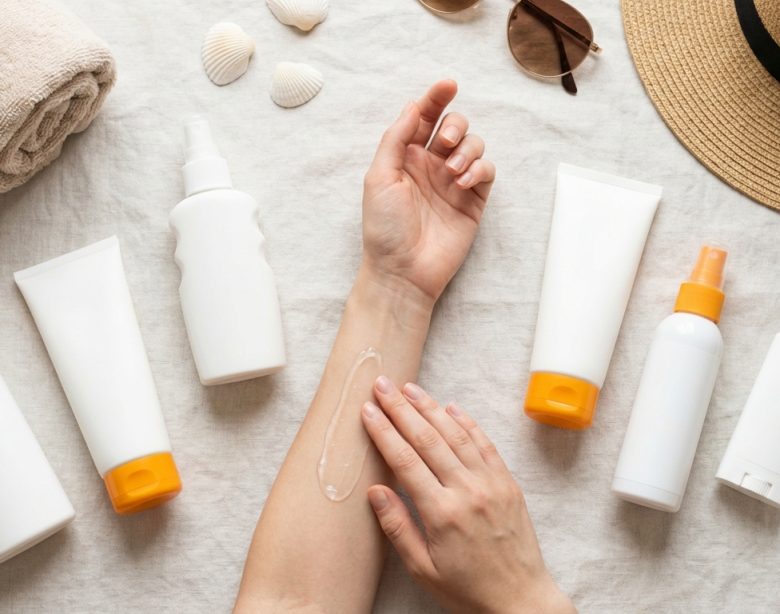
You apply sunscreen to your arms before heading out, and suddenly you look like you’ve been dusted with chalk. Or worse, your black dress now has greasy handprints all over it. This isn’t just annoying. It’s the reason so many people skip body sunscreen entirely, leaving their skin vulnerable to damage.
Body sunscreens with no white cast use chemical filters or micronized minerals that blend invisibly into all skin tones. The best formulas absorb within seconds, leave zero grease, and won’t transfer onto clothing. Look for gel textures, tinted formulas, or products labeled “invisible finish” to avoid the chalky residue that makes traditional sunscreens unwearable for daily use.
Why Most Body Sunscreens Leave White Streaks
The white cast problem comes down to particle size. Traditional mineral sunscreens use zinc oxide and titanium dioxide particles that sit on top of your skin, reflecting UV rays. These particles are large enough to scatter visible light, creating that telltale white or purple tint.
Chemical sunscreens work differently. They absorb into the skin and convert UV radiation into heat. No surface particles means no white cast. But many older chemical formulas left that greasy film that ruined clothes and felt heavy all day.
Skin tone makes a huge difference here. What looks “barely there” on pale skin can appear starkly white on medium to deep complexions. The beauty industry spent decades ignoring this, which is why finding body sunscreens that actually disappear took so long.
What Makes a Sunscreen Truly Invisible
Three factors determine whether a sunscreen will blend seamlessly or leave you looking ghostly:
Filter type: Chemical filters like avobenzone, octinoxate, and newer options like Tinosorb absorb completely. Mineral filters need to be either micronized to nano-size or tinted to blend properly.
Base formula: Gel and serum textures sink in faster than thick creams. Water-based formulas feel lighter than oil-based ones, though they may need more frequent reapplication after sweating.
Finish: Matte finishes reduce shine but can look chalky. Dewy finishes feel more natural but might transfer to clothes. The sweet spot is a skin-like finish that looks like nothing at all.
The Best Textures for No White Cast
Not all sunscreen formats are created equal when it comes to invisible wear.
Gels absorb the fastest and feel the lightest. They work beautifully on arms, legs, and chest areas. The downside? They can sting if you have any small cuts or irritation, and they tend to dry out skin over time.
Lotions offer the best balance. Modern formulations use silicones and lightweight oils that spread easily without heaviness. They provide some hydration while still sinking in completely.
Sprays seem convenient but often leave streaks if you don’t rub them in thoroughly. You also end up inhaling product, which isn’t ideal. They work better as touch-up options than primary application.
Oils sound counterintuitive, but dry oil sunscreens absorb surprisingly well. They give skin a subtle glow without greasiness. Perfect for evenings out when you want a bit of sheen.
How to Apply Body Sunscreen Without Residue
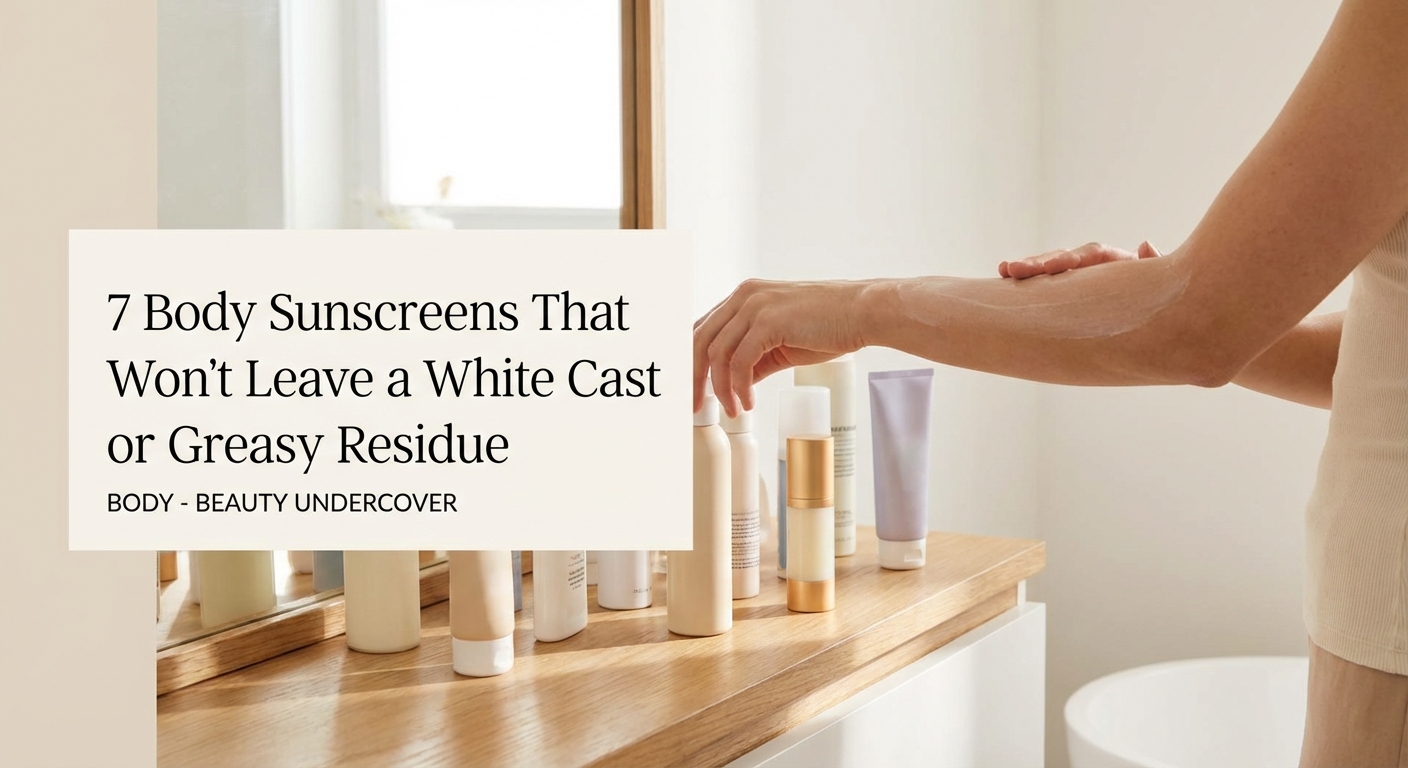
Even the best formula will leave white marks if you apply it wrong. Here’s the method that actually works:
- Start with clean, dry skin. Moisture or sweat on the surface prevents proper absorption.
- Squeeze a line of product directly onto your skin rather than into your palm. This helps you use enough without over-applying in one spot.
- Blend in circular motions using firm pressure. Really work it in rather than just spreading it around.
- Wait three full minutes before getting dressed. This lets the formula set properly.
- Check problem areas in natural light: collarbones, shoulders, and the tops of your feet often show white cast most obviously.
The biggest mistake? Rushing. Give each body section 30 seconds of blending time. Your arms, legs, chest, and back each need focused attention.
Common Application Mistakes That Cause White Streaks
| Mistake | Why It Causes White Cast | Better Approach |
|---|---|---|
| Applying too much at once | Product sits on surface instead of absorbing | Use thin layers and build coverage |
| Rubbing in straight lines | Creates uneven distribution and streaks | Use circular motions for even blending |
| Skipping the wait time | Product transfers before it sets | Wait 3 minutes before dressing |
| Using on damp skin | Water dilutes formula and prevents absorption | Dry skin completely first |
| Not warming product first | Cold, thick formula doesn’t spread smoothly | Rub between palms before applying |
Ingredients That Blend Invisibly
Chemical filters dominate the no-white-cast category. Avobenzone provides UVA protection but breaks down in sunlight, so it needs stabilizers. Octinoxate and octocrylene are lightweight and absorb instantly. Newer filters like Tinosorb S and Uvinul A Plus offer broad spectrum protection without any visible residue.
For mineral lovers, look for “micronized” or “nano” zinc oxide. These particles are small enough to blend clear while still providing physical protection. Tinted mineral formulas add iron oxides that counteract the white cast, though they can stain light-colored clothing.
Silicones like dimethicone and cyclopentasiloxane give that silky, invisible finish. They help sunscreen spread easily and dry down to nothing. Some people avoid silicones for environmental reasons, but they’re unmatched for elegant texture.
“The difference between a sunscreen you’ll actually wear and one that sits in your drawer comes down to how it feels in the first 30 seconds. If it blends clear immediately, you’ll reach for it every day. If you see white streaks, you won’t.” – Dr. Michelle Wong, cosmetic chemist
Formulas That Work on All Skin Tones
Universal sunscreens need to pass the test on the deepest skin tones. If it shows up on dark skin, it definitely shows up everywhere.
Completely clear gels work across the board because there’s zero tint to clash with your natural color. The trade-off is they can feel drying.
Tinted formulas sound skin-tone specific, but many brands now offer “universal tints” with a sheer bronze tone that adapts to different complexions. These work surprisingly well from fair to deep skin.
Invisible finish lotions use optical blurring technology. Tiny mica particles scatter light to minimize the appearance of any white cast. It’s not actually invisible, but your eye can’t detect the residue.
Clothing-Safe Options That Don’t Transfer
White marks on black clothes are just as bad as white marks on skin. The culprits are usually mineral filters and certain oils that don’t fully absorb.
Look for formulas labeled “non-staining” or “clothing-safe.” These typically use chemical filters that absorb completely rather than sitting on the surface.
Let sunscreen dry completely before getting dressed. That three-minute wait isn’t optional if you care about your clothes. The formula needs time to bond with your skin.
Avoid applying sunscreen right where fabric will rub: bra lines, waistbands, and collar areas. You can apply lighter coverage there and focus heavier application on exposed areas.
For existing stains, treat them before washing. Rub dish soap directly on the mark, let it sit for 10 minutes, then launder as usual. The surfactants break down the oils and filters.
Reapplication Without the Greasy Buildup
Reapplying every two hours sounds great in theory. In practice, layering sunscreen often creates that slick, heavy feeling.
Powder sunscreens work well for touch-ups on arms and legs. They add coverage without any wet or greasy sensation. Just brush on and blend.
Sunscreen sticks let you target high-exposure areas like shoulders and décolletage without affecting the rest of your body. The solid format controls application better than lotions.
Misting sprays can refresh your protection if you rub them in properly. Spray, then blend with your hands. Don’t just mist and walk away.
Blotting before reapplication helps. Use a clean towel to remove sweat and excess oils, then apply a fresh thin layer. This prevents the gunky buildup that happens when you pile product on top of product.
Special Situations That Need Different Formulas
Beach days require water resistance, which often means thicker formulas. Accept that these might not be as cosmetically elegant as your daily options. The trade-off is they actually stay on while you swim.
Under sheer clothing, you need something that truly disappears. Even a slight white cast will show through light fabrics. Stick with clear gels or very sheer chemical formulas.
For events where you’re wearing sleeveless or backless outfits, consider a tinted body sunscreen. It evens out skin tone while protecting, giving you that airbrushed look without makeup.
Active days with lots of sweating call for sport formulas. These are designed to resist moisture while still feeling breathable. They often have a drier finish that won’t drip into your eyes.
Testing New Sunscreens Before Committing
Don’t buy a full-size bottle without testing first. Many brands offer travel sizes or sample packets.
Test on your inner forearm first. This area shows white cast clearly and lets you check for any irritation before covering your whole body.
Wait the full absorption time and check in different lighting. Natural sunlight reveals white cast that indoor lighting might hide.
Wear it for a full day to assess transfer. Put on dark clothing after application and check for marks after a few hours of normal activity.
Try it in warm weather too. Some formulas that feel fine in air conditioning turn greasy and heavy in heat and humidity.
Making Sunscreen Part of Your Routine
The best sunscreen is the one you’ll actually use. If white cast and greasiness have stopped you before, finding the right formula changes everything.
Keep your body sunscreen in a visible spot. Next to your body lotion or in your getting-ready area works better than buried in a bathroom drawer.
Pair it with your morning routine. After shower, before getting dressed becomes automatic when you do it in the same order every day.
Set a weekend reminder to reapply if you’re spending time outdoors. Your phone can prompt you every two hours so you don’t have to think about it.
Track how long a bottle lasts. If you’re using the recommended amount (about a shot glass for your whole body), you should go through a bottle every few weeks during summer.
Finding Your Perfect Match
Body sunscreens with no white cast exist across every price point and preference. Chemical formulas offer the most reliably invisible finish. Modern mineral options work too if you choose micronized or tinted versions.
Texture matters as much as ingredients. Gels for fast absorption, lotions for hydration, oils for glow. Match the format to how you want your skin to look and feel.
The application technique makes or breaks even the best formula. Take your time, blend thoroughly, and wait before dressing. Those extra minutes mean the difference between streaky and seamless.
Your skin deserves protection that doesn’t compromise how you look or what you wear. The right body sunscreen disappears completely, leaving nothing behind except coverage you can count on.