If retinol left your face red, flaky, and stinging, you’re not alone. That burning sensation might feel like a badge of honor in skincare circles, but sensitive skin doesn’t need to suffer for results. The good news? Several proven ingredients deliver similar benefits without the drama.
Bakuchiol, retinaldehyde, niacinamide, peptides, and azelaic acid offer effective anti-aging and skin-smoothing benefits for sensitive skin types. These retinol alternatives work through different mechanisms to boost cell turnover, increase collagen production, and improve texture without triggering the redness and peeling that traditional retinoids cause. Start slowly, patch test first, and give each ingredient at least 8 weeks before evaluating results.
Why Retinol Wreaks Havoc on Sensitive Skin
Retinol works by speeding up cell turnover and boosting collagen production. Sounds perfect, right? The problem is how aggressively it does this.
Your skin barrier is already compromised when you have sensitive skin. Retinol strips away the outer layer faster than your skin can rebuild it. This creates microscopic cracks that let irritants in and moisture out.
The result? Inflammation, redness, and that tight, uncomfortable feeling that makes you want to skip skincare altogether.
Traditional retinoids also make your skin more photosensitive. Even with diligent sunscreen use, sensitive skin types often experience increased reactivity to UV exposure.
The Five Alternatives That Actually Deliver Results
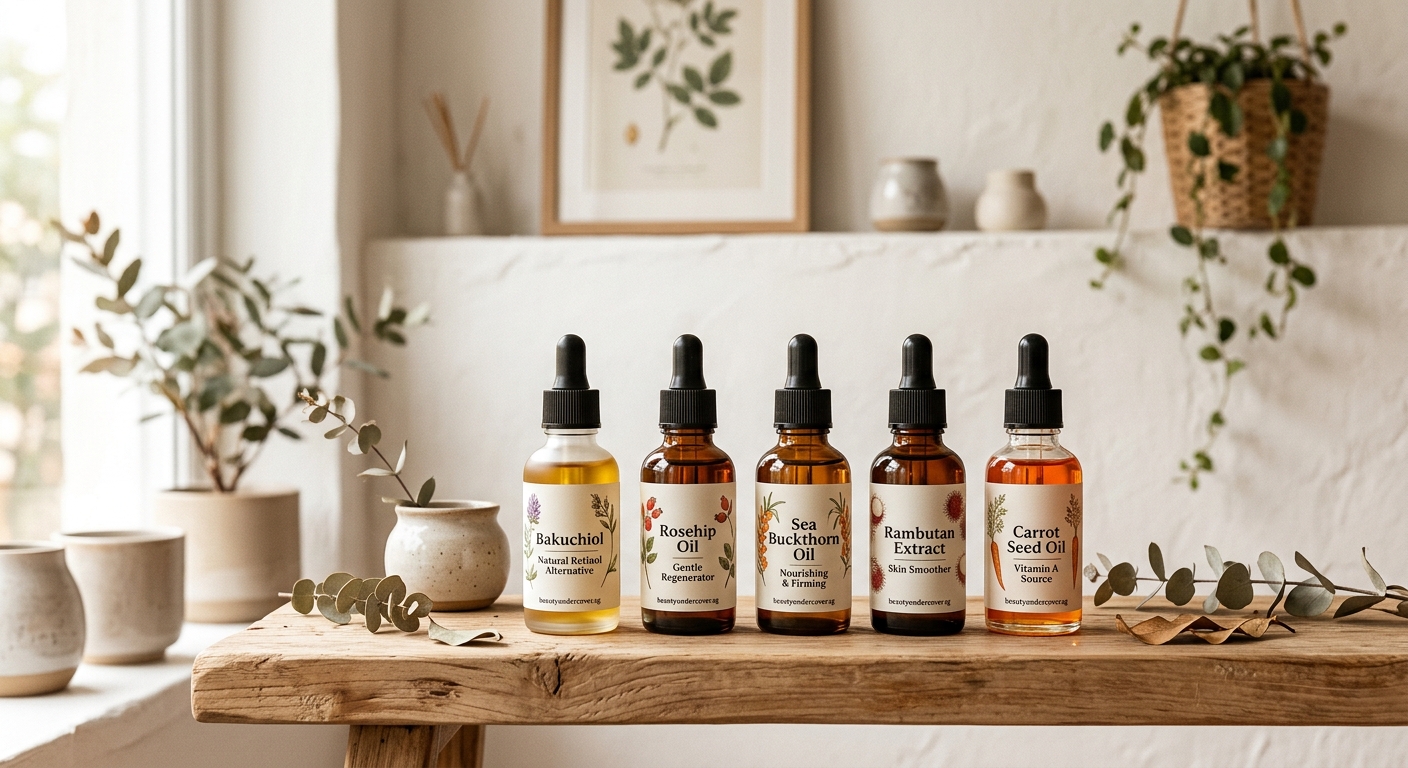
Bakuchiol: The Plant-Based Powerhouse
Bakuchiol comes from the babchi plant and has been used in Ayurvedic medicine for centuries. Multiple clinical studies now show it delivers retinol-like results without irritation.
A 2018 study published in the British Journal of Dermatology compared bakuchiol to retinol over 12 weeks. Both groups saw similar improvements in fine lines, pigmentation, and elasticity. The difference? The bakuchiol group reported zero stinging or peeling.
Unlike retinol, bakuchiol doesn’t increase sun sensitivity. You can use it morning and night without worry.
Start with a 0.5% to 1% concentration. Apply it after cleansing but before heavier creams. Most people see visible smoothing within 4 to 6 weeks.
One caveat: bakuchiol has a distinct herbal scent that some find off-putting. The smell fades after application, but it’s worth knowing before you buy.
Retinaldehyde: Retinol’s Gentler Cousin
Retinaldehyde sits one conversion step closer to retinoic acid than retinol. This means it works faster and requires less metabolic processing in your skin.
Less processing equals less irritation.
Studies show retinaldehyde is up to 11 times less irritating than retinol while delivering comparable results. It also has antibacterial properties that make it particularly useful for sensitive, acne-prone skin.
Look for products with 0.05% to 0.1% retinaldehyde. Apply it 2 to 3 times per week initially, then increase frequency as your skin adjusts.
Store retinaldehyde products in a cool, dark place. This ingredient degrades faster than standard retinol when exposed to light and heat.
Niacinamide: The Multi-Tasking Workhorse
What does niacinamide really do for your skin? This form of vitamin B3 strengthens your skin barrier, reduces inflammation, and regulates oil production.
While it doesn’t directly increase cell turnover like retinol, niacinamide improves skin texture by minimizing pore appearance and evening out tone. It also boosts ceramide production, which is critical for maintaining a healthy moisture barrier.
Research shows niacinamide reduces fine lines and hyperpigmentation with consistent use. A 2004 study found that 5% niacinamide improved skin elasticity and reduced fine lines after 12 weeks.
The beauty of niacinamide? You can use it twice daily without any adjustment period. It plays well with other active ingredients, making it perfect for building a simple skincare routine.
Start with 5% to 10% concentration. Higher percentages don’t necessarily work better and may cause flushing in some people.
Peptides: The Collagen Boosters
Peptides are short chains of amino acids that signal your skin to produce more collagen. Think of them as messengers that tell your cells to get to work.
Different peptides serve different functions. Matrixyl (palmitoyl pentapeptide) stimulates collagen and hyaluronic acid production. Argireline (acetyl hexapeptide) relaxes facial muscles to reduce expression lines.
A 2005 study found that palmitoyl pentapeptide reduced wrinkle depth by up to 31% after 12 weeks. The best part? Participants reported no irritation or sensitivity.
Peptide serums work slowly but steadily. Don’t expect overnight results. Most people notice firmer, plumper skin after 8 to 12 weeks of consistent use.
Apply peptides to damp skin for better absorption. Layer them under your moisturizer and avoid using them with vitamin C at the same time, as low pH can degrade certain peptides.
Azelaic Acid: The Multitasker for Redness and Texture
Azelaic acid tackles multiple concerns at once. It gently exfoliates, reduces redness, fades dark spots, and has anti-inflammatory properties.
This ingredient is particularly valuable if your sensitive skin also deals with rosacea or post-inflammatory hyperpigmentation. Studies show 15% to 20% azelaic acid significantly reduces redness and improves skin texture.
Unlike other acids, azelaic acid doesn’t make your skin more sun-sensitive. It actually helps prevent UV-induced pigmentation.
Start with a 10% formula and use it once daily, preferably at night. You might experience mild tingling during the first few applications. This usually subsides within a week.
Some people find azelaic acid slightly drying. If this happens, reduce frequency or apply it over your moisturizer instead of directly on bare skin.
How to Introduce These Alternatives Without Triggering a Reaction
Your skin needs time to adapt to any new active ingredient. Rushing the process defeats the purpose of choosing gentler alternatives.
Follow this introduction schedule:
- Week 1-2: Patch test on your jawline for three consecutive nights. Watch for redness, itching, or burning.
- Week 3-4: Apply to your full face twice per week, waiting 48 hours between applications.
- Week 5-6: Increase to every other night if your skin shows no irritation.
- Week 7+: Use nightly or as directed, depending on the ingredient and your skin’s response.
Never introduce multiple new actives simultaneously. If you experience a reaction, you won’t know which ingredient caused it.
Keep your routine simple during the introduction phase. Use a gentle cleanser, your new active, and a basic moisturizer. Save the fancy serums and treatments for later.
Understanding why your skin purges helps you distinguish between normal adjustment and genuine irritation.
Common Mistakes That Sabotage Your Results
| Mistake | Why It Matters | Better Approach |
|---|---|---|
| Using too much product | More product doesn’t mean faster results, just increased irritation | Stick to a pea-sized amount for your entire face |
| Skipping sunscreen | UV exposure undoes anti-aging benefits and worsens sensitivity | Apply SPF 30+ every morning, even indoors |
| Mixing incompatible ingredients | Some combinations reduce effectiveness or increase irritation | Space out actives or use them at different times of day |
| Expecting immediate results | Cell turnover takes 28 days minimum; collagen production takes months | Commit to 12 weeks before evaluating effectiveness |
| Over-exfoliating | Adding acids or scrubs on top of actives compromises your barrier | Limit exfoliation to once weekly while using alternatives |
The biggest mistake? Giving up too soon. Your skin didn’t develop fine lines overnight. It won’t erase them overnight either.
Pairing Your Alternative with the Right Supporting Cast
Active ingredients work better when your skin barrier is strong and hydrated. Think of your routine as a team where every player has a role.
Morning routine:
– Gentle cleanser
– Niacinamide or peptide serum
– Hydrating serum with hyaluronic acid
– Moisturizer with ceramides
– Broad-spectrum sunscreen
Evening routine:
– Oil-based cleanser (if wearing makeup)
– Water-based cleanser
– Bakuchiol, retinaldehyde, or azelaic acid
– Moisturizer
– Facial oil (optional, for extra barrier support)
Understanding what order to apply your products maximizes absorption and effectiveness.
Avoid layering multiple actives at night when you’re starting out. Once your skin adapts, you can experiment with combining compatible ingredients like niacinamide and peptides.
What Results Look Like (And When to Expect Them)
Setting realistic expectations prevents disappointment and premature product abandonment.
Weeks 1-4:
– Improved hydration and skin texture
– Reduced redness or reactivity
– Possibly no visible changes yet (this is normal)
Weeks 5-8:
– Smoother skin surface
– More even tone
– Subtle reduction in fine lines
– Improved radiance
Weeks 9-12:
– Noticeable improvement in skin firmness
– Continued fading of hyperpigmentation
– Reduced appearance of deeper lines
– Overall healthier skin function
“The most effective anti-aging ingredient is the one your skin will actually tolerate long-term. Consistency beats potency every single time.” – Dr. Whitney Bowe, board-certified dermatologist
Take progress photos in the same lighting every two weeks. Your brain adapts to gradual changes, making it hard to notice improvement without visual comparison.
Signs You Should Stop and Reassess
Not every ingredient works for every person. Sometimes even gentle alternatives cause problems.
Stop using a product immediately if you experience:
- Persistent burning or stinging beyond the first few applications
- Rash, hives, or welts
- Increased breakouts lasting more than 2 weeks
- Severe dryness that doesn’t improve with moisturizer
- Swelling around eyes or lips
Minor tingling during the first week is normal for some ingredients like azelaic acid. Persistent discomfort is not.
If you’re unsure whether you’re experiencing normal adjustment or a genuine reaction, pause the product for 3 to 5 days. If symptoms clear, try reintroducing at a lower frequency. If they return, discontinue use.
Building Your Sensitive Skin Arsenal on a Budget
Effective alternatives don’t require luxury price tags. Several affordable options deliver clinical-level results.
Budget-friendly bakuchiol:
– The Inkey List Bakuchiol Moisturizer
– Revolution Skincare Bakuchiol Serum
Accessible retinaldehyde:
– Avène RetrinAL
– Medik8 Crystal Retinal
Wallet-friendly niacinamide:
– The Ordinary Niacinamide 10% + Zinc 1%
– Good Molecules Niacinamide Serum
Affordable peptides:
– The Ordinary Buffet
– CeraVe Skin Renewing Night Cream
Budget azelaic acid:
– The Ordinary Azelaic Acid Suspension 10%
– Paula’s Choice 10% Azelaic Acid Booster
Price doesn’t always indicate quality. Many drugstore brands use the same ingredient concentrations as their luxury counterparts.
Check when beauty products actually go on discount to maximize your budget without compromising on effectiveness.
Your Questions About Retinol Alternatives Answered
Can I use multiple alternatives at once?
Not initially. Start with one ingredient for at least 6 to 8 weeks. Once your skin adapts, you can layer compatible options like niacinamide with peptides or bakuchiol with azelaic acid.
Will these work as well as prescription retinoids?
They work differently but can deliver comparable cosmetic results for mild to moderate aging concerns. Prescription retinoids remain more effective for severe photodamage or deep wrinkles.
How long until I see results?
Most people notice texture improvements within 4 to 6 weeks. Visible reduction in fine lines and pigmentation typically takes 8 to 12 weeks of consistent use.
Can I use these if I’m pregnant or nursing?
Bakuchiol, niacinamide, peptides, and azelaic acid are generally considered safe during pregnancy and breastfeeding. Always consult your healthcare provider before starting new skincare products.
Do I still need sunscreen if I’m not using retinol?
Absolutely. UV exposure remains the primary cause of premature aging. Sunscreen protects your investment in anti-aging skincare regardless of which ingredients you use.
Making Peace with Your Sensitive Skin Journey
Sensitive skin isn’t a flaw that needs fixing. It’s simply skin that requires more thoughtful care.
The alternatives covered here offer real results without forcing your skin to endure unnecessary irritation. Whether you choose bakuchiol for its retinol-mimicking properties, peptides for collagen support, or azelaic acid for its multi-tasking benefits, consistency matters more than potency.
Start with one ingredient. Give it time. Listen to your skin. Adjust as needed.
Your skin doesn’t need to burn to prove that something is working. The right alternative will improve your skin while respecting its boundaries. That’s not settling for less. That’s choosing sustainable, long-term skin health over short-term suffering.