
You spend time perfecting your facial skincare routine, but what about the rest of your body? Your skin from neck to toes deserves the same attention and care. Building a solid body care routine doesn’t need to be complicated or time consuming.
A complete body care routine includes cleansing, exfoliating, moisturizing, and protecting your skin. Start with the basics and add steps gradually based on your skin type and concerns. Consistency matters more than having dozens of products. Focus on quality formulas that address your specific needs, whether that’s dryness, texture, or uneven tone. Most routines take just five to ten minutes daily.
Understanding your body’s skin needs
Your body skin differs from facial skin in several ways. It’s generally thicker and has fewer sebaceous glands, which means it tends to be drier. Areas like elbows, knees, and heels develop more calluses and rough patches. Your back and chest might produce more oil and be prone to breakouts.
Different body zones need different approaches. Your décolletage shows signs of aging faster because the skin there is thin and delicate. Your hands face constant exposure to water, soap, and environmental stressors. Your feet bear your weight all day and often get neglected until problems appear.
Knowing your skin type helps you choose the right products. Dry skin feels tight after showering and shows visible flaking. Oily skin appears shiny, especially on the back and chest. Combination skin means some areas are dry while others produce excess oil. Sensitive skin reacts easily to fragrances, dyes, or harsh ingredients.
Building your foundation routine
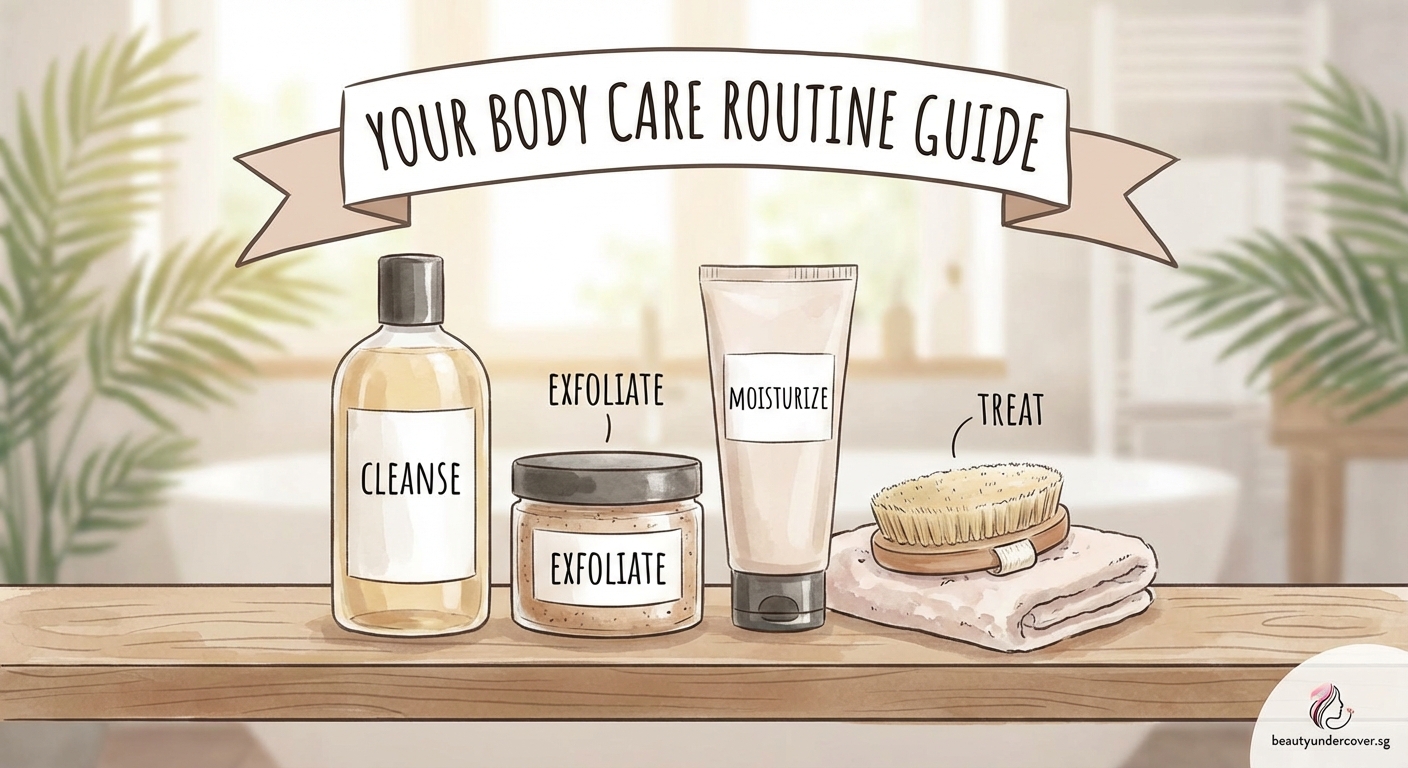
Every effective body care routine starts with three essential steps. These form the backbone of healthy skin maintenance.
Cleansing without stripping
Your cleanser should remove dirt, sweat, and product buildup without leaving your skin feeling tight or squeaky. That squeaky clean feeling actually means you’ve stripped away protective oils.
Look for gentle formulas with a pH close to your skin’s natural level, around 5.5. Cream cleansers work well for dry skin. Gel formulas suit oily or acne prone skin. Body washes with glycerin, ceramides, or hyaluronic acid help maintain moisture.
Skip the loofah if you have sensitive skin. These harbor bacteria and can cause micro tears. Use your hands or a soft washcloth instead. Save exfoliating tools for your designated exfoliation days.
Water temperature matters more than you think. Hot water feels relaxing but strips natural oils and can worsen conditions like eczema. Lukewarm water cleans effectively without causing damage.
Exfoliation for smooth texture
Dead skin cells accumulate on your body just like they do on your face. Regular exfoliation reveals fresh skin, improves texture, and helps other products absorb better.
You have two main exfoliation options: physical and chemical.
Physical exfoliants use granules, brushes, or scrubs to manually slough off dead cells. Sugar scrubs, salt scrubs, and dry brushing fall into this category. These work well for rough areas like elbows and feet but can be too harsh for sensitive zones.
Chemical exfoliants use acids or enzymes to dissolve the bonds between dead skin cells. Alpha hydroxy acids like glycolic and lactic acid work on the skin’s surface. Beta hydroxy acid (salicylic acid) penetrates pores, making it ideal for body acne. These tend to be gentler and more even than physical scrubs.
Most skin types benefit from exfoliating two to three times per week. Sensitive skin might need just once weekly. Oily or thick skin can handle more frequent exfoliation.
Moisturizing to lock in hydration
Moisturizing is non negotiable, regardless of your skin type. Even oily skin needs hydration to function properly.
Apply moisturizer within three minutes of showering. Your skin is still damp, which helps seal in water. This timing makes a noticeable difference in how soft your skin feels.
Choose your moisturizer based on your skin’s needs:
- Lotions have high water content and absorb fast, perfect for normal to oily skin
- Creams are thicker and provide more intensive hydration for dry skin
- Butters and balms work best for very dry areas like heels and elbows
- Oils can supplement your routine but shouldn’t replace moisturizer entirely
Key ingredients to look for include ceramides (strengthen skin barrier), niacinamide (improves texture and tone), hyaluronic acid (holds moisture), and shea butter (nourishes dry skin).
Advanced steps for specific concerns
Once you’ve mastered the basics, you can add targeted treatments.
Treating body acne
Back and chest acne requires a different approach than facial breakouts. The skin is thicker and can tolerate stronger formulations.
Use a salicylic acid body wash or benzoyl peroxide cleanser. Let it sit on your skin for a minute before rinsing to allow the active ingredients to work. Follow with a lightweight, non comedogenic moisturizer.
Spray treatments work better than lotions for hard to reach areas like your back. Look for formulas with salicylic acid, tea tree oil, or niacinamide.
Change your sheets weekly and shower immediately after working out. Sweat and bacteria contribute to body breakouts.
Addressing texture and tone
Keratosis pilaris (those bumpy patches on arms and thighs) and hyperpigmentation respond well to consistent treatment.
For bumpy texture, use a chemical exfoliant with lactic acid or urea. These soften the keratin plugs causing the bumps. Avoid picking or scrubbing aggressively, which makes the condition worse.
For dark spots or uneven tone, look for body lotions with vitamin C, kojic acid, or alpha arbutin. These ingredients gradually fade discoloration with regular use. Sun protection is essential to prevent new dark spots from forming.
Caring for hands and feet
Your extremities need extra attention because they work the hardest.
For hands, keep a rich hand cream at every sink. Apply after each wash. At night, use a thicker treatment and wear cotton gloves to intensify absorption. Cuticle oil prevents dry, ragged cuticles.
For feet, soak them weekly in warm water with Epsom salt. Use a pumice stone on calluses when skin is soft. Apply a thick foot cream with urea or salicylic acid to soften rough patches. Wear socks overnight to lock in moisture.
Creating your personalized schedule
A body care routine guide only works if you can stick to it. Here’s how to structure your week for realistic consistency.
Daily morning routine:
1. Shower with gentle cleanser
2. Pat skin dry, leaving it slightly damp
3. Apply body lotion within three minutes
4. Add sunscreen to exposed areas
Daily evening routine:
1. Cleanse if you showered in the morning, or do full shower routine
2. Apply any treatment products to problem areas
3. Moisturize with a richer cream than morning
4. Give extra attention to hands and feet
Two to three times weekly:
1. Exfoliate in the shower
2. Apply a hydrating mask to dry areas while you relax
3. Use targeted treatments for body acne or texture
4. Do a foot care session
Common mistakes that sabotage results
Even with good intentions, these errors can prevent you from seeing improvements.
| Mistake | Why it’s harmful | Better approach |
|---|---|---|
| Showering too hot | Strips protective oils, causes dryness | Use lukewarm water, save heat for the end |
| Skipping moisturizer on oily skin | Dehydration triggers more oil production | Use lightweight, water based lotions |
| Over exfoliating | Damages skin barrier, causes irritation | Stick to 2-3 times weekly maximum |
| Using face products on body | Expensive and impractical for large areas | Choose body specific formulas |
| Ignoring sunscreen | Causes premature aging and dark spots | Apply SPF 30+ to exposed skin daily |
| Applying products to dry skin | Reduces absorption and effectiveness | Moisturize on damp skin post shower |
Choosing products that actually work
The beauty market overflows with body care options. Here’s how to cut through the noise.
Read ingredient lists, not just marketing claims. Active ingredients should appear in the first five to seven ingredients. If they’re at the end of the list, the concentration is probably too low to be effective.
Fragrance free doesn’t always mean unscented. Some products use masking fragrances to cover the natural smell of ingredients. If you have sensitive skin, look for products labeled “fragrance free” rather than “unscented.”
Test new products on a small area first. Apply to your inner arm and wait 24 hours to check for reactions. This prevents wasting money and dealing with widespread irritation.
Price doesn’t always correlate with quality. Many drugstore brands offer excellent formulations at accessible prices. Focus on ingredients and your skin’s response rather than packaging or brand prestige.
“The best body care routine is one you’ll actually do. Start with just cleanser and moisturizer if that’s all you can manage. You can always add more steps later. Consistency with basics beats sporadic use of elaborate routines every time.” — Dermatology nurse practitioner
Adjusting for seasons and life changes
Your skin’s needs shift throughout the year and during major life events.
Winter demands richer moisturizers and more frequent application. Cold air and indoor heating create the perfect storm for dry, flaky skin. Switch to cream based formulas and add a humidifier to your bedroom.
Summer calls for lighter textures that won’t feel sticky in humidity. You’ll need more frequent exfoliation if you’re sweating more. Don’t forget to reapply sunscreen on exposed areas.
Pregnancy often brings skin changes. Some women develop darker patches or increased sensitivity. Stick to gentle, fragrance free products and avoid retinoids or high concentration acids without consulting your doctor.
Menopause can cause dryness and thinning skin. Increase moisturizer richness and frequency. Look for products with collagen supporting ingredients like peptides and vitamin C.
After weight loss or gain, skin texture and elasticity might change. Focus on hydration and ingredients that support skin barrier function like ceramides and niacinamide.
Making your routine sustainable
The most effective body care routine guide is the one you can maintain long term without burnout or breaking the bank.
Multitask when possible. Apply a hydrating hair mask while you exfoliate your body. Let a body treatment sink in while you brush your teeth.
Buy in bulk for products you use daily. Large pump bottles of body lotion cost less per ounce and reduce packaging waste.
Set reminders on your phone for weekly treatments until they become habit. Sunday evening works well for most people to do a full body care session.
Keep travel sizes of your essentials ready to go. Maintaining your routine while away from home prevents setbacks.
Don’t chase every trend. New ingredients and products launch constantly, but your skin doesn’t need everything. Stick with what works and only introduce new products when you have a specific concern to address.
Your skin deserves this attention
Building a body care routine that works means understanding your skin, choosing appropriate products, and staying consistent. You don’t need a bathroom full of products or an hour each day. Start with cleansing and moisturizing, add exfoliation when you’re ready, and incorporate treatments as specific concerns arise.
Your body carries you through every experience. Treating your skin well from shoulders to toes isn’t vanity. It’s basic maintenance that pays off in comfort, confidence, and long term skin health. Give it the same thoughtful care you give your face, and you’ll notice the difference within weeks.
Leave a Reply