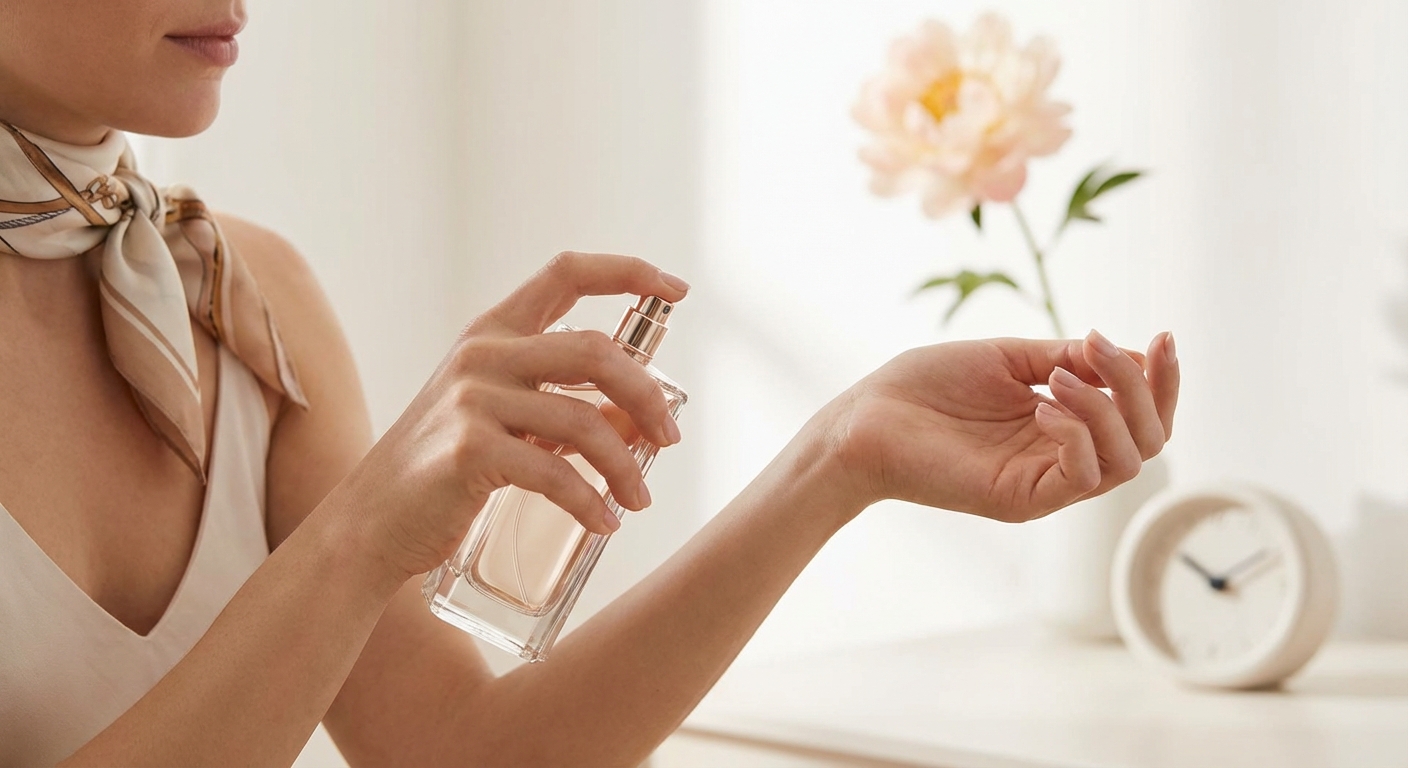
You spritz your favorite fragrance before heading out, and by lunch it’s barely detectable. You’re not alone. Most people struggle with perfume that fades too fast, but the problem usually isn’t the fragrance itself. It’s how and where you apply it.
Making perfume last all day depends on proper application techniques, skin preparation, and strategic layering. Apply fragrance to moisturized pulse points, avoid rubbing wrists together, and layer products from the same scent family. Store bottles away from heat and light. Understanding your skin type and fragrance concentration helps you choose products that naturally perform better throughout the day.
Why Your Perfume Disappears So Fast
Fragrance longevity isn’t just about the perfume quality. Your skin chemistry, hydration levels, and application method all play major roles.
Dry skin absorbs perfume quickly, causing it to evaporate faster. Hot weather accelerates evaporation. Even your diet can affect how long scents linger on your skin.
The concentration matters too. Eau de toilette typically lasts 3 to 4 hours, while eau de parfum can last 6 to 8 hours. Pure perfume or parfum offers the longest wear, often 12 hours or more.
Prepare Your Skin Before Applying
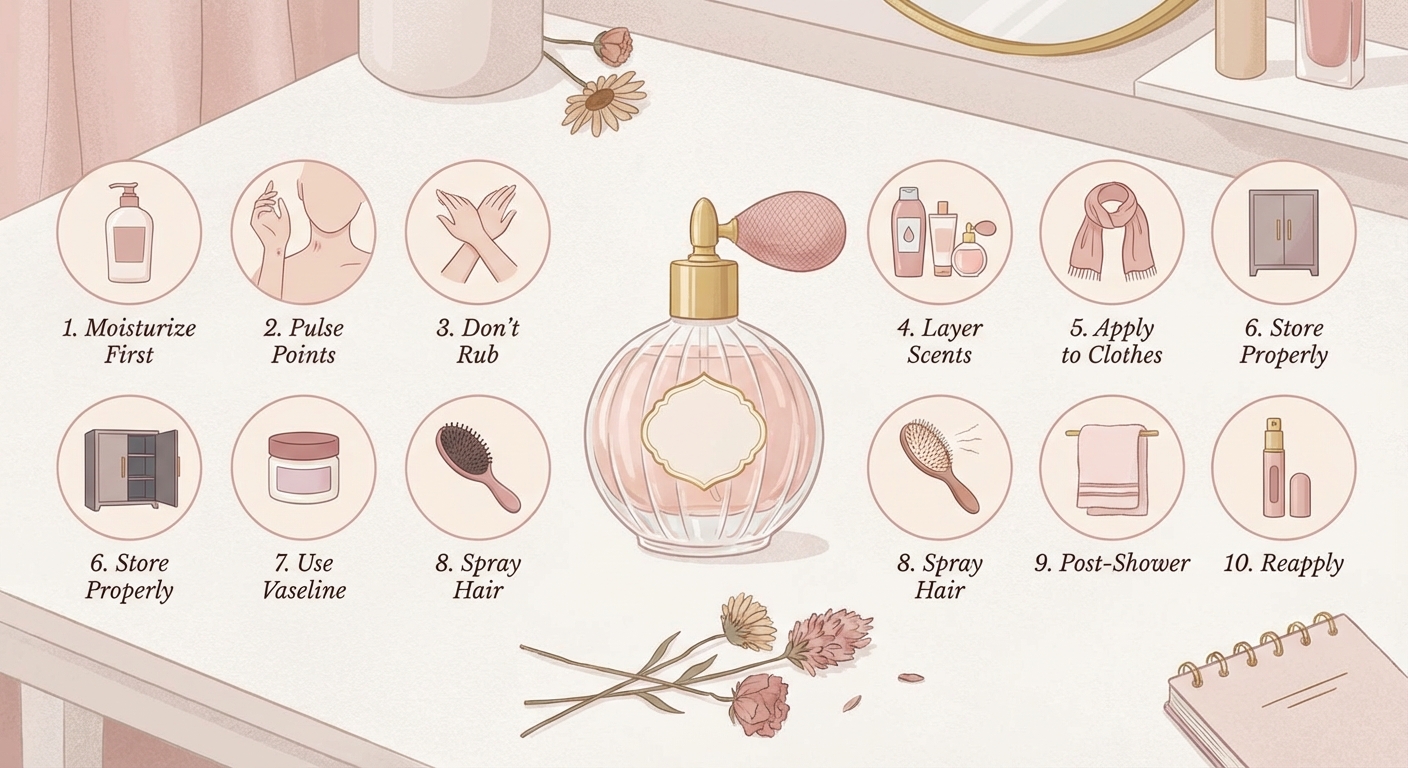
Think of your skin as a canvas. The better you prepare it, the longer your fragrance will stick around.
Start with a shower or bath. Clean skin holds scent better because oils and sweat don’t interfere with the fragrance molecules.
Pat your skin dry but leave it slightly damp. Apply an unscented or matching scented moisturizer immediately. Hydrated skin creates a better base for perfume to cling to.
“Fragrance clings to moisture. If you apply perfume to dry skin, it evaporates within an hour. Moisturized skin can extend wear time by several hours.” — Perfume chemist
Some people apply petroleum jelly to pulse points before spraying. This creates an occlusive barrier that slows evaporation. Just use a thin layer so it doesn’t feel greasy.
Target the Right Pulse Points
Pulse points generate heat, which helps diffuse fragrance throughout the day. But not all pulse points work equally well.
The best spots include:
- Behind your ears
- Base of your throat
- Inside your wrists
- Inside your elbows
- Behind your knees
- Between your breasts
Warmer areas amplify scent. The back of your knees might seem odd, but heat rises, carrying the fragrance upward as you move.
Your hair also holds scent beautifully. Spray perfume on your brush before running it through your hair, or mist your hair lightly from about 8 inches away. Avoid direct application if you have dry or color-treated hair, as alcohol can cause damage.
Never Rub Your Wrists Together
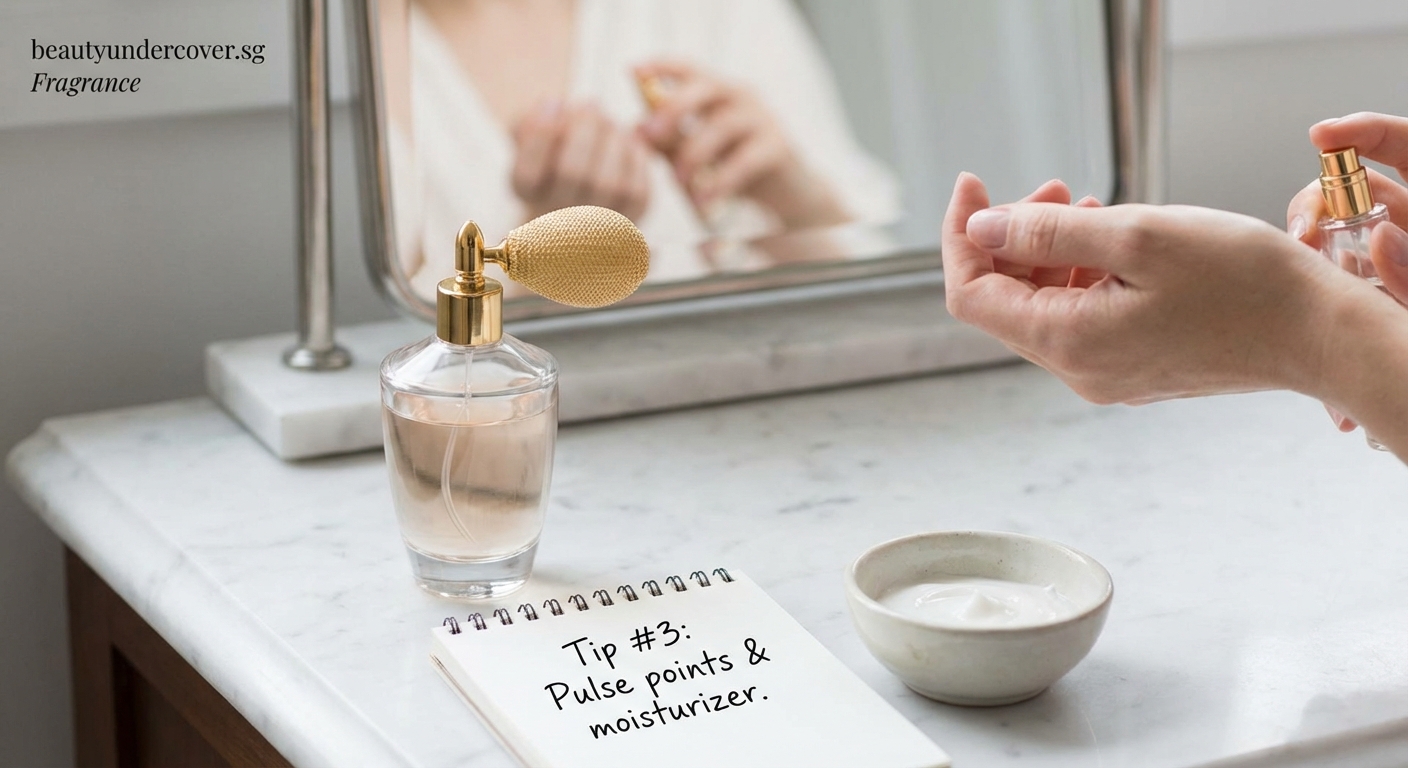
This common habit actually ruins your fragrance. Rubbing creates friction that breaks down the perfume molecules, particularly the delicate top notes.
Those top notes are what you smell first. They’re designed to evaporate naturally over 15 to 30 minutes, transitioning into the heart notes. When you rub, you skip this process and distort the intended scent profile.
Instead, spray or dab perfume on each wrist separately. Let it dry naturally. The same rule applies to any pulse point.
Layer Your Fragrance Products
Layering creates depth and longevity. Start with a scented body wash, follow with matching lotion, and finish with the perfume itself.
Many fragrance lines offer complete collections. If yours doesn’t, choose unscented products or ones with complementary notes.
You can also layer different fragrances strategically. Apply a heavier base note fragrance first, then add a lighter one on top. For example, a woody or musky scent pairs well with fresh citrus notes.
Just avoid combining too many competing scents. Two or three products maximum keeps things balanced.
Apply to Clothes and Accessories
Fabric holds fragrance longer than skin because it doesn’t have oils that break down the scent molecules.
Spray the inside of your jacket collar, your scarf, or the lining of your coat. The fabric releases fragrance gradually as you move.
Be careful with delicate materials. Test on an inconspicuous spot first, as some perfumes can stain light-colored fabrics or leave oil marks on silk.
Your hair accessories work too. Spray a light mist on fabric headbands or the inside of your hat.
Timing Your Application Matters
Apply perfume right after your shower while your skin is still slightly damp and your pores are open. This helps your skin absorb the fragrance better.
Give it time to settle before getting dressed. Wait at least 5 minutes so the alcohol evaporates and the scent bonds with your skin.
If you’re heading to an event, apply perfume 20 to 30 minutes before you leave. This allows the top notes to settle and the heart notes to emerge, giving you the truest representation of the fragrance.
Store Your Perfume Properly
Heat, light, and air exposure degrade perfume over time. A bottle stored incorrectly can lose potency within months.
Keep bottles in a cool, dark place. Your bathroom seems convenient, but temperature fluctuations from showers damage the fragrance. A bedroom drawer or closet works better.
Always close the cap tightly after use. Oxygen breaks down perfume molecules, changing the scent and reducing longevity.
Original boxes provide extra protection from light. If you’ve tossed yours, consider storing bottles in a decorative box or drawer organizer.
Choose the Right Concentration
Understanding fragrance concentrations helps you pick products that naturally last longer.
| Concentration Type | Perfume Oil % | Typical Longevity | Best For |
|---|---|---|---|
| Parfum/Perfume | 20-30% | 12-24 hours | Special occasions, sensitive skin |
| Eau de Parfum | 15-20% | 6-8 hours | Daily wear, office settings |
| Eau de Toilette | 5-15% | 3-5 hours | Casual wear, warm weather |
| Eau de Cologne | 2-4% | 2-3 hours | Post-workout, light refresh |
Higher concentrations cost more upfront but require less product per application. A small dab of parfum often outlasts multiple sprays of eau de toilette.
For all-day wear, eau de parfum offers the best balance of longevity and value.
Match Your Fragrance to Your Skin Type
Oily skin holds fragrance longer than dry skin. The natural oils create a base that slows evaporation.
If you have dry skin, you’ll need to apply more product or choose richer formulations. Focus on moisturizing before application and consider oil-based perfumes instead of alcohol-based sprays.
Your skin’s pH also affects how fragrance smells and lasts. Acidic skin can make perfumes smell sharper and fade faster. Alkaline skin tends to hold scents longer but might make them smell slightly different than intended.
You can’t change your skin’s pH dramatically, but staying hydrated and maintaining a good skincare routine helps optimize fragrance performance.
Reapplication Strategy for Long Days
Even with perfect application, some situations require a refresh. Carry a small travel atomizer or rollerball for touch-ups.
Decant a small amount of your perfume into a 5ml or 10ml spray bottle. Keep it in your purse for midday application.
Solid perfumes work great for travel. They’re spill-proof and easy to apply discreetly. Dab a small amount on your wrists or neck when you need a boost.
Scented hand cream offers another subtle way to refresh your fragrance throughout the day. Apply it after washing your hands to maintain your scent profile.
Common Mistakes That Shorten Wear Time
Certain habits sabotage your fragrance without you realizing it.
Spraying from too far away wastes product. Hold the bottle 3 to 6 inches from your skin for optimal coverage.
Applying to just one spot doesn’t give the fragrance enough surface area. Use multiple pulse points for better projection and longevity.
Waiting too long between moisturizing and applying perfume means your skin has already absorbed the lotion. Apply perfume within 2 minutes of moisturizing.
Using expired perfume gives poor results. Most fragrances last 3 to 5 years unopened, 1 to 2 years after opening. If your perfume smells off or looks cloudy, it’s time to replace it.
Overapplying to compensate for poor longevity makes you nose-blind to your own scent while overwhelming others. Start with 2 to 3 sprays and build from there if needed.
Seasonal Adjustments for Better Performance
Temperature and humidity affect how perfume behaves on your skin.
Summer heat intensifies fragrance and speeds up evaporation. Choose lighter concentrations or fresh scent families like citrus and aquatic notes. Apply to cooler pulse points like behind your knees instead of your neck.
Winter’s dry air and cold temperatures mute fragrances. Layer more generously and choose richer concentrations like eau de parfum or parfum. Warmer notes like vanilla, amber, and woods perform better in cold weather.
Spring and fall offer moderate conditions. You can wear most fragrances comfortably, though you might need slight adjustments based on daily temperature swings.
Your Fragrance Routine Starts Now
Making your perfume last all day doesn’t require expensive products or complicated rituals. Small changes to your application routine create noticeable improvements.
Start with one or two techniques from this guide. Moisturize before applying, or switch your target pulse points. Notice how your fragrance performs differently.
Build from there. Add layering products when you find a scent you love. Invest in a travel atomizer for touch-ups. Pay attention to how your skin responds to different concentrations.
Your favorite fragrance deserves to shine from morning coffee to evening plans. These methods help it do exactly that.
Leave a Reply