Starting a skincare routine doesn’t have to feel like learning a new language. You don’t need ten products lined up on your bathroom counter or a chemistry degree to understand what goes on your face. The truth is, most people only need three basic steps to see real improvements in their skin. If you’ve been putting off skincare because it all seems too complicated, this guide will show you exactly where to begin.
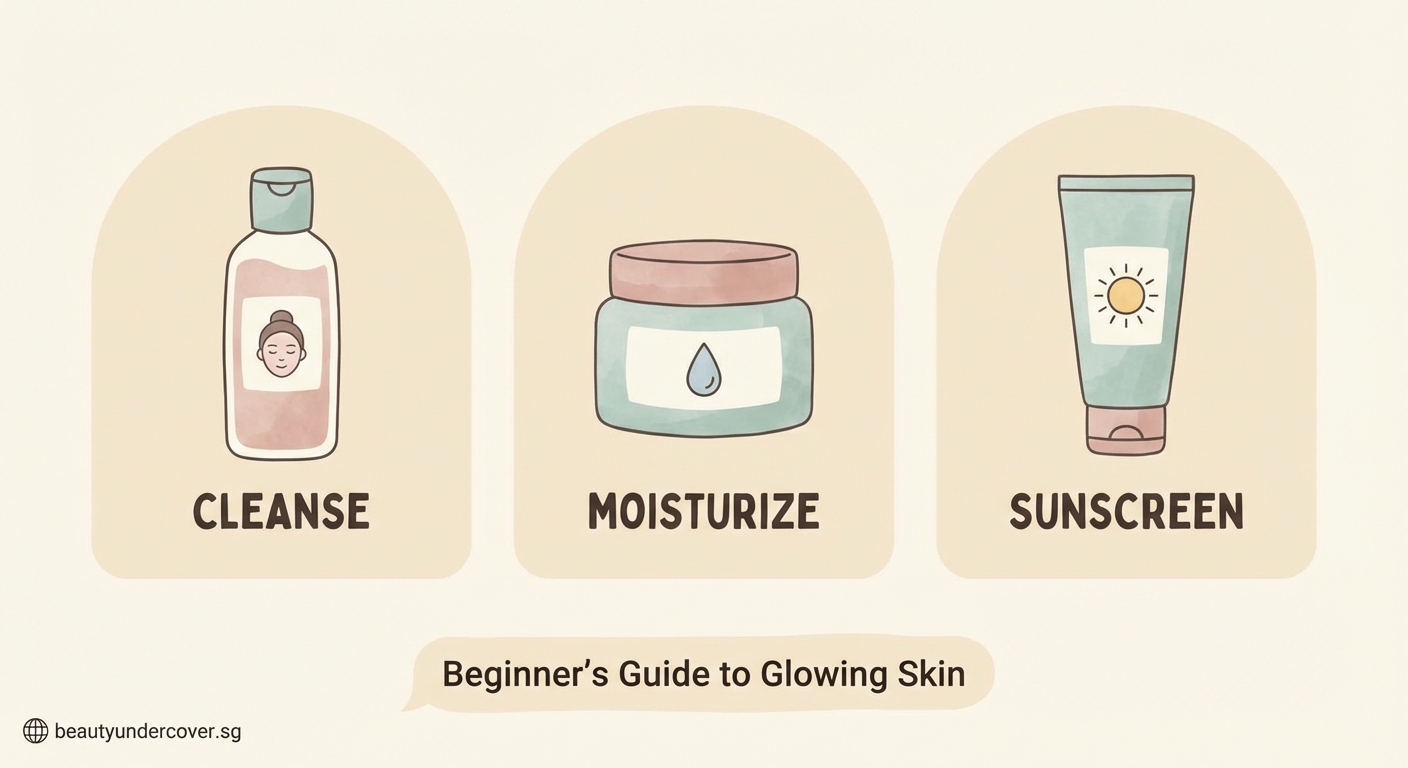
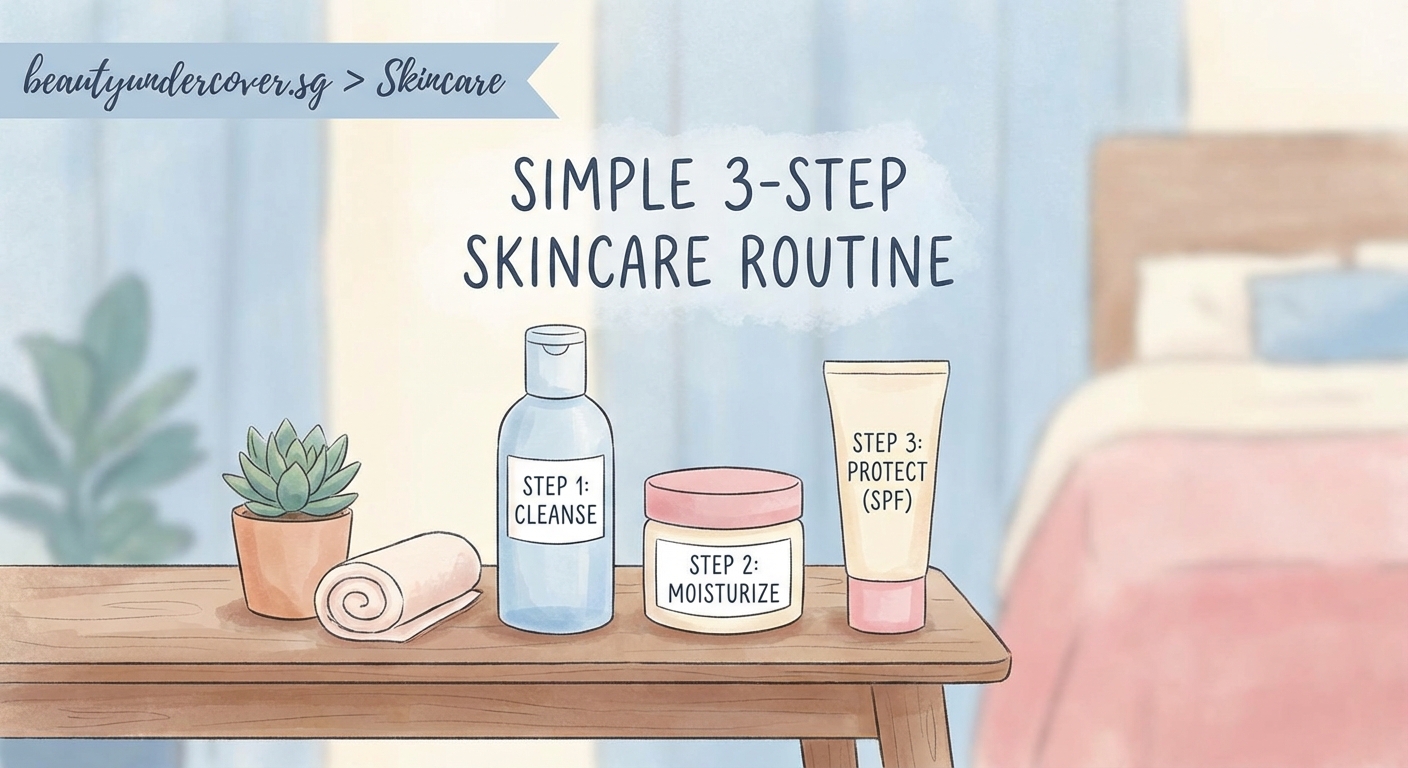
A simple skincare routine for beginners requires just three steps: cleanse, moisturize, and protect with SPF. Start with one product for each step, use them consistently for at least four weeks, and adjust based on how your skin responds. You don’t need expensive products or complicated techniques to see results, just the right basics applied regularly morning and night.
Why three steps actually work
Your skin has basic needs that don’t change based on trends or marketing claims.
It needs to be clean. It needs hydration. It needs protection from sun damage.
Everything else is optional. Serums, toners, essences, and treatments can be helpful later, but they’re not where you should start. Building a foundation with three core products gives you a baseline to understand your skin before adding anything extra.
Most skincare failures happen because people try to do too much at once. They buy seven new products, use them all together, and then can’t figure out what’s helping or what’s causing breakouts. Starting simple means you actually learn what your skin likes.
The three steps you need
Step one: cleanse
Washing your face removes dirt, oil, makeup, and pollution that builds up throughout the day.
You need two things here. A gentle cleanser for morning and a slightly stronger one for night if you wear makeup or sunscreen. If you don’t wear either, the same cleanser works twice daily.
Look for these terms on the label:
- Gentle
- Hydrating
- Non-foaming (for dry skin)
- Gel or foaming (for oily skin)
- pH-balanced
- Fragrance-free
Avoid anything that says “deep cleaning,” “clarifying,” or “exfoliating” for now. Those are too harsh for daily use when you’re just starting out.
How to do it:
- Wet your face with lukewarm water (not hot).
- Pump a nickel-sized amount of cleanser into your palm.
- Massage it gently across your face for 30 seconds.
- Rinse thoroughly until the water runs clear.
- Pat dry with a clean towel (don’t rub).
Your skin should feel clean but not tight or squeaky. If it feels stripped or uncomfortable, your cleanser is too strong.
Step two: moisturize
Every skin type needs moisture, even oily skin.
Moisturizer creates a protective barrier that keeps water in your skin and irritants out. Without it, your skin can actually produce more oil to compensate for dehydration, making problems worse.
Choose based on your skin type:
| Skin Type | Texture to Look For | Ingredients to Seek |
|---|---|---|
| Dry | Cream or balm | Hyaluronic acid, ceramides, shea butter |
| Oily | Gel or lightweight lotion | Niacinamide, glycerin, squalane |
| Combination | Lotion | Hyaluronic acid, glycerin |
| Sensitive | Fragrance-free cream | Centella, colloidal oatmeal, ceramides |
Apply moisturizer to damp skin right after cleansing. This locks in the water from washing and helps the product absorb better.
Use about a pea-sized amount for your whole face. Dot it on your forehead, cheeks, nose, and chin, then blend outward in gentle upward motions.
Wait two to three minutes before moving to the next step so it can sink in properly.
Step three: protect with SPF
Sunscreen is the single most important anti-aging product you can use.
UV damage causes wrinkles, dark spots, and skin cancer. It happens every day, even when it’s cloudy, even in winter, even if you’re inside near windows.
You need SPF 30 or higher, applied every morning as the last step of your routine.
There are two types:
- Chemical sunscreen absorbs UV rays and converts them to heat. It’s usually lighter and easier to blend but can irritate sensitive skin.
- Mineral sunscreen sits on top of skin and reflects UV rays. It can leave a white cast but tends to be gentler.
Apply a full finger-length of product (about 1/4 teaspoon) to cover your face and neck. Most people use way too little, which cuts the protection in half.
Reapply every two hours if you’re outside or sweating. If you’re inside all day, one morning application is usually enough.
“The best skincare routine is the one you’ll actually do. Consistency beats perfection every single time. I’d rather see someone use three basic products daily than own twenty expensive ones that sit unused.” — Board-certified dermatologist
Common mistakes beginners make
Starting a new routine comes with a learning curve. Here are the pitfalls to avoid.
Using products in the wrong order. The sequence matters. Always cleanse first, moisturize second, and apply SPF last in the morning. At night, skip the SPF.
Expecting results overnight. Your skin cells turn over every 28 days on average. You need at least four weeks of consistent use to see real changes. Give products time to work before deciding they don’t.
Over-exfoliating. Scrubs and acids are tempting, but they’re not part of a beginner routine. Adding them too soon damages your skin barrier and causes more problems than they solve.
Switching products too often. Trying something new every week prevents you from understanding what actually works. Stick with your three products for at least a month before making changes.
Skipping sunscreen on “low UV” days. UV rays penetrate clouds and windows. There’s no such thing as a day off from sun protection if you want healthy skin long term.
Using too much product. More doesn’t mean better results. It just wastes product and can clog pores. Follow the amounts listed above.
How to choose your first products
Walk into any drugstore and you’ll see hundreds of options. Here’s how to narrow them down without getting overwhelmed.
Start with affordable options. Expensive doesn’t mean better, especially for basic products. Plenty of drugstore brands make excellent cleansers, moisturizers, and sunscreens that work just as well as luxury versions.
Read the ingredient list, not the marketing claims. Brands can say almost anything on the front of the package, but the ingredient list tells the real story. The first five ingredients make up most of the formula.
Look for simple formulas with fewer than 15 ingredients when possible. This reduces the chance of irritation and makes it easier to identify what works for your skin.
Check reviews from people with your skin type. Someone with oily skin will have different experiences than someone with dry skin using the same product.
Buy travel sizes first if available. This lets you test without committing to a full-size bottle you might not like.
Building your morning routine
Here’s what your AM routine should look like once you have your products:
- Cleanse your face with your gentle cleanser
- Apply moisturizer to damp skin
- Wait two minutes
- Apply SPF 30 or higher
- Wait another few minutes before makeup if you wear it
Total time: about five minutes.
Do this every single morning, even on weekends. Consistency is what creates results.
Building your evening routine
Your PM routine is similar but slightly different:
- Cleanse your face (use makeup remover first if needed)
- Apply moisturizer to damp skin
- Go to bed
That’s it. No SPF at night since you’re not getting sun exposure.
Some people like to use a slightly richer moisturizer at night since your skin repairs itself while you sleep. This is optional but can be helpful if you have dry skin.
When to add more products
After you’ve used your three-step routine consistently for at least two months, you might want to address specific concerns.
Here’s when to consider adding a fourth step:
- Dark spots or uneven tone: Add a vitamin C serum in the morning before moisturizer
- Fine lines or texture: Add a retinol product at night after cleansing
- Dullness: Add a gentle chemical exfoliant two nights per week
- Extra dryness: Add a hydrating serum or face oil
Only add one new product at a time. Wait at least two weeks before introducing another so you can identify what’s working and what might be causing problems.
Adjusting for your skin type
Your basic three steps stay the same regardless of skin type. What changes is the specific products you choose within each category.
Oily skin tends to do better with gel cleansers, lightweight gel moisturizers, and mattifying sunscreens. You still need all three steps. Skipping moisturizer because your skin is oily will backfire.
Dry skin needs cream cleansers, rich moisturizers, and hydrating sunscreens. You might want to apply moisturizer twice at night if your skin still feels tight.
Combination skin can use different products on different areas, but this gets complicated fast. Most people do better choosing products for their overall skin type and adjusting as needed.
Sensitive skin should prioritize fragrance-free, minimal-ingredient formulas. Patch test new products on your jawline for three days before using them on your whole face.
Tracking what works
Keep notes on your phone for the first month. Write down:
- What products you’re using
- When you started them
- Any changes you notice (good or bad)
- How your skin feels each week
This creates a record you can reference later. It’s easy to forget what your skin looked like before you started, and notes help you see progress you might otherwise miss.
Take photos in the same lighting once a week. Natural light near a window works best. You don’t need to share these with anyone, but they’re incredibly helpful for tracking subtle improvements.
What to do if something goes wrong
Sometimes products don’t work out. Here’s how to tell the difference between normal adjustment and actual problems.
Normal adjustment: Slight tingling, temporary redness that fades in minutes, skin feeling different but not painful. Give it a few days.
Actual problem: Burning, persistent redness, new breakouts in unusual places, swelling, itching. Stop using the product immediately.
If you break out from a new product, it’s usually the moisturizer or sunscreen causing issues. Try switching to a different formula and keep the cleanser the same.
If your skin feels tight or flaky, your cleanser might be too harsh. Switch to something gentler.
If you see no changes after six weeks, your products might not be strong enough for your concerns. This is when you’d consider adding a treatment product or consulting a dermatologist.
Your skin will thank you later
Building a simple skincare routine for beginners isn’t about perfection. It’s about creating a sustainable habit that protects and nourishes your skin every day.
Start with these three steps tonight. Give them a full month of consistent use. Pay attention to how your skin responds. Adjust as needed, but don’t give up just because you don’t see dramatic changes in week one.
The people with the best skin aren’t the ones with the most products. They’re the ones who found a routine that works and stuck with it. You can be one of them.
Leave a Reply